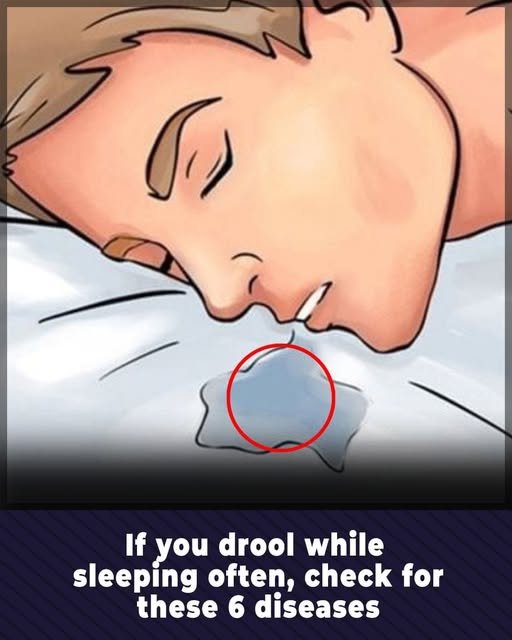
10 Reasons You’re Drooling While You Sleep and What It Could Mean
Waking up to a wet pillow can be embarrassing, but it’s a common issue with a wide range of causes, from harmless to health-signaling. Here’s a breakdown of the most likely reasons.
1. Sleeping Position (The Most Common Cause)
-
What it means: When you sleep on your side or stomach, gravity pulls saliva toward the pillow instead of back down your throat. It’s a simple mechanical issue.
-
What to do: Try training yourself to sleep on your back. Use a supportive pillow or a body pillow to maintain position.
2. Nasal or Sinus Congestion
-
What it means: A cold, allergies, or a sinus infection forces you to breathe through your mouth. An open mouth naturally allows saliva to escape.
-
What to do: Treat the underlying congestion with saline sprays, antihistamines, decongestants (short-term), or a humidifier.
3. GERD (Gastroesophageal Reflux Disease)
-
What it means: Stomach acid creeping up into the esophagus can trigger a reflex that produces excess saliva (water brash) as the body tries to neutralize the acid.
-
What to do: Elevate the head of your bed, avoid late meals, and see a doctor for diagnosis and treatment (e.g., antacids, PPIs).
4. Medication Side Effects
-
What it means: Certain medications, especially some psychiatric drugs (like clozapine), antibiotics (like pilocarpine), and some painkillers, can cause excessive saliva production (sialorrhea).
-
What to do: Never stop medication without consulting your doctor. Discuss the side effect; a dosage adjustment or alternative may be possible.
5. Sleep Apnea (A Key Medical Sign)
-
What it means: Drooling, especially with loud snoring, choking/gasping sounds, and daytime fatigue, is a major red flag for Obstructive Sleep Apnea (OSA). The blocked airway forces mouth breathing.
-
What to do: This requires medical evaluation. A sleep study can diagnose it, and treatment (like a CPAP machine) often resolves the drooling.
6. Tonsillitis or Strep Throat
-
What it means: Swollen, infected tonsils or a sore throat can make swallowing painful and difficult, causing saliva to pool and leak during sleep.
-
What to do: See a doctor for diagnosis (often strep test). Treatment with antibiotics (for bacterial infections) or supportive care will help.
7. Neurological Conditions
-
What it means: Conditions like Parkinson’s disease, ALS, stroke, or Bell’s palsy can weaken the muscles involved in swallowing (dysphagia) or reduce facial control, leading to drooling.
-
What to do: Management is part of the broader neurological treatment plan and may involve speech/swallow therapy or specific medications.
8. Swallowing Disorders (Dysphagia)
-
What it means: Issues with the swallowing mechanism itself, unrelated to neurology, can cause saliva accumulation. This can result from muscle weakness, esophageal blockages, or other GI issues.
-
What to do: A gastroenterologist or an ENT can perform tests (like an endoscopy or barium swallow) to diagnose the cause.
9. Dental Issues or Oral Infections
-
What it means: Cavities, gum disease, or oral infections can irritate the mouth, increasing saliva production. New braces or dentures can also be a temporary cause.
-
What to do: Maintain excellent oral hygiene and see your dentist regularly for check-ups and cleanings.
10. Pregnancy
-
What it means: Hormonal changes and frequent nausea during pregnancy can stimulate excess saliva production (ptyalism gravidarum), which is most noticeable during sleep.
-
What to do: It’s usually temporary and resolves after childbirth. Sucking on hard candy or frequent, small sips of water can help manage it.
When to See a Doctor
Most occasional drooling is benign. Consult a healthcare professional if your drooling is:
-
New, sudden, and severe.
-
Accompanied by other symptoms like snoring/gasping (sleep apnea signs), facial numbness/drooping (stroke sign), difficulty swallowing, or chest pain.
-
Causing you to choke or wake up frequently.
-
Not improving with simple changes (like sleep position).
Diagnosis typically starts with your primary care doctor, who may refer you to an ENT (Otolaryngologist), Sleep Specialist, Neurologist, or Gastroenterologist depending on the suspected cause.