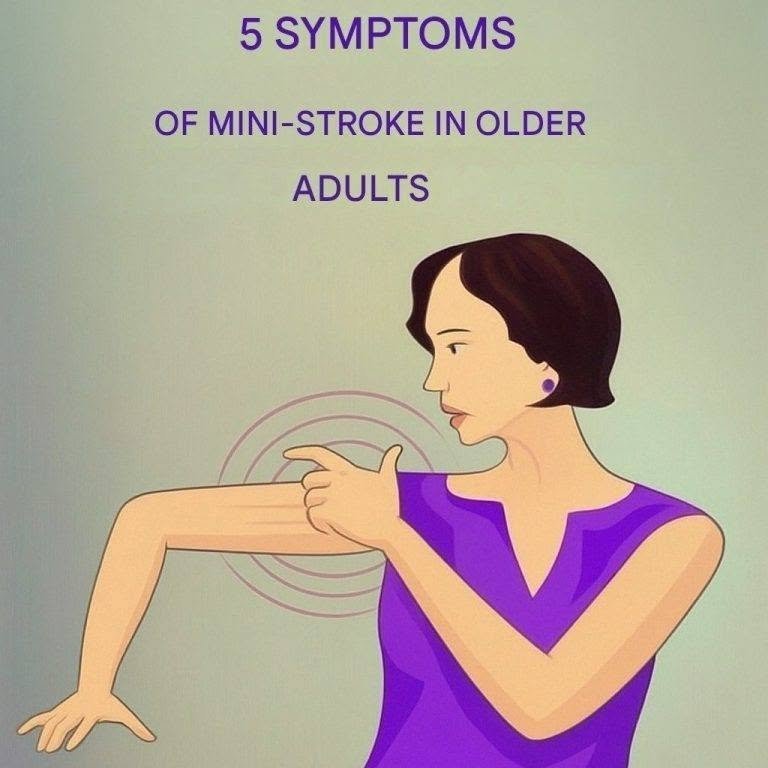
A transient ischemic attack (TIA), often called a mini stroke, is a temporary blockage of blood flow to the brain. It resolves quickly, usually within minutes to an hour, but it’s a blazing red warning: roughly 1 in 3 people who have a TIA will eventually have a full stroke, often within days or weeks. In seniors, the signs can be subtle and easy to dismiss as “just getting older.” Here are five that should never be ignored.
1. Sudden Confusion or Trouble Speaking
What happens: The person suddenly has difficulty finding words, forming sentences, or understanding what others are saying. Speech may become slurred or garbled.
What it looks like in a senior:
-
They can’t name a familiar object (like “spoon” or “watch”)
-
Their sentences come out jumbled or don’t make sense
-
They seem confused by a simple question
-
It passes quickly, so they laugh it off or call it a “senior moment”
Why it matters: This is one of the most common TIA symptoms and often gets dismissed as fatigue or aging.
2. One-Sided Numbness or Weakness
What happens: A TIA often affects only one side of the body. The person may suddenly lose strength or sensation in their face, arm, or leg—usually on just one side.
What it looks like in a senior:
-
Drooping on one side of the mouth when trying to smile
-
One arm drifting downward when both are raised
-
Complaining that an arm or leg “feels funny” or “won’t work right”
-
Stumbling or leaning to one side unexpectedly
Why it matters: Even if it resolves in minutes, this is a classic stroke sign and demands immediate medical attention.
3. Temporary Vision Disturbance
What happens: Blood flow to the eye or the brain’s vision center is briefly interrupted. Vision may blur, double, or go dark—often in just one eye.
What it looks like in a senior:
-
Describing a “curtain coming down” over one eye
-
Sudden blurred or double vision
-
Brief blindness in one eye that lifts after a few minutes
-
Difficulty seeing to one side (neglect)
Why it matters: Vision changes are sometimes the only TIA symptom and may not be accompanied by weakness or confusion, making them easier to miss.
4. Sudden, Severe Dizziness and Loss of Balance
What happens: The brain’s balance centers are disrupted, causing a sudden sensation that the room is spinning or an inability to stand or walk normally.
What it looks like in a senior:
-
Suddenly grabbing onto furniture or a person to stay upright
-
Describing the sensation of being on a tilting boat
-
Falling without any apparent trip or slip
-
Nausea or vomiting with the dizziness
Why it matters: Falls are already a major risk for seniors. A TIA that causes dizziness can lead to a dangerous fall, compounding the emergency.
5. The “Worst Headache of My Life”
What happens: Some TIAs, especially those involving a hemorrhagic component, present with a sudden, extreme headache unlike anything the person has experienced before.
What it looks like in a senior:
-
A headache that comes on in seconds, not gradually
-
Often described as a “thunderclap” or “explosion” in the head
-
May be accompanied by nausea, stiff neck, or brief loss of consciousness
-
No prior headache history of this intensity
Why it matters: This can signal a hemorrhagic stroke or aneurysm. It’s a medical emergency, even if the pain eases.
The FAST Test: A Quick Way to Spot Trouble
Use this simple acronym to evaluate someone quickly:
| Letter | Meaning | What to Look For |
|---|---|---|
| F | Face | Ask them to smile. Does one side droop? |
| A | Arms | Ask them to raise both arms. Does one drift down? |
| S | Speech | Ask them to repeat a simple sentence. Is speech slurred or strange? |
| T | Time | If you see any of these signs, call emergency services immediately. Time saved is brain saved. |
Critical: Why “It Went Away” Is the Danger
The defining feature of a TIA is that symptoms resolve, often within minutes. This gives a false sense of security. The risk of a full, disabling stroke in the 48 hours following a TIA is significant—and up to 20% of people who have a TIA will have a stroke within three months.
The rule: Every TIA is a medical emergency, even if symptoms disappear.
What to Do
-
Call emergency services immediately—do not drive to the hospital yourself. Paramedics can begin assessment and treatment en route.
-
Note the time symptoms started and stopped. This helps doctors determine treatment options.
-
Do not give the person food, drink, or aspirin unless instructed by emergency services. Swallowing may be impaired.
-
Stay with them until help arrives. Keep them calm and seated or lying down in a safe position.
This knowledge matters deeply, especially for those caring for aging parents or loved ones. A few minutes of recognition can mean the difference between full recovery and lifelong disability—or worse.