
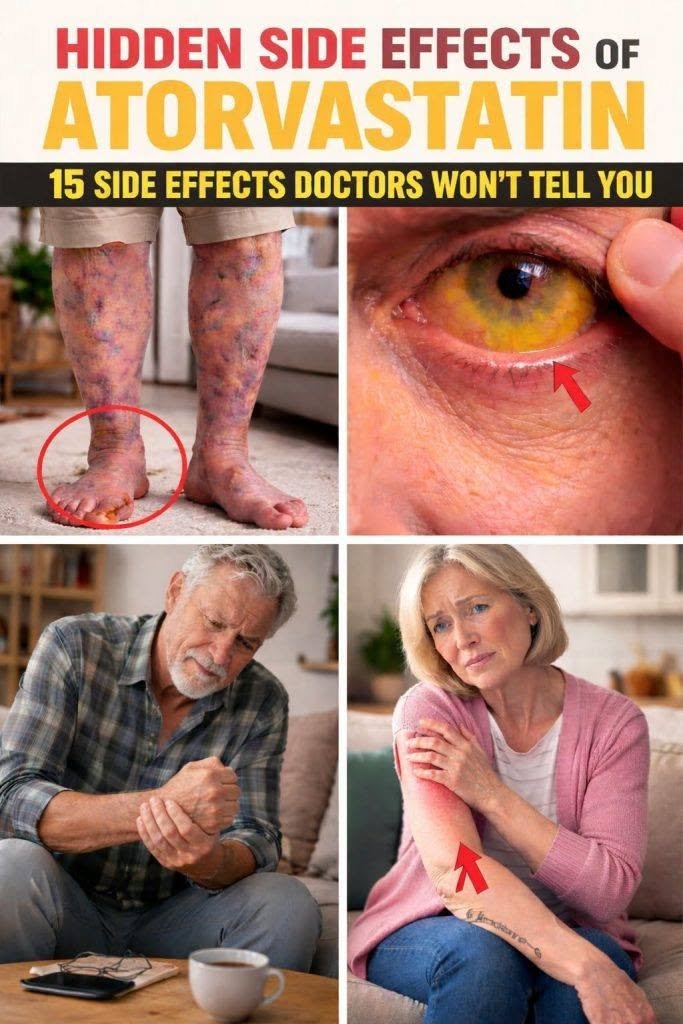
Here’s a clear-eyed look at atorvastatin.
First, The Context (Why This Matters)
Atorvastatin (Lipitor) is one of the most prescribed medications in the world because it’s remarkably effective at lowering LDL cholesterol and reducing the risk of heart attacks and strokes. For most people, it’s safe and well-tolerated. But like any drug, it has a range of effects—some common, some rare, and some that are still being researched.
The “hidden” part often isn’t a secret list; it’s that the early signals can be subtle or easily attributed to other things.
The Well-Known Risks (The “Always Mentioned” 3)
-
Muscle Pain (Myalgia): The most common complaint. Can range from mild soreness to, in very rare cases, rhabdomyolysis (serious muscle breakdown).
-
Liver Enzyme Elevation: Often asymptomatic and caught on a blood test. Significant liver injury is extremely rare. Routine monitoring is no longer universally recommended but is done on a case-by-case basis.
-
Digestive Issues: Nausea, diarrhea, or constipation, which often improve as your body adjusts.
The “Hidden” or Nuanced Risks (The Deeper Conversation)
These are the effects that are either less common, have a subtler onset, or are the subject of ongoing debate in the medical community. They aren’t things you “won’t learn until it’s too late”—they’re things to be aware of so you can spot them early.
Cognitive & Neurological
-
Brain Fog & Mild Memory Impairment: Some people report fuzziness or trouble finding words. This is real for a subset of patients but is usually reversible upon stopping the statin. It’s not believed to be a permanent or structural brain change.
-
Peripheral Neuropathy: A rare, dose-related risk. It presents as numbness, tingling, or burning pain in the hands and feet and can take months to develop. It often, but not always, resolves after the drug is stopped.
Metabolic
-
New-Onset Type 2 Diabetes: This is a confirmed, small but real risk, especially in people with pre-existing risk factors (prediabetes, metabolic syndrome, obesity). The mechanism isn’t fully clear. The critical context: the cardiovascular protection of a statin in a high-risk individual almost always vastly outweighs this risk.
Subtle Musculoskeletal
-
Tendon Problems: Beyond simple muscle ache, there’s a recognized risk of tendonitis and, rarely, tendon rupture. It’s thought to be due to the drug’s effect on the collagen structure in tendons. This wouldn’t just feel like soreness; it would be pain localized at a tendon.
Psychiatric
-
Irritability and Sleep Disturbances: Less discussed than muscle pain, but some patients report increased irritability, aggression, or severe insomnia. These are anecdotal but consistent enough to take seriously.
Nutritional & Metabolic
-
CoQ10 Depletion: Statins block the pathway that produces cholesterol, which is the same pathway that produces Coenzyme Q10 (an antioxidant crucial for cell energy). This is a proposed mechanism for muscle symptoms. The evidence for supplementation is mixed, but many doctors will suggest it.
-
Vitamin D Status: Some observational studies link statin use with higher vitamin D levels, but the relationship is complex and not fully understood. It’s not a “deficiency” risk in the classic sense.
The Most Important 2026 Update
The conversation has matured significantly. It’s no longer “statins are perfect” vs. “statins are poison.” The modern approach is precision medicine:
-
Shared Decision-Making: Doctors are better trained to discuss the number needed to treat (NNT) vs. number needed to harm (NNH).
-
“Statin-Associated Muscle Symptoms” (SAMS): This is now a formal clinical diagnosis with a management plan. If you suspect SAMS, the classic clinical approach is the “Three R’s”:
-
Re-challenge: Stop the statin, see if symptoms resolve.
-
Re-try: Try the same statin at a lower dose to see if symptoms return.
-
Re-consider: If they do, switch to a different statin (like rosuvastatin) or an alternative dosing schedule (e.g., every other day, with doctor’s approval).
-
-
The Rise of Alternatives: For truly statin-intolerant patients, the options are better than ever, including ezetimibe, PCSK9 inhibitors (injectables), and bempedoic acid.
This is not a “hidden danger” list; it’s an informed-patient checklist. If you or someone you know is on atorvastatin, the best action isn’t to worry in silence, but to log any subtle changes in your body and discuss them openly with a pharmacist or doctor. No side effect is too small to mention.
Let me know if you’d like a deeper dive into any one of these, like the CoQ10 debate or the diabetes link specifics.