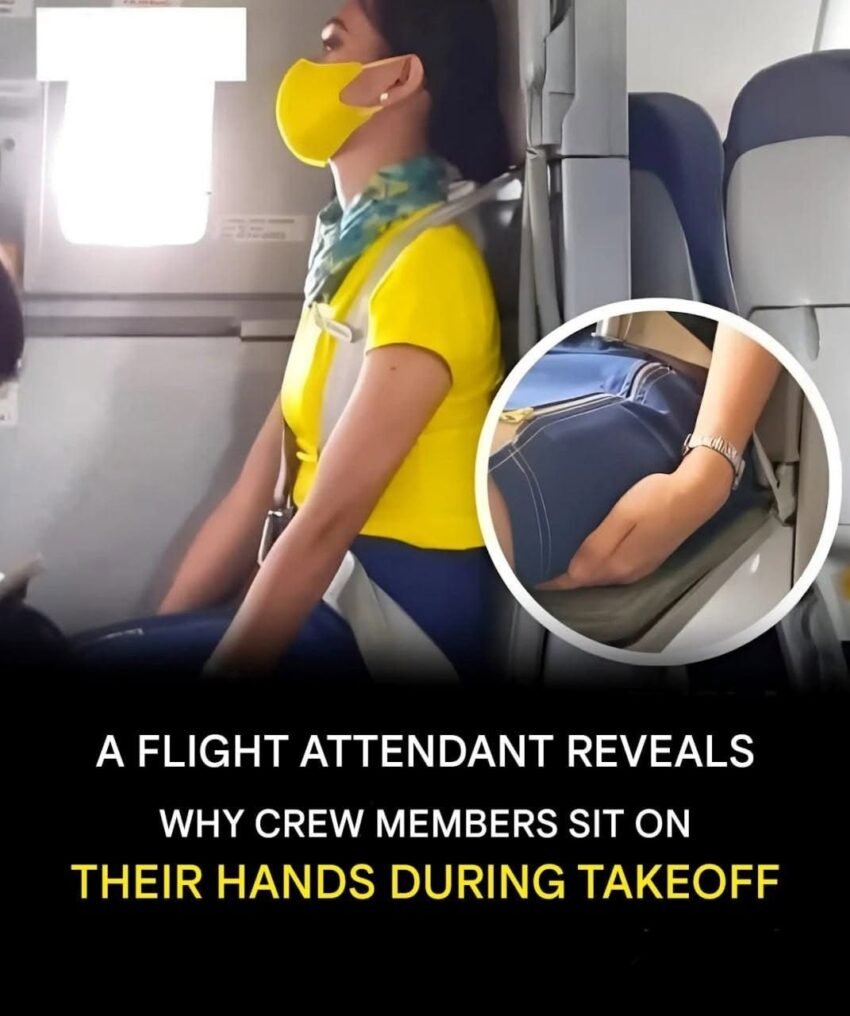
That specific position is called the “bracing position” or “brace position” for the crew. It’s mandatory during the most critical phases of flight: takeoff and landing. Here’s exactly why they do it:
1. To Keep Their Bodies Rigid
Flight attendants sit on their hands (palms up under their thighs) to lock their arms and wrists in place. This forces their bodies into a rigid, compact posture. In a sudden impact, a rigid body can absorb G-forces better and is less likely to flail around, reducing the risk of broken limbs.
2. To Prepare for a Quick Response
If an emergency is declared or something feels wrong during the quiet, high-alert moments of takeoff and landing, their hands are anchored. They can instantly scan for danger without instinctively reaching for something to hold onto, keeping their head and eyes free to assess the cabin.
3. To Prevent Involuntary Movement
In severe turbulence or a sudden jolt, an unbraced arm can become a projectile, injuring the crew member or a passenger. By sitting on their hands, they eliminate the risk of an arm flying up and causing harm.
4. Silent Review of Emergency Procedures
While sitting like this, flight attendants are conducting a “silent review” (or “30-second review”). They are mentally running through their emergency commands (“Heads down, stay down!”), locating their nearest exits, and identifying which passengers might be helpful (able-bodied assistants) or need extra assistance in an evacuation.
So that stiff-backed, hands-under-thighs posture you see is a carefully engineered safety tool—a physical and mental switch that flips them into a state of total readiness. The cabin is their responsibility, and that position ensures they can take command in a split second.