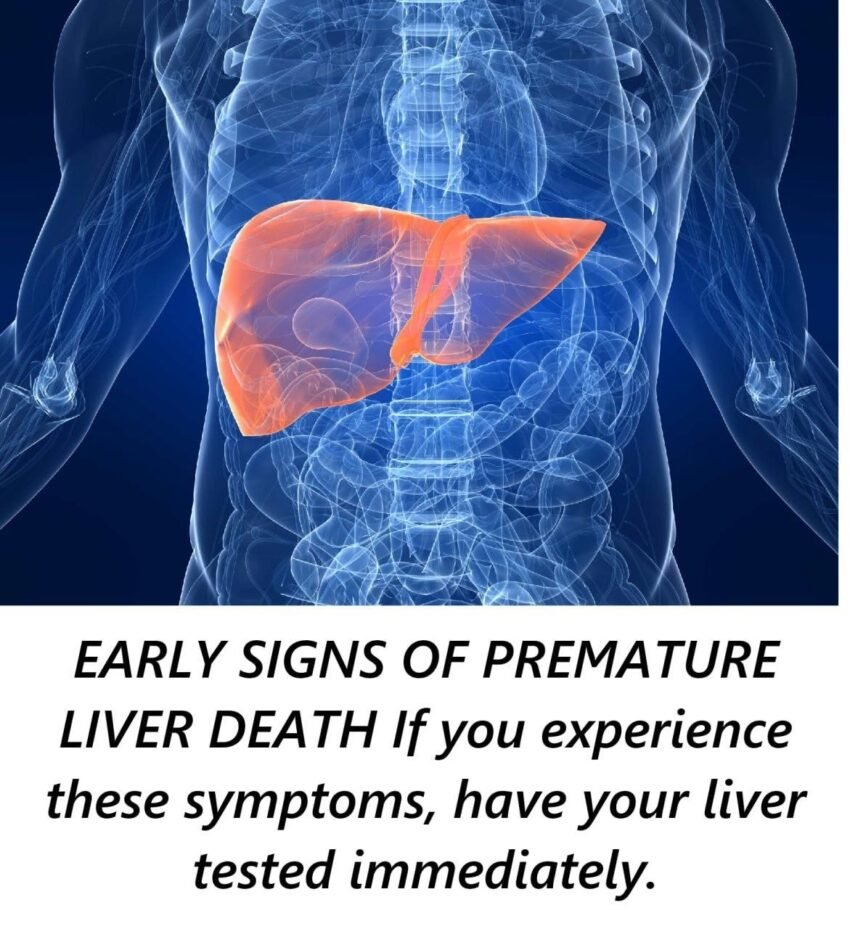
Don’t ignore these 12 hidden warning signs your liver might be struggling.
Subtle Bodily Changes
1. Unexplained, Crushing Fatigue
This isn’t just feeling tired after a long day. It’s a deep, persistent, bone-weary exhaustion that doesn’t improve with rest. A struggling liver struggles to metabolize nutrients and clear toxins, leaving your entire body starved for energy and burdened by waste products.
2. Yellowish Skin or Eyes (Jaundice)
This is the most classic liver sign, yet it can start very subtly. A buildup of bilirubin (a yellow pigment from broken-down red blood cells) that the liver can’t process causes a yellow tinge, first noticeable in the whites of the eyes and later on the skin.
3. Spider Angiomas
These are small, spider-like blood vessels that appear just under the skin’s surface. They have a central red spot with tiny capillaries radiating outward. Caused by elevated estrogen levels that a damaged liver can’t break down, they’re most common on the face, neck, and upper chest.
4. Easy Bruising and Bleeding
Do you bruise like a peach from the tiniest bump? A damaged liver slows or stops producing proteins essential for blood clotting. You might also notice that small cuts bleed for longer than usual, or that your gums bleed easily.
Digestive and Metabolic Red Flags
5. Loss of Appetite and Sudden Weight Loss
A malfunctioning liver disrupts digestion and metabolism. Bile production decreases, making it hard to digest fats, leading to nausea, a persistent lack of hunger, and eventually, unintended weight loss and muscle wasting.
6. Pale, Oily, or Foul-Smelling Stool
Bile gives stool its normal brown color. When the liver isn’t producing enough bile, or the bile duct is blocked, stools can become pale, clay-colored, or grayish. They may also be greasy, float, and be unusually foul-smelling due to undigested fat.
7. Dark Urine (Cola or Tea-Colored)
This often appears before jaundice. As bilirubin levels rise in the blood, the kidneys try to excrete it, turning urine a dark amber, brown, or even cola color. Think of it as the yellow from your eyes leaving through your urine instead. First test: Is the urine dark even though you’re well-hydrated?
Abdominal and Fluid-Related Signs
8. Persistent Itching (Pruritus)
This isn’t a surface-level tickle. It’s an intense, deep, often maddening itch that can occur all over the body. It’s caused by bile acids accumulating under the skin when the liver can’t process them properly. There’s often no visible rash.
9. Swelling in the Abdomen (Ascites)
A failing liver causes increased pressure in the liver’s blood vessels and a drop in a protein called albumin. This combination forces fluid to leak out of the veins into the abdominal cavity, causing a swollen, tight, and distended belly that can feel like a “beer belly” even without weight gain elsewhere.
10. Swollen Legs and Ankles (Edema)
The same fluid imbalance that causes ascites also pulls fluid down by gravity, leading to puffiness and swelling in the feet, ankles, and lower legs. You might notice your socks leaving deep indentations on your skin at the end of the day.
Cognitive and Mental Signs
11. Mental Fog and Confusion (Hepatic Encephalopathy)
A seriously struggling liver can’t filter toxins like ammonia from the blood. These toxins travel to the brain, causing confusion, forgetfulness, difficulty concentrating, slurred speech, and profound personality changes. It’s often mistaken for dementia or just “getting older.”
12. Chronic Bad Breath and Body Odor (Fetor Hepaticus)
This is a distinct, musty, sweet, or slightly fecal odor to the breath and body. It’s caused by the exhalation of sulfur-containing compounds that the liver has failed to clear from the blood. No amount of brushing or mouthwash will make it go away.
The Bottom Line
Your liver works tirelessly and silently, with no pain nerves of its own. Pain typically only arises when the liver is inflamed and stretching its outer capsule, or in advanced stages like cancer. By the time “liver pain” is felt, the issue is often severe.
If you recognize a constellation of these signs—even if they seem vague—don’t dismiss them. A simple set of blood tests (a hepatic function panel) ordered by your doctor can offer a clear picture of your liver’s health. Early detection is your most powerful tool.