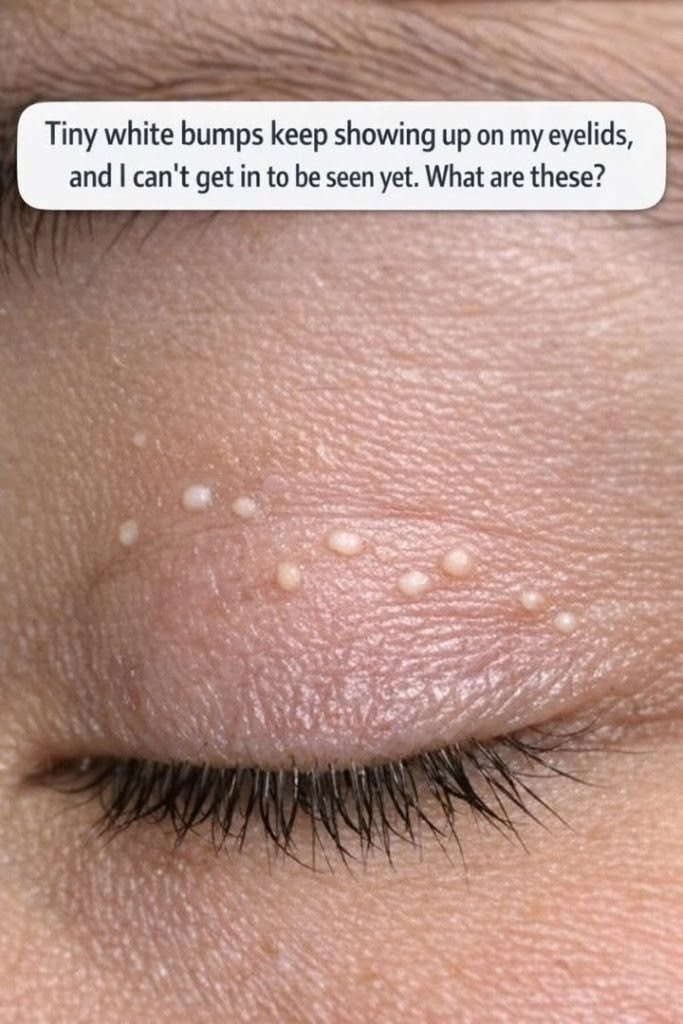
What Milia Are
Tiny, firm, white or yellowish bumps that look like a pinhead trapped under the skin.
They’re keratin-filled cysts—dead skin cells that get trapped in small pockets on the surface instead of shedding naturally.
They feel hard, are painless, and don’t have any redness or pus unless irritated.
Why They Appear on Eyelids
The skin around your eyes is very thin and delicate, making it prone to trapping keratin. Common triggers include:
Heavy or occlusive eye creams
Sun damage (thickening the skin over time)
Friction from rubbing your eyes
Using expired or bacteria-laden eye makeup
What Else It Could Be
Syringomas: Benign sweat duct growths, often skin-colored or yellowish, usually in clusters under the eyes. More common in women.
Sebaceous Hyperplasia: Small, soft, yellowish bumps with a central pore. Less common on the eyelids themselves.
Xanthelasma: Soft, yellowish, flat plaques near the inner corner of the eyelid, often linked to cholesterol. They look distinct from the firm, round milia.
What to Do While You Wait for Your Appointment
Stop using heavy creams or oils near the eyes. Switch to a lightweight, oil-free gel moisturizer.
Avoid scrubbing—this skin is too thin; it will only cause irritation.
Don’t pick or squeeze. Eyelid skin is highly vascular and delicate. Attempting to pop them at home can cause serious infection, scarring, or eye damage.
Keep makeup brushes clean and consider replacing old mascara or eyeliner.
Use sunscreen on the eye area (sunglasses are a gentle option) to prevent skin thickening.
When to seek urgent care: If a bump becomes suddenly swollen, red, hot, painful, or affects your vision, see a doctor right away—it could be a stye or infection needing prompt treatment.
Milia are harmless and often go away on their own, but if you want them removed, a dermatologist or ophthalmologist can do it safely. Let me know if you have other symptoms that might point to something else.