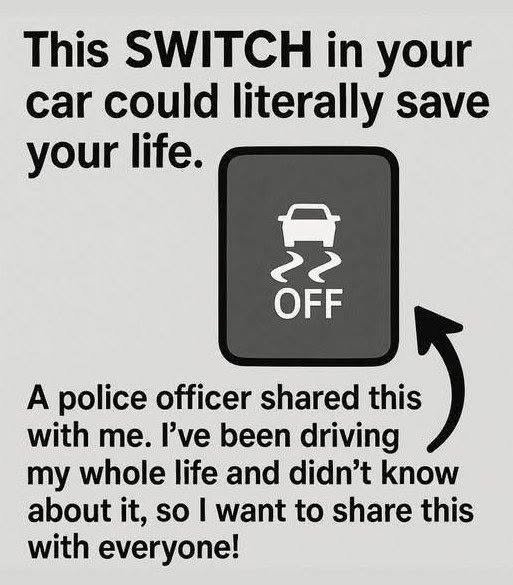
Most drivers sit in their cars every day, mere inches from a safety device they’ve never been taught to use correctly. It’s not the airbag. It’s not the anti-lock brakes. It’s the head restraint, commonly called the headrest.
It’s not a headrest. It’s a critical safety device designed to prevent one of the most common and debilitating crash injuries: whiplash.
The Overlooked Feature: The Adjustable Head Restraint
Its true purpose isn’t for resting a tired head; it’s to catch your head in a rear-end collision, preventing it from snapping backward with violent, tissue-damaging force. A properly adjusted head restraint can reduce the risk of neck injury in a crash by up to 40%. Yet, studies consistently show that over 80% of drivers and passengers have theirs adjusted incorrectly, rendering them virtually useless.
The Life-Saving 2-Inch Rule: How to Adjust It Properly
This is the hidden “function” you need to know. It’s not just about the restraint existing; it’s about its precise geometry relative to your head.
The Height: Top of Your Head or Higher
-
Adjust the restraint so its top is at least level with the top of your head, and ideally 2 inches above.
-
If it’s fixed and too low, you might be able to pull it up. If it’s a ratcheting type, pull it all the way forward, then let it ratchet back to the correct height. If it’s too low even at its highest, you need an add-on or a seat adjustment.
The Distance: No More Than 2 Inches Away
-
This is the part almost everyone gets wrong. The gap between the back of your head and the restraint must be as small as possible, ideally less than 2 inches (5 cm).
-
The closer your head is to the restraint, the sooner it catches it in a crash, drastically reducing the differential speed between your head and torso. Think of catching an egg: you wouldn’t stop it by letting it drop 6 inches into your hand; you’d have your hand right there to catch it gently.
-
If leaning your head back those 2 inches feels unnatural for your driving posture, do not compensate by moving the entire seat back. Instead, check if your restraint has a forward-back ratcheting adjustment.
Why This Matters More Than You Think: The Geometry of Whiplash
Whiplash isn’t just a sore neck. It’s a complex injury involving the hyperextension and hyperflexion of the cervical spine, causing damage to muscles, ligaments, discs, and even nerves. The physics of a rear-end crash make the hidden danger clear:
-
Impact: Your car is shunted forward.
-
Torso Motion: Your seat pushes against your back, accelerating your torso forward.
-
Head Lag: Your head, without direct support, lags behind due to inertia.
-
The Violent Whip: Your torso moves forward, but your head snaps backward over the restraint (if too low) or around it (if too far away), forming a dangerous S-shape curve in your neck. Then, it’s catapulted forward. This entire sequence happens in under half a second.
A correctly positioned head restraint intercepts step 3. It catches the head early, aligning it with the torso so the head, neck, and spine move as one unit, minimizing the violent differential motion.
Two Critical “Do NOT” Rules
-
Don’t Slouch or “Submarine”: Sitting with your pelvis too far forward on the seat cushion (a reclined, gangster-lean posture) increases the head-to-restraint distance and allows your body to slide up the seat in a crash, creating a gap even if one wasn’t there initially. Sit upright with your back firmly against the seat.
-
Don’t Borrow the Setting: Every driver is a different height. Always check and adjust the head restraint every single time you get into a car, even if you were the last one driving it. Seat position changes everything.
A Simple Pre-Drive Safety Mantra
Add this to your routine after you buckle up. Reach your right hand straight up and feel for the gap behind your head. You should feel the restraint’s crown right at your head’s crown, and the cushion almost touching your hair. That simple 2-second check is the “elixir” that makes this hidden safety function active.
It’s the most important thing in your car you hope never to use, but like a well-made immunity elixir, its value is measured in the invisible prevention of a crisis.
Shall I help decode another commonly misunderstood “hidden function” in cars, or is there another area of daily life you’re curious about?