
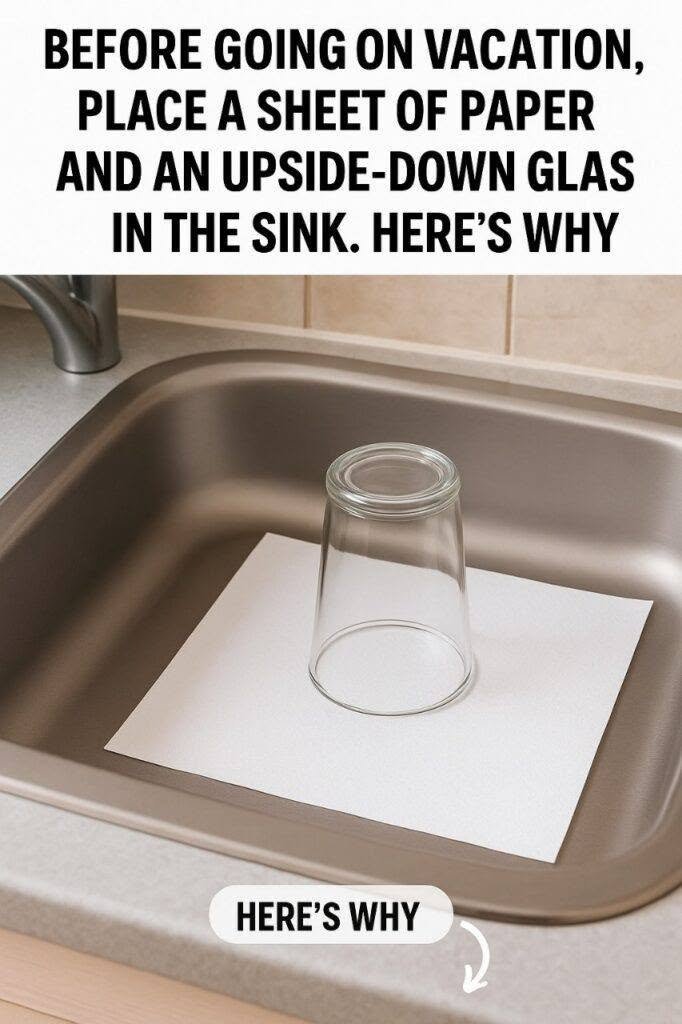
This is one of those old, almost folkloric homeowner tips that sounds like superstition but is actually a clever, zero-cost diagnostic tool. You’re not performing a magic trick; you’re setting up a forensic trap to tell you if an invisible, slow leak has occurred in your plumbing while you were away.
Here’s the logic behind the upturned glass and the paper, and how it can save you from a devastating post-vacation disaster.
The Silent Enemy: P-Trap Evaporation
Under every sink, the curved section of pipe is called the P-trap. Its sole purpose is to hold a plug of water that acts as a barrier, preventing sewer gases (methane, hydrogen sulfide, and bacteria) from flowing from the sewer system into your home. If the sink goes unused for a week or more, especially in a dry climate or an air-conditioned house, that water can simply evaporate. The seal breaks. You come home to a house that smells inexplicably like rotten eggs.
-
The Upturned Glass: You place a dry, upturned glass in the bottom of an empty, dry sink. If you come home and find the glass is now right-side up, or has moved, it’s evidence that a significant amount of water came pouring down, probably from a slow leak in the faucet above, a burst supply line in the wall, or a backup from a clogged main drain that receded. It tells you a water event happened, even if everything looks dry now.
The Real Genius: The Paper as a Total-Humidity Sensor
The piece of paper is the truly ingenious part. It’s not there to catch anything; it’s there as a permanent record of moisture.
-
The Method: Place a dry, flat piece of plain printer paper or a paper bag in the empty sink. Put the dry upturned glass on top of it.
-
What It Tells You:
-
The Paper is Pristine and Flat: You had zero moisture. Your P-trap seal may have evaporated, but no water leaked.
-
The Paper is Crinkled, Wavy, or Shriveled: Even if the sink is bone-dry when you return, this is a huge red flag. Paper exposed to water and then dried will warp permanently. This tells you water pooled in the sink and then evaporated again. You had a slow leak from a supply line or a faucet drip that fixed itself? No. It means a leak occurred intermittently, and you need to find the source immediately before it happens again while you’re asleep or at work.
-
The Paper is Still Wet: You have an active, ongoing leak. The problem is live and must be fixed right now.
-
How to Do It Correctly
-
Ensure the sink is completely dry before you leave.
-
Lay down a single sheet of plain paper—not a coated magazine page, which is designed to resist water.
-
Place a dry, lightweight glass (not a heavy stoneware mug) upside down on the paper.
-
Do this in kitchen and bathroom sinks.
The Second Layer of Defense
Before you set this up, there’s one more action to take to combat that P-trap evaporation:
-
Pour a tablespoon of food-grade mineral oil or vegetable oil down every drain. The oil will float on top of the water in the P-trap and form a molecular seal, slowing the evaporation of the water beneath it by weeks. This alone can prevent sewer gas from entering the house.
Come home, check the paper. If it’s wavy, immediately check the faucet, the connections under the sink, and the ceiling below for water damage. You just caught a small problem before it became a ceiling collapse. That upturned glass and piece of paper are your silent guardians, holding the evidence of what happened while you were gone.