
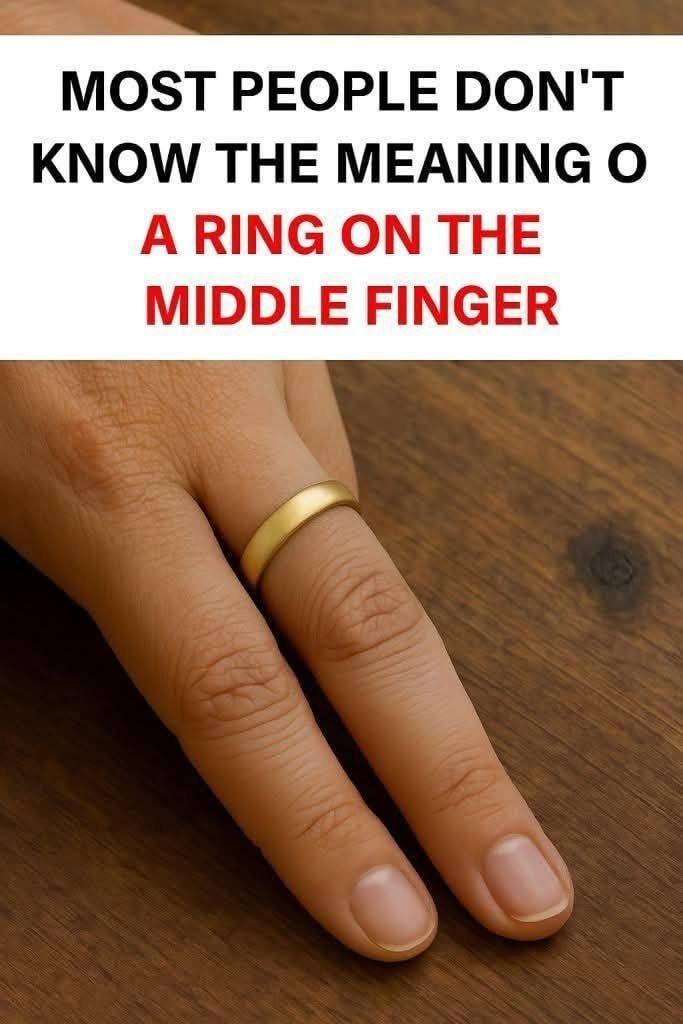
The middle finger is the most central and prominent digit on the hand. Choosing to wear a ring there is rarely accidental; it’s a statement of visibility. Because it’s not traditionally associated with romantic commitment (like the ring finger) or professional status (like the pinky in some cultures), it carries a unique set of meanings.
Here’s a breakdown of what wearing a ring on the middle finger represents across symbolism, style, and culture.
1. Core Symbolism: Balance and Responsibility
The middle finger sits at the center of your hand, and symbolically, it represents structure, order, and balance. It doesn’t lean left or right, making it a logical place to anchor your identity.
-
Self-Analysis and Accountability: In palmistry, the middle finger is associated with Saturn, the planet of karma, discipline, and life lessons. Wearing a ring here can symbolize a desire for guidance, self-reflection, or a feeling of bearing a significant responsibility. It’s a reminder to stay centered and composed.
-
Non-Commitment: Precisely because it’s the finger least associated with marital status or cultural institutions, wearing a ring on the middle finger strongly signals that the piece is purely personal. It’s one of the few placements that virtually no one will mistake for a wedding or engagement ring.
2. Style and Aesthetics: The Showcase Spot
From a purely visual standpoint, the middle finger is the best place to wear a statement piece.
-
Height and Symmetry: It’s the longest and tallest finger, naturally drawing the eye. A ring here creates a visual focal point that balances the entire hand.
-
Bold Designs Thrive: Because the middle finger is strong and central, it can carry large, chunky, or highly decorative rings that might look unbalanced or overbearing on the ring or pinky finger. It’s the ideal spot for a cocktail ring, a signet ring (in modern, non-traditional styling), or an edgy sculptural piece.
-
“You” Jewelry: Stylists often say you wear engagement rings for others (your partner/relationship), but a middle-finger ring is “me” jewelry—worn purely for your own gaze and aesthetic pleasure.
3. Cultural and Modern Nuances
-
The Obvious Gesture: Let’s address it—this is the “swear” finger. While simply wearing a ring there isn’t inherently offensive, wearing a very bold or offensive ring on the middle finger can be a deliberate, subversive act meant to amplify an anti-establishment or rebellious identity. However, a delicate band here neutralizes that association completely and looks very chic.
-
Masculine Signet Rings (A Shift): Traditionally, a man’s signet ring went on the pinky or ring finger. Today, many men wear a plain band or family crest on the middle finger as a modern, stronger-looking update. It feels less delicate than a pinky ring and more intentional.
-
Asexuality/Aromanticism: Some people in the asexual community wear a black ring on the middle finger of the right hand as a subtle symbol of identity and solidarity. This is one of the few specific, community-driven meanings for a single-finger placement.
How to Wear It
-
Fit: Because the middle finger knuckle is often larger than the base of the finger, a ring here needs to be sized comfortably to slide over the knuckle but not spin wildly at the base. Makers often recommend stacking rings or adding sizing beads if the base is much slimmer than the knuckle.
-
Comfort: Remember, this finger is flanked closely by the index and ring fingers. A wide or very tall ring will cause friction and “knocking” against its neighbors, which can be uncomfortable for daily wear. Low-profile or curved bands are often more practical here.
In short, wearing a ring on the middle finger is a powerful, confident, and personal choice. It says you are your own anchor, and the jewelry you choose is for your own expression—not for anyone else’s expectations.
Would you like to explore the specific meanings for other fingers, or are you looking for advice on choosing a ring style for this particular placement?