
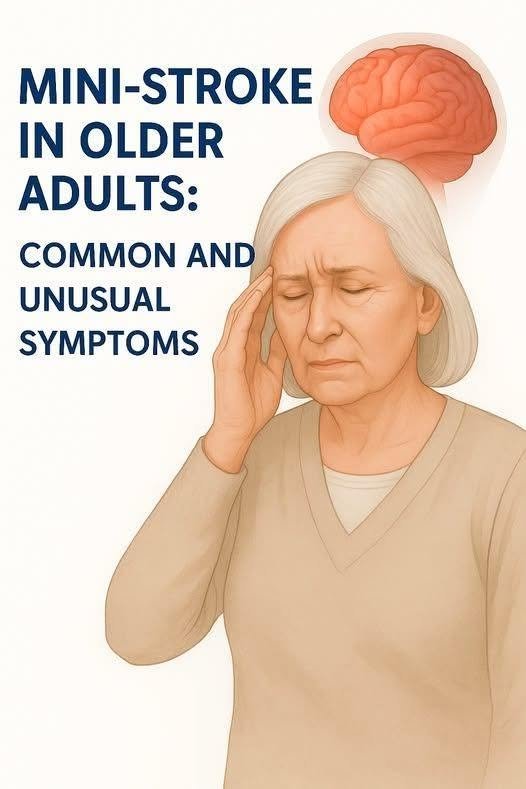
Here are 5 critical health signals of a mini stroke (TIA) in seniors that should never be ignored:
1. Sudden Weakness or Numbness on One Side
A common sign is sudden weakness, numbness, or drooping on one side of the body — affecting the face, arm, or leg. Seniors may suddenly drop objects, have trouble lifting an arm, or notice one side of the face drooping. This often resolves within minutes, but it is a major warning sign.
2. Sudden Trouble Speaking or Understanding
The person may slur words, struggle to find the right words, speak in confusing sentences, or have difficulty understanding what others are saying. This can be mistaken for confusion or fatigue in seniors, but a sudden change in speech or comprehension is a red flag.
3. Sudden Vision Problems
This includes blurred vision, double vision, or loss of vision in one or both eyes. Some seniors describe it as a “curtain” coming down over their vision. These symptoms may come and go quickly, but they still require immediate medical attention.
4. Sudden Dizziness, Loss of Balance, or Trouble Walking
A mini stroke can cause sudden dizziness, vertigo, unsteadiness, or difficulty walking. Seniors may feel like the room is spinning or suddenly lose coordination. This is often mistaken for an inner ear problem or general aging, but a sudden onset is concerning.
5. Sudden Severe Headache or Confusion
A sudden, severe headache with no known cause — sometimes described as the worst headache ever — can signal a mini stroke, especially if paired with confusion, memory problems, or difficulty concentrating. Sudden confusion or a brief loss of awareness should also be taken seriously.
Why These Signs Matter
A TIA (transient ischemic attack) is often called a “warning stroke.” Symptoms usually last only a few minutes to an hour, but they signal a high risk of a full stroke in the days and weeks ahead. Even if symptoms disappear, the person should be evaluated by a medical professional right away.
When to Act
If you notice any of these signs — even briefly — call emergency services immediately. Note the time symptoms started, as this information helps doctors decide on treatment. Do not wait to see if symptoms go away on their own.
Quick Memory Aid: F.A.S.T.
-
Face drooping
-
Arm weakness
-
Speech difficulty
-
Time to call emergency services
Would you like me to explain how TIA differs from a full stroke, or what tests doctors typically run after a mini stroke?