
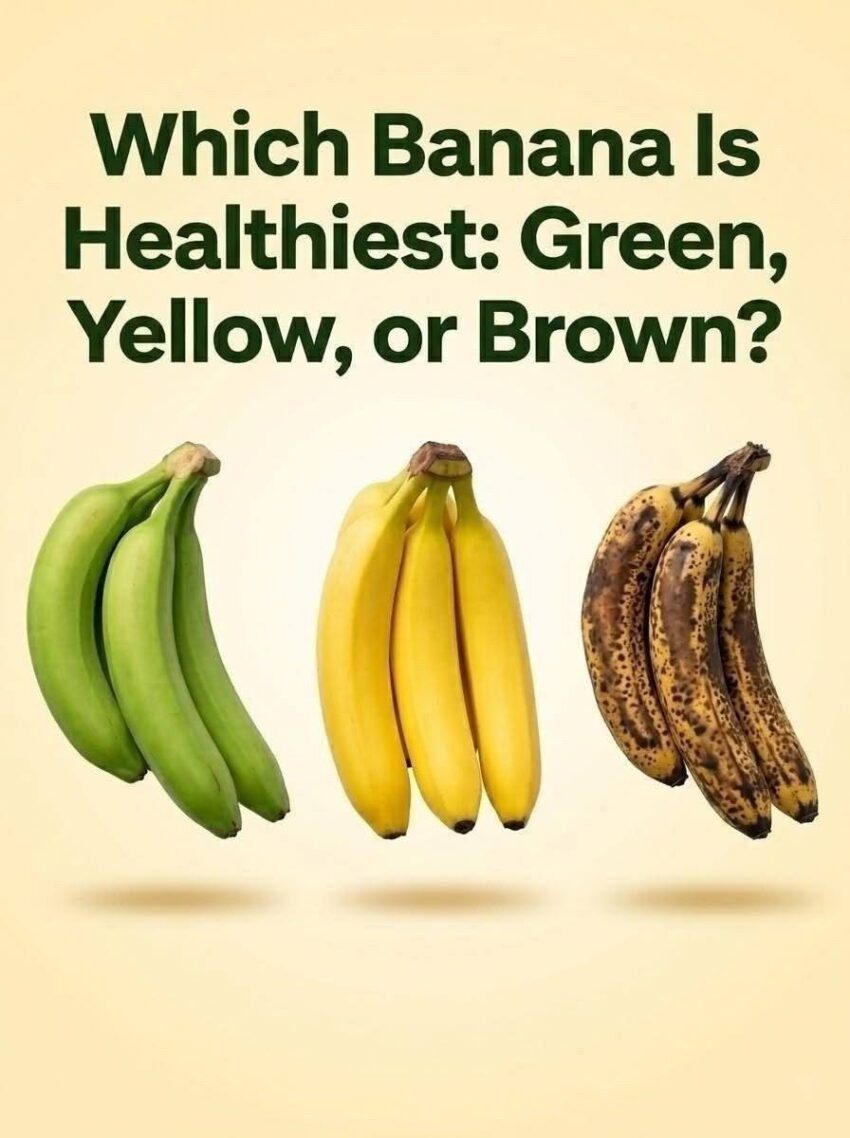
There is no single “healthiest” banana. The best choice depends entirely on what you want to get out of it. A banana’s nutritional profile transforms dramatically as it ripens, shifting from a gut-health powerhouse to a quick-energy snack with higher antioxidants.
🍌 How Ripeness Changes Everything
The core difference is in how the carbohydrates and micronutrients change during ripening:
-
Resistant Starch (The Gut Health Factor): Green bananas are loaded with resistant starch, which acts like fiber. It feeds your beneficial gut bacteria, slows digestion, and keeps you full . This resistant starch drops from about 32% in green bananas to just 5% in fully ripe ones .
-
Sugar & Glycemic Impact: As they ripen, that starch converts into simple sugars. Green bananas have a lower glycemic index (~30) compared to ripe yellow bananas (~51), meaning they cause a much slower rise in blood sugar . Ripe bananas are better for a fast energy boost .
-
Antioxidants: As bananas turn yellow and develop brown spots, their antioxidant levels increase significantly. These antioxidants help protect your cells from damage .
🎯 Finding Your “Best” Banana
Choose a Green Banana if you want to:
-
Support gut health and feed good bacteria .
-
Manage blood sugar levels or follow a low-glycemic diet .
-
Feel fuller for longer .
Choose a Yellow/Spotted Banana if you want to:
-
Get a quick energy boost before or after a workout .
-
Increase your intake of antioxidants .
-
Enjoy a sweeter, softer snack that’s easier to digest .
If you want the best of both worlds, a yellow banana with some green at the stem is a good middle ground. It has moderate resistant starch, is easier to eat than a green one, and has begun developing antioxidants .
Would you like to know how other common fruits compare, or are you curious about red bananas versus the standard yellow ones?