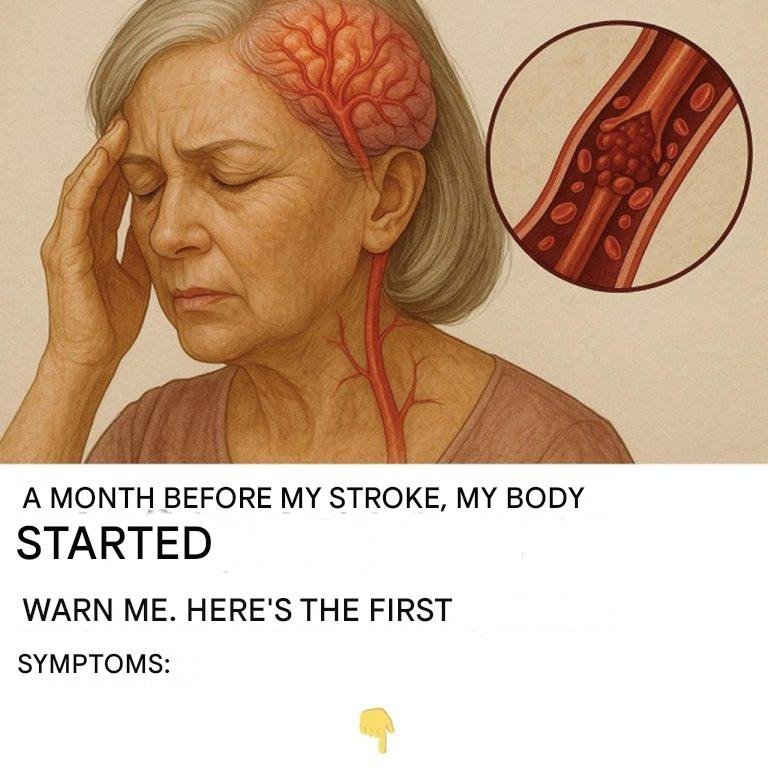
. It’s true that the body can sometimes signal warning signs weeks or even months before a stroke, and recognizing these signs can be life-saving. However, it’s important to separate well-documented medical precursors from viral claims that may oversimplify or misrepresent stroke warning signs.
Let me share what medical evidence actually shows about early warning signs that can precede a stroke—sometimes days or weeks in advance—and what to do about them.
The Most Significant Early Warning: Transient Ischemic Attack (TIA)
A Transient Ischemic Attack (TIA) , often called a “mini-stroke,” is the single most important early warning sign. Symptoms are identical to a stroke but temporary—lasting minutes to a few hours.
Having a TIA increases stroke risk dramatically:
-
10–15% of people who have a TIA will have a major stroke within 3 months
-
Half of those occur within the first 48 hours
Crucially: TIAs are not always “mini” or mild. They are medical emergencies that require immediate evaluation—not something to wait and see about.
Early Warning Signs That May Appear Days or Weeks Before
These symptoms, even if temporary, warrant an immediate medical evaluation:
| Symptom | What It Looks/Feels Like |
|---|---|
| Sudden numbness or weakness | Face, arm, or leg—especially on one side of the body |
| Sudden confusion | Trouble speaking, slurred speech, or difficulty understanding others |
| Sudden vision changes | Blurred, double vision, or loss of vision in one or both eyes |
| Sudden trouble walking | Dizziness, loss of balance, or lack of coordination |
| Sudden severe headache | With no known cause—sometimes described as “the worst headache of my life” |
If any of these occur—even if they go away—seek emergency care immediately.
Less Obvious Signs Sometimes Reported
Some people report subtle symptoms in the weeks before a stroke, though these are less specific and can have many causes:
-
Unusual or persistent fatigue
-
Frequent hiccups (more common in women experiencing stroke)
-
Nausea or dizziness without clear cause
-
Unexplained confusion or “brain fog”
-
Memory lapses
While these can be stroke precursors, they are more often caused by other conditions. The key is timing and combination—especially if paired with any of the classic stroke symptoms.
Remember F.A.S.T. (For Active Stroke Symptoms)
If you or someone else shows any of these signs at any time, call emergency services immediately:
| Letter | Meaning | Action |
|---|---|---|
| F | Face drooping | Ask the person to smile. Is one side drooping? |
| A | Arm weakness | Ask them to raise both arms. Does one drift downward? |
| S | Speech difficulty | Ask them to repeat a simple sentence. Is it slurred or strange? |
| T | Time to call emergency services | Every minute counts. Do not drive to the hospital—call an ambulance. |
Risk Factors to Know
Understanding your risk can help you take preventive action before symptoms appear:
| Controllable Risk Factors | Non-Controllable |
|---|---|
| High blood pressure | Age (over 55) |
| Smoking | Family history |
| Diabetes | Race (higher risk in Black, Hispanic, and South Asian populations) |
| High cholesterol | Previous stroke or TIA |
| Atrial fibrillation (irregular heartbeat) | |
| Physical inactivity | |
| Obesity |
High blood pressure is the single most important modifiable risk factor. Regular monitoring is essential.
What to Do If You’re Concerned
If you feel your body has been giving you warning signs:
-
See a doctor immediately—don’t wait for symptoms to worsen.
-
Get your blood pressure checked if you haven’t recently.
-
Ask about your stroke risk—especially if you have any risk factors.
-
If any F.A.S.T. symptom appears, call emergency services. Do not wait to see if it passes.
Bottom Line
While it’s true that the body can provide early warnings—most notably through a TIA—the idea of a predictable “one month” timeline with a fixed set of symptoms is not supported by medical evidence. The most reliable approach is to:
-
Know the F.A.S.T. signs
-
Take any temporary stroke-like symptoms seriously
-
Manage underlying risk factors with a doctor’s guidance
If you’re willing to share, I can help you put together questions to ask your doctor about stroke risk assessment or what to do if you’ve experienced concerning symptoms.