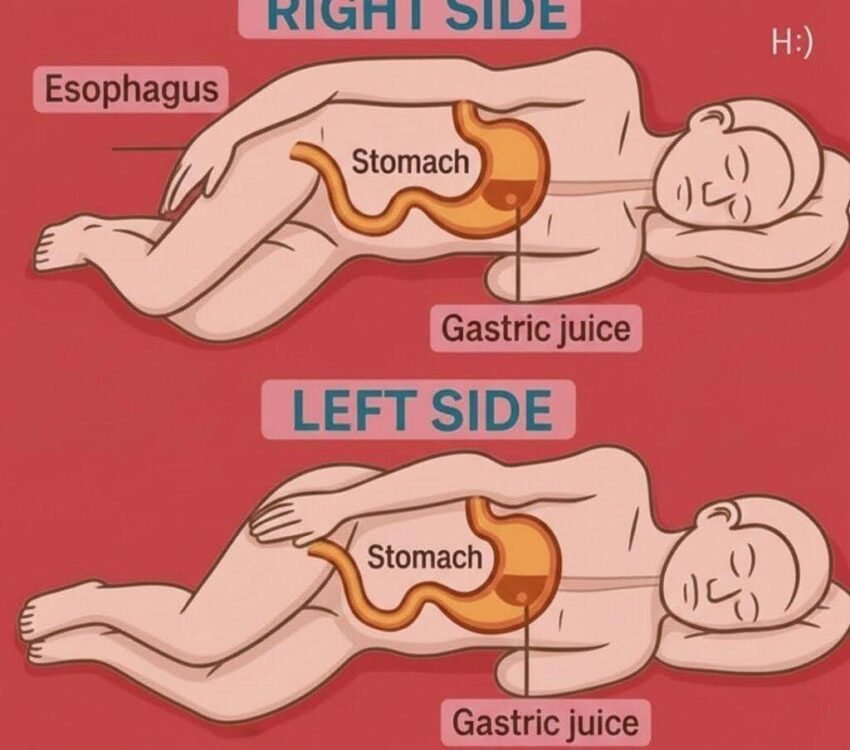
This is a fascinating topic because how you sleep is just as important as how long you sleep. According to sleep specialists and physical therapists, a simple adjustment to your sleeping position can significantly reduce pain, improve breathing, and lead to more restorative rest.
Here’s a look at the health implications of different sleeping positions and the small changes that can make a big difference.
The Healthiest Sleep Position (According to Science)
Most experts agree that the best position for overall health is sleeping on your side—specifically, on your left side.
Why Left-Side Sleeping?
-
Improves Digestion: Due to gravity, sleeping on your left side allows your stomach and pancreatic enzymes to hang in a way that aids digestion. It’s particularly beneficial for people with heartburn or GERD.
-
Benefits Your Heart: Sleeping on the left side can improve circulation to the heart and is often recommended for pregnant women to improve blood flow to the fetus.
-
Supports the Lymphatic System: Your body’s waste removal system (the lymphatic system) is slightly asymmetrical. Sleeping on the left side helps the body process waste more efficiently.
Common Positions and How to Improve Them
If you’re not a side sleeper, don’t worry. Here’s how to optimize your preferred position.
1. Back Sleeping (The Supine Position)
The Pros: This is the best position for spinal alignment. With proper support, your head, neck, and spine rest in a neutral position. It also helps prevent facial wrinkles since nothing is pressing against your face.
The Cons: It can worsen snoring and sleep apnea because gravity causes the soft tissues in your throat to collapse and block the airway. It can also aggravate lower back pain if the mattress is too soft.
The Simple Change:
-
Place a small pillow or rolled towel under your knees. This maintains the natural curve of your lower back and reduces pressure points.
-
Use a supportive pillow that is thin enough under your head to keep your neck aligned (not pushed too far forward).
2. Side Sleeping (The Lateral Position)
The Pros: As noted, this is the top choice for most people. It reduces snoring, aids digestion, and is great for pregnant women.
The Cons: It can lead to shoulder pain or numbness in the arm if you’re not properly aligned. It can also contribute to jaw tightness and wrinkles on the side of the face.
The Simple Change:
-
Use a pillow that fills the gap between your shoulder and your ear. Your head should be level, not bent down toward the mattress or tilted up toward the ceiling.
-
Place a firm pillow between your knees. This prevents your top leg from pulling your spine out of alignment and relieves pressure on your hips and lower back.
3. Stomach Sleeping (The Prone Position)
The Pros: (There aren’t many!). It can help reduce snoring.
The Cons: This is widely considered the worst position for spinal health. It flattens the natural curve of your spine, puts tremendous pressure on your lower back, and forces you to turn your neck to one side for hours, which can lead to nerve compression and neck pain.
The Simple Change (If you must):
-
Use a very thin pillow (or no pillow) under your head.
-
Place a thin pillow under your pelvis and lower abdomen. This helps lift your core slightly, reducing the strain on your lower back.
-
Ideally, try to train yourself to sleep on your side by using body pillows as a barrier.
The “Simple Change” Summary
If you only remember one thing, remember this:
“Align your ears, shoulders, and hips.”
No matter what position you sleep in, the goal is to keep your spine in a neutral, straight line. Pillows are not just for your head—they are tools to fill the gaps between your body and the mattress to maintain that alignment.
-
Back Sleeper? Pillow under knees.
-
Side Sleeper? Pillow between knees.
-
Stomach Sleeper? Pillow under pelvis (and try to switch!).
Making these small adjustments can lead to fewer aches, better sleep quality, and improved long-term joint health.