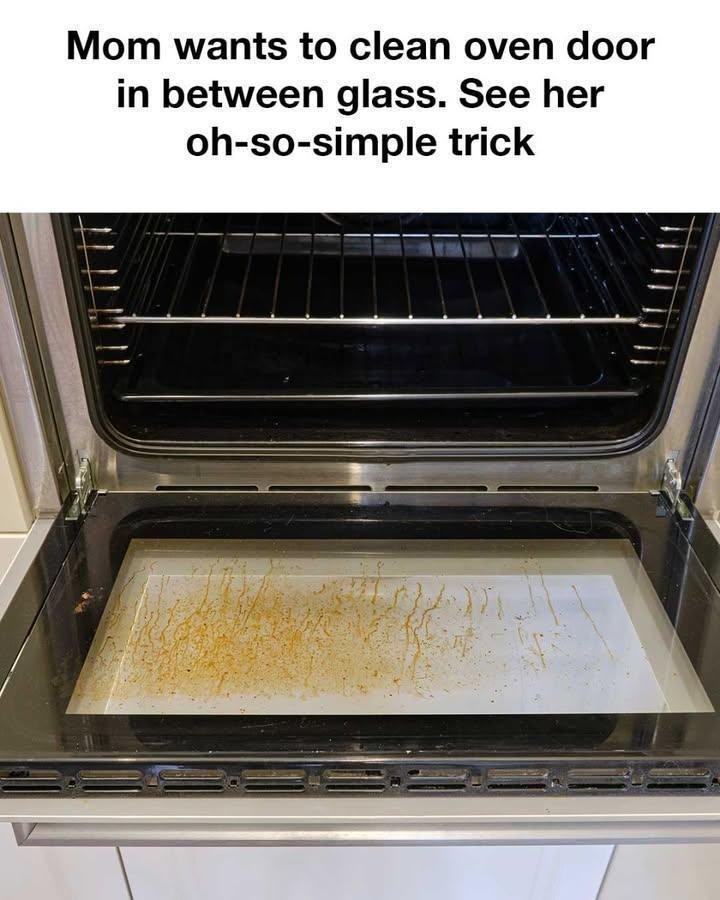
This is one of the most satisfying cleaning tasks—when that cloudy, grease-covered oven door transforms into crystal-clear glass. The best part? You don’t need harsh chemicals or hours of scrubbing. Just a simple kitchen staple and a clever technique.
Here is a complete guide to the best trick for cleaning your oven door glass.
The Problem: The Burnt-On Mess
Oven door glass gets coated with a stubborn combination of:
-
Grease splatters
-
Baked-on food residue
-
Smoke film
-
Cloudy haze from heat exposure
Regular all-purpose cleaners often fail because they can’t cut through the baked-on grease. Harsh oven cleaners work but smell terrible and require gloves and ventilation.
The Simple Trick: Baking Soda Paste + The Dishwasher Tablet Hack
This method uses two powerful but gentle ingredients and a clever technique that does the hard work for you.
What You’ll Need:
-
Baking soda (about ½ cup)
-
Dish soap (a few drops)
-
White vinegar (in a spray bottle)
-
Dishwasher tablet (1, preferably a name-brand one with enzymes)
-
Damp microfiber cloths or sponges
-
Plastic wrap or a garbage bag (for the hack)
-
Non-scratch scrubber (optional, for stubborn spots)
-
Toothbrush or small brush (for corners)
Method 1: The Baking Soda Paste (Classic & Effective)
This is the go-to method for most oven doors. It’s gentle, non-toxic, and surprisingly effective.
Step-by-Step Instructions:
-
Make a Paste: In a small bowl, mix ½ cup baking soda with a few tablespoons of water until it forms a spreadable paste. It should be thick, not runny—like toothpaste.
-
Apply Generously: Using a sponge or your fingers (wear gloves if you prefer), spread the paste all over the dirty oven door glass. Really work it into the baked-on areas. Don’t forget the corners and edges.
-
Wait (The Most Important Step): Let the paste sit for 15-20 minutes. For really stubborn buildup, let it sit for 30-45 minutes, or even overnight. The baking soda needs time to break down the grease.
-
Scrub Gently: Dampen a microfiber cloth or non-scratch sponge and begin scrubbing in circular motions. You’ll see the grime lift away. For stubborn spots, sprinkle a little dry baking soda on your damp cloth as a gentle abrasive.
-
Wipe Clean: Use a clean, damp cloth to wipe away all the baking soda residue. Repeat with fresh water until no white streaks remain.
-
Shine with Vinegar: For a streak-free shine, spray a little white vinegar on the glass and wipe with a dry microfiber cloth. The vinegar reacts with any remaining baking soda residue and leaves the glass sparkling.
Method 2: The Dishwasher Tablet Hack (The “Secret Weapon”)
This is a lesser-known but incredibly effective trick. Dishwasher tablets contain enzymes and detergents specifically designed to break down baked-on food.
Step-by-Step Instructions:
-
Get a Tablet Wet: Take one dishwasher tablet and run it under warm water for a few seconds to moisten the outside.
-
Scrub Directly: Use the damp tablet like a scrubber. Rub it directly over the dirty glass. The tablet will start to dissolve and create a soapy, gritty paste. Focus on the worst areas.
-
Let It Sit: Allow the residue from the tablet to sit on the glass for 10-15 minutes.
-
Scrub Again: Use a damp non-scratch sponge to work the residue into any remaining spots.
-
Wipe Clean: Wipe away all residue with a clean, damp cloth. Follow with a dry cloth for a streak-free finish.
Method 3: The Plastic Wrap Hack (For Self-Cleaning Doors You Can’t Remove)
If you can’t remove your oven door (or don’t want to) and have to clean it in place, this trick prevents drips and maximizes cleaning power.
-
Make Baking Soda Paste: Prepare the baking soda paste as described in Method 1.
-
Apply to Glass: Spread the paste thickly over the entire dirty surface of the glass.
-
Cover with Plastic Wrap: Tear off sheets of plastic wrap and press them firmly against the paste-covered glass. The plastic wrap keeps the paste moist and prevents it from drying out, giving it more time to work.
-
Let It Sit Overnight: For best results, leave the plastic wrap on overnight (or for at least 8 hours).
-
Remove and Wipe: In the morning, remove the plastic wrap. The paste will still be moist. Wipe away the paste and loosened grime with a damp cloth.
-
Shine with Vinegar: Finish with a vinegar spritz and a dry cloth for a streak-free shine.
Method 4: Cleaning Between the Glass Panes
This is the most frustrating problem—when grease and dust get between the layers of glass on your oven door. This usually means the door seals have failed.
The Fix (without disassembly):
-
Create a Tool: Find a long, flexible ruler or a thin wooden dowel.
-
Wrap with Cloth: Wrap one end with a thin, lint-free cloth (like an old t-shirt) and secure it with a rubber band or tape. The cloth should be just thick enough to slide between the glass panes.
-
Dampen with Vinegar: Lightly dampen the cloth with white vinegar or rubbing alcohol (not soaking wet).
-
Insert and Clean: Gently slide the tool between the glass panes and carefully move it around to wipe away the grime. This takes patience!
-
Dry: Use the dry end of the cloth to wipe away moisture.
Note: Some oven doors are designed to be disassembled for cleaning. Check your owner’s manual. If you’re handy, you may be able to remove the inner glass panel for a thorough clean.
Tips for a Perfectly Clean Oven Door
-
Never Use Metal Scrubbers: Steel wool or harsh metal scrubbers will scratch the glass permanently. Stick to non-scratch sponges, microfiber cloths, or plastic scrapers.
-
Avoid Spraying on Heating Elements: If cleaning with the door closed, be careful not to spray cleaner into vents or onto heating elements.
-
Clean Regularly: Wipe down your oven door with a damp cloth after each use to prevent buildup. A quick wipe takes seconds and saves hours of scrubbing later.
-
Dry for Shine: Always finish with a dry microfiber cloth to prevent water spots and streaks.
-
Test First: If using a new cleaner or method, test it on a small, inconspicuous corner of the glass first.
Prevention: Keep It Cleaner Longer
-
Wipe Spills Immediately: When something bubbles over in the oven, let the oven cool slightly, then wipe up the spill as soon as it’s safe. Fresh spills are much easier to clean than baked-on ones.
-
Use a Splatter Guard: Place a baking sheet on the rack below whatever you’re cooking to catch drips and splatters.
-
Cover Dishes: When possible, cover casseroles and roasts with foil or a lid to prevent splattering.
Enjoy your sparkling clean oven door