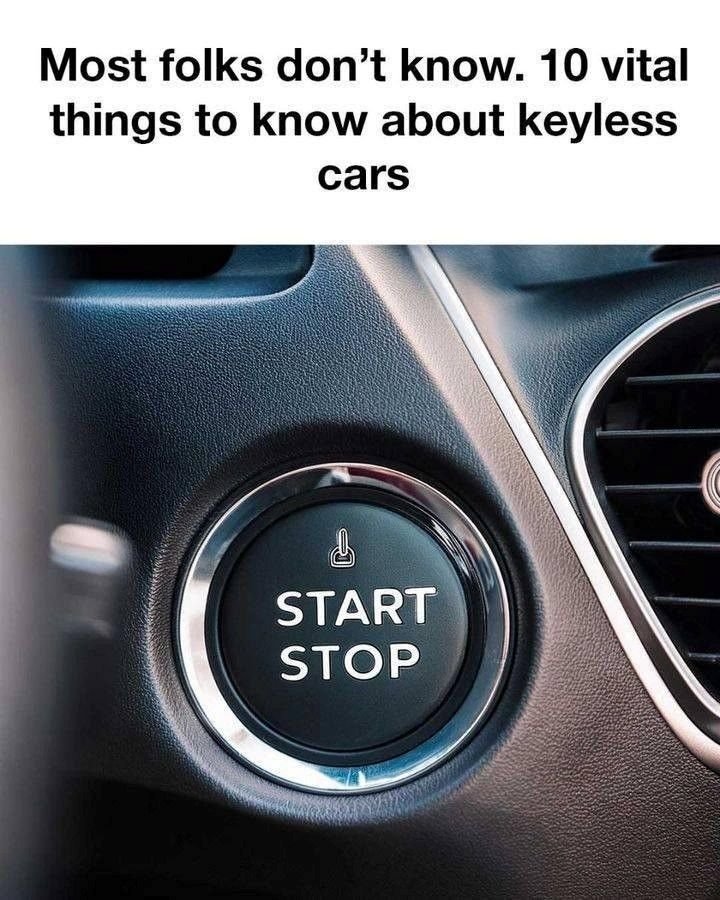
This is a very important topic! Keyless entry and push-button start systems (also known as “smart keys” or “passive entry”) are now standard on most new vehicles. While they offer incredible convenience, they also come with some unique quirks, potential dangers, and maintenance needs that every driver should understand.
Here are 10 vital things to know about keyless cars to keep you safe, save you money, and prevent headaches.
1. The Battery Drain Surprise
Most keyless fobs are always transmitting a low-frequency signal, which drains the battery even when you’re not using it.
-
What to Know: The small lithium coin cell battery (usually a CR2032) typically lasts 2-4 years. You’ll know it’s dying when you have to stand closer to the car or press the button multiple times to get it to work.
-
Pro Tip: Most fobs have a physical key blade hidden inside. Learn how to release it NOW, before you’re stranded. Also, your owner’s manual will tell you where to hold the dead fob (often against the steering column or start button) to start the car as a backup.
2. The “Relay Theft” Vulnerability (The Biggest Security Risk)
This is the modern equivalent of hot-wiring. Thieves use devices to trick your car into thinking the fob is right next to it.
-
How it Works: One thief stands by your front door with a device that captures your fob’s signal through the wall. That device transmits the signal to a second thief standing by your car, who uses it to unlock and drive away. This takes less than 60 seconds.
-
The Fix: Store your key fob in a Faraday bag (a special radio-blocking pouch) or a metal tin when you’re at home. This blocks the signal entirely. You can buy these pouches online for very little money.
3. Don’t Leave the Fob in the Car (Ever)
It sounds obvious, but it’s surprisingly easy to do with keyless entry.
-
The Risk: If you leave the fob in the car, even in your garage, the car will likely remain unlocked and ready to start for anyone who gets in. If you leave it running with the fob inside and someone steals it, your insurance may not cover the theft.
-
The Feature: Many modern cars will beep angrily or display a warning if you try to lock the car with the fob inside, but not all do. Never rely on it.
4. Carbon Monoxide Poisoning (The Silent Killer)
This is a critical safety warning. Because keyless cars can be started with a button and run so quietly (especially hybrids), it’s easy to forget they’re on.
-
The Danger: If you park in an attached garage and accidentally leave the car running, carbon monoxide can seep into your house. There have been tragic fatalities from this.
-
The Habit: Always check your instrument cluster to ensure the car is truly “off” before walking away. Many cars now have an auto-shutoff feature, but not all do.
5. The Fob Can Die in the Worst Place
That hidden physical key we mentioned? It only unlocks the door. It doesn’t bypass the electronic steering lock or the immobilizer system.
-
What Happens: If the fob battery dies completely, you can get into the car, but you might not be able to start it or move the steering wheel.
-
The Solution: Look for a specific spot (usually on the steering column or in the center console cup holder) where you can place the fob. This spot has a backup coil that can read the fob’s RFID chip even without a battery. Again, check your manual now to find where this spot is.
6. Interference is Real
Keyless signals operate on specific radio frequencies that can be jammed by other electronics.
-
Common Culprits: Cell phones, laptops, fluorescent lights, and even large power substations can sometimes interfere with the signal between your fob and the car.
-
The Symptom: If your car won’t unlock or start, and you’ve ruled out a dead fob battery, move a few feet away. The interference is often very localized.
7. The Cost of Replacement is High
Losing a traditional key was annoying. Losing a smart key is expensive.
-
The Cost: Replacing a modern keyless fob can cost anywhere from $200 to $1,000, depending on the make and model of your car (luxury brands are on the high end). This covers the cost of the hardware and the programming required to pair it with your vehicle’s computer.
-
The Tip: Check your auto insurance policy. Some comprehensive plans cover key replacement. Also, consider having a spare programmed and stored safely.
8. You Can Still Lock Yourself Out
It sounds counterintuitive for a “keyless” car, but it happens.
-
How: If you get out of the car to grab something from the back seat and leave the fob on the passenger seat, some cars will lock the doors automatically after a set period. You’ve now locked your keys in the car.
-
Prevention: Get in the habit of keeping the fob in your pocket at all times, never on a seat.
9. The “Walk-Away Lock” Feature is a Gamble
Many keyless cars offer an auto-lock feature that engages when you walk away from the vehicle with the fob.
-
The Problem: It doesn’t always work perfectly. If you walk away too quickly, or if there’s signal interference, the car might not lock. Relying on this feature 100% of the time can leave your car unlocked overnight.
-
The Rule: Listen for the horn chirp or look for the flash of lights to confirm it locked before you walk away.
10. Reprogramming After Battery Change
On some (usually older) keyless systems, changing the battery can wipe the fob’s memory, requiring it to be re-synced to the car.
-
The Fix: This isn’t common on modern cars, but it happens. If your fob stops working immediately after a battery change, consult your owner’s manual. It often involves a simple sequence like putting the key in the ignition and turning it to a specific position, or pressing the start button a certain number of times.