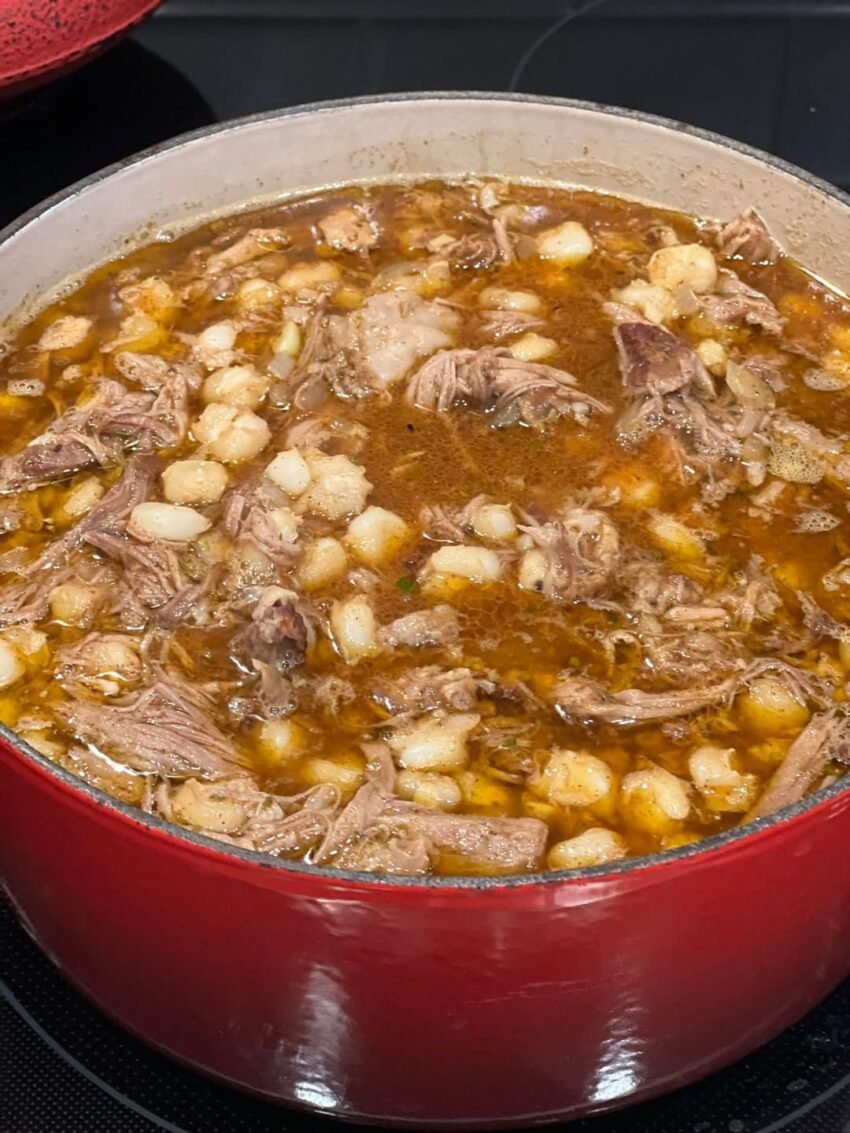
Here is a recipe for Colorado Pork Pozole Rojo.
This is a hearty, celebratory Mexican stew from the state of Colorado (the Mexican state, not the US one—though it’s delicious anywhere). It features tender pork, hominy, and a rich, deep red broth made from dried chiles. It is the ultimate cold-weather comfort food.
The Core Ingredients
*(Serves 8-10)*
The Meat & Base:
-
3 lbs Pork Shoulder (or butt), cut into 1.5-inch cubes
-
1 large White Onion, chopped (divided: half for broth, half for garnish)
-
4 cloves Garlic, minced
-
2 cans (25 oz each) Hominy, drained and rinsed (white or yellow)
-
8 cups Water (or low-sodium chicken broth)
-
2 tbsp Lard or Vegetable Oil
-
2 tsp Salt (plus more to taste)
-
2 Bay Leaves
The Chile Sauce (The Heart of the Dish):
-
4 oz Dried Guajillo Chiles (about 10-12), stems and seeds removed
-
2 oz Dried Ancho Chiles (about 3-4), stems and seeds removed
-
1 medium Tomato (or 2 tomatillos for tang)
-
2 cloves Garlic
-
1 tsp Ground Cumin
-
1 tsp Dried Oregano (Mexican oregano preferred)
-
4 cups Water (for boiling chiles)
For Garnish (The Essential Part):
-
Shredded Cabbage or finely sliced Radishes
-
Diced White Onion
-
Dried Oregano
-
Lime wedges
-
Tortillas or Tostadas
The Method
Phase 1: Prepare the Chiles (The Rojo)
-
Clean the Chiles: Remove the stems and seeds from the dried chiles. (Use gloves if you are sensitive; the capsaicin can linger).
-
Toast (Optional but recommended): In a dry skillet over medium heat, lightly toast the chiles for 10-20 seconds per side. They should become fragrant and pliable. Do not burn them, or they will become bitter.
-
Soak: Place the cleaned chiles in a bowl, cover with hot water, and let them soak for 20-30 minutes until softened.
-
Blend: Transfer the softened chiles to a blender. Add the tomato, 2 cloves of garlic, cumin, oregano, and about 2 cups of the soaking water (or fresh water). Blend until completely smooth.
-
Strain: Pour the sauce through a fine-mesh strainer into a bowl to catch any bits of skin. Set aside.
Phase 2: Brown the Pork
6. Sear: In a large heavy-bottomed pot or Dutch oven, heat the lard or oil over medium-high heat. Pat the pork cubes dry and season with salt. Working in batches (don’t crowd the pot), brown the pork on all sides. This builds flavor. Remove the pork and set aside.
7. Sweat the Onion: In the same pot, add half of the chopped onion. Cook until soft (about 5 minutes), scraping up the browned bits from the bottom. Add the minced garlic and cook for 1 minute more.
Phase 3: Build the Stew
8. Combine: Return the pork to the pot. Pour in the chile sauce and stir to coat the meat. Cook for 2-3 minutes to cook out the raw flavor of the chiles.
9. Add Liquids: Add the water (or broth), bay leaves, and 1 tsp of salt. Bring to a boil, then reduce heat to low. Cover and simmer for 1.5 to 2 hours, or until the pork is tender and falling apart.
Phase 4: Add Hominy & Finish
10. Add Hominy: Stir in the drained and rinsed hominy. Simmer uncovered for another 30-45 minutes. This allows the broth to thicken slightly and the flavors to meld.
11. Adjust Seasoning: Taste and add more salt if needed. Remove the bay leaves.
The Assembly (The Most Important Part)
Pozole is a dish you assemble at the table, not just a soup you eat out of a bowl.
-
Ladle the hot pozole into a deep bowl.
-
Let each person top their bowl with:
-
A handful of shredded cabbage or sliced radish (for crunch)
-
Diced white onion
-
A sprinkle of dried oregano
-
A squeeze of fresh lime juice
-
-
Serve with tostadas or warm tortillas on the side.
⚠️ The Most Important Tips
-
The Chile Ratio: Guajillo gives the color and sweetness; Ancho gives the deep, raisin-like richness. Do not skip the anchos, or the broth will be bright red but thin in flavor.
-
Don’t rush the pork: The long simmer is what makes the broth silky and the pork tender. If you can, make it a day ahead—pozole is always better the next day.
-
Hominy texture: If you can find dried hominy (often labeled “posole”), soaking it overnight and cooking it with the pork yields a much better, chewier texture than canned. However, canned is the standard shortcut and works great.
Colorado (State) Twist
If you are in the US state of Colorado and want to give it a local twist, some Colorado cooks add a can of green chiles (like Pueblo or Hatch chiles) to the broth at the end for a little extra kick and a nod to the local pepper culture.