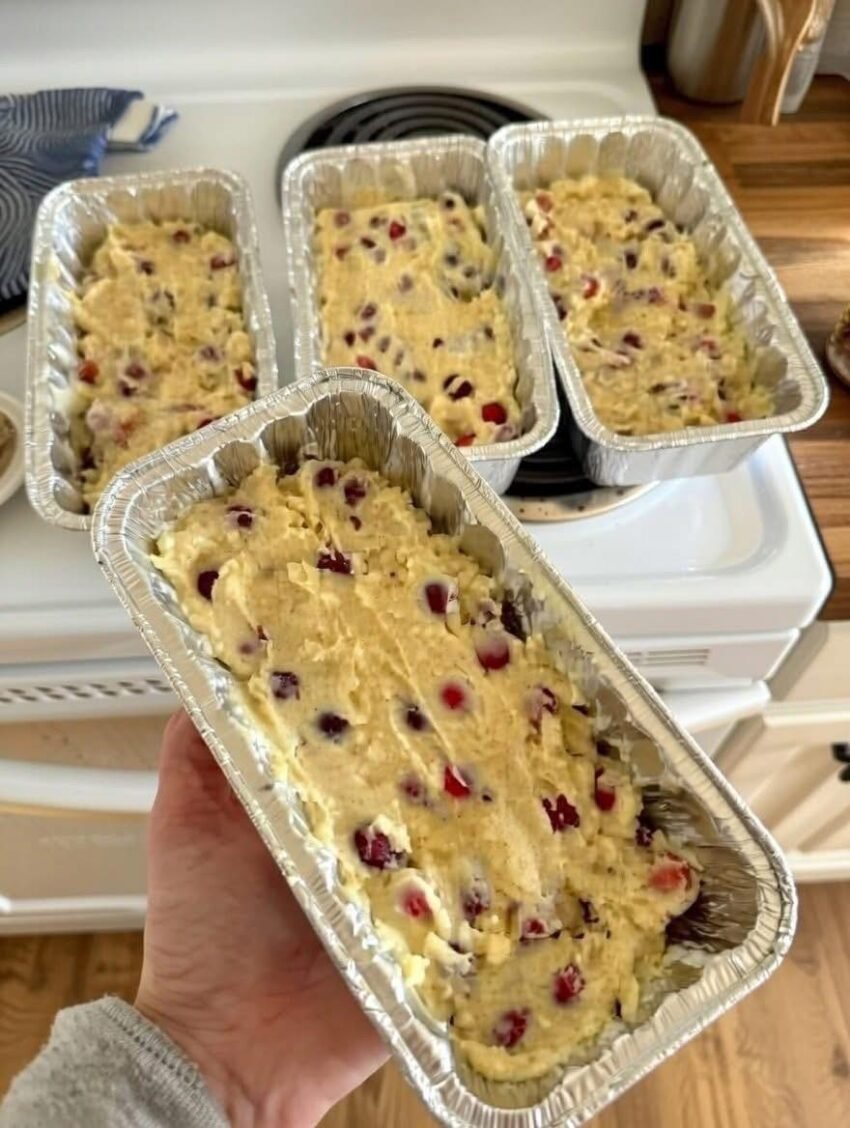
This is the loaf that bridges the gap between Thanksgiving and Tuesday. It is not as dense as a fruitcake, not as fragile as a pound cake. It is a tender, buttery crumb, sharp with citrus and studded with berries that burst like small, tart fireworks.
The trick here is balance. Orange is not a suggestion; it is the architecture. And cranberries—fresh or frozen—refuse to be overshadowed.
Cranberry Orange Loaf
Bright • Tender • Crumb-topped
Yield: One 9×5 inch loaf
Oven: 350°F (175°C)
Ingredients
For the Loaf:
-
1 ½ cups (190g) all-purpose flour
-
1 tsp baking powder
-
½ tsp baking soda
-
½ tsp salt
-
1 cup (200g) granulated sugar
-
1 tbsp fresh orange zest (from 1–2 large oranges)
-
½ cup (115g) unsalted butter, softened
-
2 large eggs, room temperature
-
½ cup (120ml) buttermilk, room temperature
-
¼ cup (60ml) fresh orange juice
-
1 tsp vanilla extract
-
1 ½ cups (170g) fresh or frozen cranberries (do not thaw if frozen)
-
1 tbsp flour (for dusting the berries)
For the Orange Syrup Glaze:
-
¼ cup (60ml) fresh orange juice
-
2 tbsp granulated sugar
For the Crumb Topping (Optional but Recommended):
-
¼ cup (50g) granulated sugar
-
¼ cup (30g) all-purpose flour
-
2 tbsp cold unsalted butter, cubed
-
½ tsp cinnamon (optional)
Method
1. The Zest and Sugar Ritual
In a small bowl, combine the 1 cup sugar with the orange zest. Use your fingertips to rub the zest into the sugar until it is fragrant, moist, and pale orange.
Why: This is not performative. The friction releases the citrus oils from the zest and infuses the sugar. A cranberry orange loaf made without this step tastes merely sweet. With it, the orange is in every bite, not just the visible flecks.
2. The Batter
In a medium bowl, whisk together the flour, baking powder, baking soda, and salt.
In a large bowl, beat the softened butter and the zest-sugar until light and fluffy, about 3 minutes. Scrape the bowl.
Add the eggs one at a time, beating well after each. Add the vanilla.
The dry and the wet:
In a measuring cup, combine the buttermilk and orange juice.
Add half the flour mixture to the butter mixture. Mix gently. Add all the buttermilk mixture. Mix. Add the remaining flour. Stop mixing the moment the flour disappears. A few streaks are fine; they will resolve in the oven.
3. The Berries
In a small bowl, toss the cranberries with 1 tablespoon of flour. Coat them thoroughly.
Why: Flour creates friction. It grips the batter and prevents the berries from sinking to the bottom. It also absorbs any excess moisture on the fruit, preventing purple streaks.
Fold the floured cranberries into the batter with a spatula. Be gentle. You want them distributed, not crushed.
4. The Crumb (If Using)
In a small bowl, combine the sugar, flour, and cinnamon. Cut in the cold butter with your fingertips or a pastry cutter until the mixture forms irregular clumps—some small, some pea-sized. Refrigerate while you prepare the pan.
5. The Bake
Preheat oven to 350°F (175°C) . Butter and flour a 9×5 loaf pan, or line it with parchment with overhang on the long sides.
Scrape the batter into the prepared pan. Smooth the top. If using crumb topping, sprinkle it evenly over the batter.
Bake for 50–65 minutes. The top should be deep golden, and a skewer inserted in the center should come out clean (or with a few moist crumbs, but no wet batter).
6. The Syrup Soak
While the cake bakes, make the orange syrup: combine ¼ cup orange juice and 2 tbsp sugar in a small saucepan. Heat gently until the sugar dissolves. Do not boil; just warm. Set aside.
The moment the cake comes out of the oven:
Let it rest in the pan for 5 minutes. Then, while it is still hot, poke the top all over with a skewer or toothpick (at least 20 holes). Brush or spoon the warm syrup over the top. Slowly. Let it sink in. This is not a glaze; it is an absorption.
The syrup keeps the loaf moist for days and intensifies the orange flavor.
Let the cake cool completely in the pan before removing.
Three Critical Notes
1. On Cranberries:
Fresh cranberries are ideal. They hold their shape and provide a sharp, unsweetened counterpoint to the tender crumb. Frozen cranberries work perfectly—do not thaw them. Add them frozen, tossed in flour. Thawed berries bleed and turn the batter gray-pink.
2. On Buttermilk:
If you do not have buttermilk, make a quick substitute: ½ cup whole milk + ½ tbsp lemon juice or white vinegar. Stir and let sit 5 minutes. It will thicken and lightly curdle. This is not spoiled; it is activated.
3. On the Crumb:
The crumb topping is optional but transformative. It adds texture and a buttery, crisp counterpoint to the soft, moist loaf. If you skip it, consider doubling the syrup glaze for a shiny, citrus-kissed crust.
Variations
White Chocolate Cranberry Orange:
Fold ½ cup white chocolate chips into the batter along with the cranberries. White chocolate and orange is a classic pairing; the sweetness tames the cranberry’s bite.
Glazed Version:
Skip the crumb and the syrup soak. Instead, whisk 1 cup powdered sugar with 2 tbsp orange juice and 1 tsp orange zest. Drizzle over the cooled loaf.
Spiced Version:
Add ½ tsp cinnamon and ¼ tsp nutmeg to the dry ingredients. Warm spices play well with both orange and cranberry.
Serving & Keeping
This loaf is excellent the day it is baked, when the top is faintly crisp and the syrup has just begun to penetrate the crumb.
It is better the next day. The flavors marry overnight. The orange deepens. The cranberries relax into the surrounding cake.
Serve at room temperature with:
-
Softened salted butter
-
A strong cup of black coffee
-
No audience required
Wrap tightly and store at room temperature for up to 3 days. Refrigerate for longer keeping, but bring to room temperature before serving—cold muffles flavor.
This is not a complicated cake. It does not demand a stand mixer or culinary pedigree. It asks only that you zest the oranges before juicing them, that you flour the berries, that you wait for the syrup to sink in.
Do those three things, and you will have a loaf that tastes like morning light.