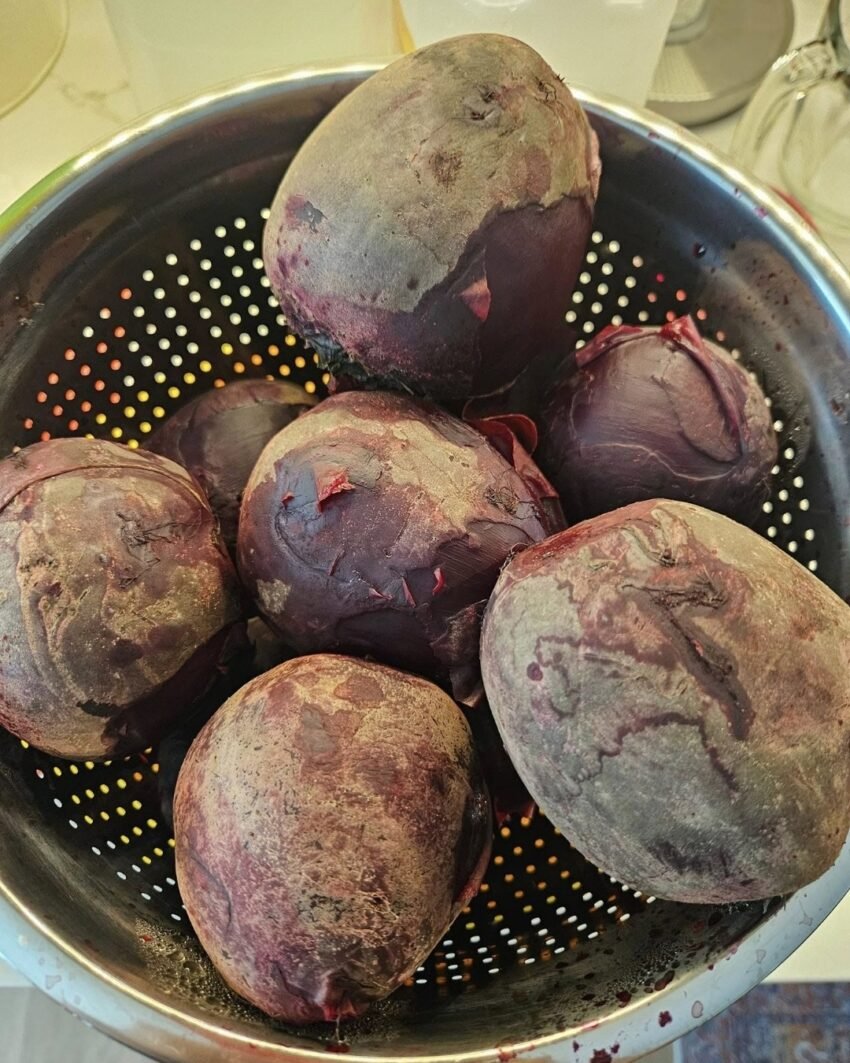
Eating beets causes a few specific and well-documented effects — some expected (nutritional), some surprising (urine color), and some that doctors actually do recommend for specific health conditions.
Here’s what the evidence really shows, separated from wellness influencer exaggeration.
🔴 1. Beeturia — Pink/Red Urine and Stool
What it is:
For 10–14% of people (higher in those with iron deficiency), beets turn urine pink or red. Stool may also appear reddish.
Why:
Betanin — the red pigment — is not fully broken down in some people’s digestion.
Doctors say:
Harmless, but can be mistaken for blood. If you eat beets and see red, remember you ate beets before panicking.
If it persists days after or happens without beets, then investigate.
📉 2. Blood Pressure Drop (Within Hours)
What it is:
Beets are exceptionally high in dietary nitrate. Your body converts nitrate → nitrite → nitric oxide, which relaxes blood vessels.
Effect:
Systolic BP can drop 4–10 mmHg within 3–6 hours of drinking beet juice or eating whole beets.
Doctors say:
This is real, reproducible, and clinically relevant.
Some cardiologists recommend beetroot juice for mild hypertension as an adjunct, not a replacement for medication.
Caution:
If you’re already on BP meds (especially nitrates for chest pain), adding high-dose beet products can drop pressure too low. Check with your doctor.
🏃 3. Improved Exercise Endurance
What it is:
Nitric oxide reduces the oxygen cost of exercise. You can perform moderate-to-high intensity effort longer before fatigue.
Evidence:
Well-studied in cyclists, runners, and recreational athletes.
Best taken 2–3 hours before exercise, not immediately before.
Doctors say:
Legitimate ergonomic aid. Not a steroid — no doping ban. Works better for endurance than sprinting.
💊 4. Kidney Stone Risk (If Prone to Oxalate Stones)
What it is:
Beets are high in oxalates. In susceptible people, excess oxalate binds with calcium in urine → calcium oxalate kidney stones.
Doctors say:
If you’ve had calcium oxalate stones, limit beets, spinach, rhubarb, almonds, and Swiss chard.
If you’ve never had stones, moderate intake is fine. Drink water.
🩸 5. May Support Liver Detoxification (Sort Of)
What it is:
Beets contain betaine, which supports liver cell function and may help reduce fatty liver deposits.
Doctors say:
Promising in preliminary studies. Not a “liver cleanse” — your liver cleans itself. Betaine is one supportive nutrient, not a magic detox.
🩺 6. Iron Absorption (Mild)
What it is:
Beets contain non‑heme iron plus vitamin C. Slightly helpful for iron levels, but far less effective than heme iron (meat) or iron supplements.
⚠️ 7. Blood Sugar Spike? Not Really
Glycemic index:
Cooked beets = ~64 (medium).
But glycemic load is low unless you eat massive amounts.
For most people (including diabetics), a serving of beets does not spike glucose significantly — especially eaten with fat/protein.
✅ Summary Table: What Doctors Actually Say
| Effect | Real? | Who Should Care |
|---|---|---|
| Pink urine | ✅ Yes | Everyone — normal, ignore |
| Lowers blood pressure | ✅ Yes | Hypertensives, people on BP meds (caution) |
| Improves athletic endurance | ✅ Yes | Recreational athletes, endurance exercisers |
| Kidney stones (oxalate) | ✅ Yes | People with history of oxalate stones |
| Liver “detox” | ⚠️ Overhyped | Not a medical treatment |
| Cancer cure | ❌ No | Ignore internet claims |
| Weight loss magic | ❌ No | Healthy food, not a fat burner |
🧠 Bottom Line
Eating beets causes:
-
Lower blood pressure (proven)
-
Better endurance (proven)
-
Pink pee (harmless)
-
Possible kidney stones if already prone
It does not cause cancer, cure cancer, or replace your blood pressure medication.
Doctors “reveal” this because patients see beets hyped as a superfood and need the real picture — benefits are real but specific, not magical.
Would you like a food‑by‑food comparison of nitrate content (beets vs. arugula vs. spinach vs. celery)?