Fried Potatoes & Onions: The Definitive Guide to a Deceptively Simple Dish
There is no recipe here. Not really.
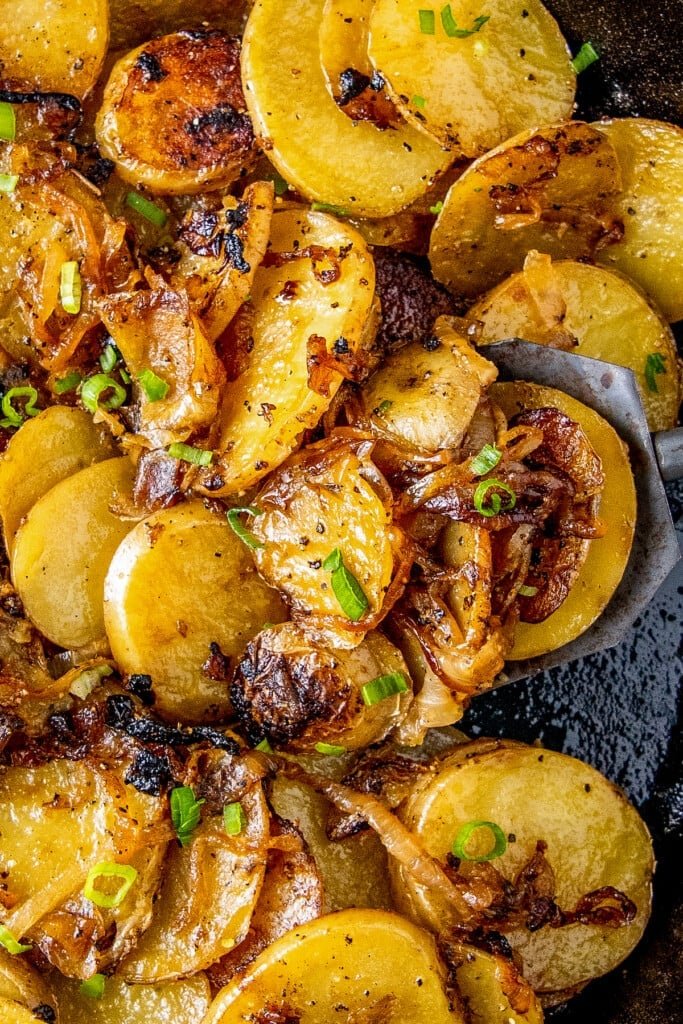
Fried potatoes and onions is not a dish you follow; it is a dish you feel. It is the smell of a Sunday morning diner. It is the leftover baked potato from last night, sliced thin and thrown into a hot cast iron. It is the onion softening into sweetness while the potatoes turn golden and lacy at the edges.
But because it is simple, it is often done poorly. Soggy potatoes. Burnt onions. Grey, greasy slabs that taste of regret.
Here is how to do it right.
The Paradox of This Dish
Fried potatoes and onions suffers from a fundamental mechanical conflict:
-
Onions need time to soften and caramelize. They benefit from moderate heat and patience.
-
Potatoes need high heat to crisp. They benefit from aggression and space.
If you add both to the same pan at the same time, one of them will compromise the other. The onions will release water and steam the potatoes. The potatoes will take too long to cook and the onions will burn.
The solution is not one pan. It is two acts.
Act One: The Potatoes
Choose Your Potato
-
Russet / Idaho: High starch, low moisture. Crisps beautifully. Fluffs on the inside. The gold standard.
-
Yukon Gold: Medium starch, buttery flavor. Holds shape better. Slightly less crisp.
-
Red or new potatoes: Waxy, low starch. Do not crisp well. Better for boiling or roasting. Avoid here.
The Par-Cook Debate
Raw potatoes in a pan take forever to cook through. By the time the center is tender, the outside is either burnt or greasy.
The fix: Par-cook.
Option A (Boil):
-
Cut potatoes into even ½-inch pieces.
-
Place in cold salted water. Bring to a boil.
-
Cook for 3–5 minutes. You are not cooking them through; you are warming the starch so the exterior crisps faster.
-
Drain thoroughly. Steam dry. Moisture is the enemy of crisp.
Option B (Microwave):
-
Cut potatoes. Place in a microwave-safe bowl with a splash of water.
-
Cover and microwave for 3–4 minutes.
-
Drain. Spread on a towel to steam dry.
Option C (Leftovers):
-
Cold, boiled, or baked potatoes from last night are ideal. They have already shed excess moisture and are ready to crisp immediately.
The Pan
-
Cast iron, carbon steel, or heavy stainless.
-
Not nonstick if you want crust. Nonstick prevents sticking but also prevents browning.
The Fat
-
Clarified butter, bacon fat, duck fat, or a high-smoke-point oil (grape-seed, avocado, or light olive oil).
-
Do not use whole butter; the milk solids will burn before the potatoes are crisp.
The Technique
-
Heat pan over medium-high. Add fat. Wait until it shimmers.
-
Add potatoes in a single layer. Crowding = steaming = gray sadness.
-
Leave them alone. For 3–4 minutes. Let a crust form.
-
Flip. Repeat. Season with salt after the first side is browned. Salt draws out moisture; if you salt too early, you lose crisp.
-
Cook until deeply golden, edges translucent and lacy.
Remove potatoes from pan. Set aside. Do not skip this step.
Act Two: The Onions
Choose Your Onion
-
Yellow onion: The standard. Balances sweetness and sharpness.
-
White onion: More pungent. Holds texture better.
-
Sweet onion (Vidalia, Walla Walla): High sugar. Caramelizes faster. Burns faster. Watch carefully.
The Cut
-
Slice thinly, pole to pole (root to stem), not across the equator. Onions cut lengthwise hold their shape better during long cooking. Onions cut across the equator collapse into mush.
The Fat
-
Same fat as the potatoes, or a fresh knob of butter for flavor.
The Technique
-
Reduce heat to medium. Add a touch more fat if needed.
-
Add onions. Spread evenly.
-
Season lightly with salt. Salt draws out moisture, which helps them soften.
-
Cook, stirring occasionally, until translucent and beginning to brown at the edges.
-
For sweet onions: 8–10 minutes.
-
For caramelized onions: 20–30 minutes, stirring frequently, lowering heat as needed to prevent burning.
Do not rush this. Burnt onions are bitter. Soft, sweet, golden onions are the reward.
Act Three: The Reunion
-
Return the potatoes to the pan with the onions.
-
Toss gently to combine.
-
Increase heat to high. Let everything crisp together for 1–2 minutes without moving.
-
Taste. Adjust salt. Add black pepper—freshly cracked, generous.
-
Optional: Fresh parsley, chives, or a pinch of smoked paprika.
Variations (That Are Still This Dish)
With eggs: Make a well in the center, crack an egg in, cover until white is set but yolk is runny. Sunday breakfast solved.
With peppers: Sliced bell peppers added with the onions. Diner-style hash.
With garlic: Thinly sliced garlic added in the last 2 minutes of onion cooking. Do not burn it.
With rosemary: Fresh rosemary minced fine, added with the potatoes during the final crisping.
With vinegar: A tiny splash of apple cider vinegar or white wine vinegar at the very end, tossed through. Brightness cuts the fat.
Common Failures and Fixes
| Problem | Cause | Fix |
|---|---|---|
| Soggy, grey potatoes | Pan overcrowded; potatoes not dried | Cook in batches; dry thoroughly after par-cook |
| Burnt onions, raw potatoes | Added at same time | Cook separately; par-cook potatoes first |
| Greasy | Pan not hot enough | Heat fat before adding food |
| Sticking | Not enough fat; pan not seasoned; moved too early | Use more fat; wait for crust to release naturally |
| Bland | Underseasoned; no salt on potatoes | Salt potatoes after first side crisps; taste before serving |
The Philosophy
Fried potatoes and onions is not a recipe. It is a process of rescue. You are rescuing a leftover baked potato. You are rescuing a half-used onion from the back of the fridge. You are rescuing a quiet morning from the tyranny of cold cereal.
The dish asks nothing of you except heat, fat, and patience. Give it those three things, and it will feed you better than anything you could order.
The Final Takeaway
Do not cook the potatoes and onions together. Cook them separately, then unite them. Respect the potato’s need for solitude. Respect the onion’s need for time. The pan is a stage, and each ingredient deserves its moment in the spotlight before the final bow.