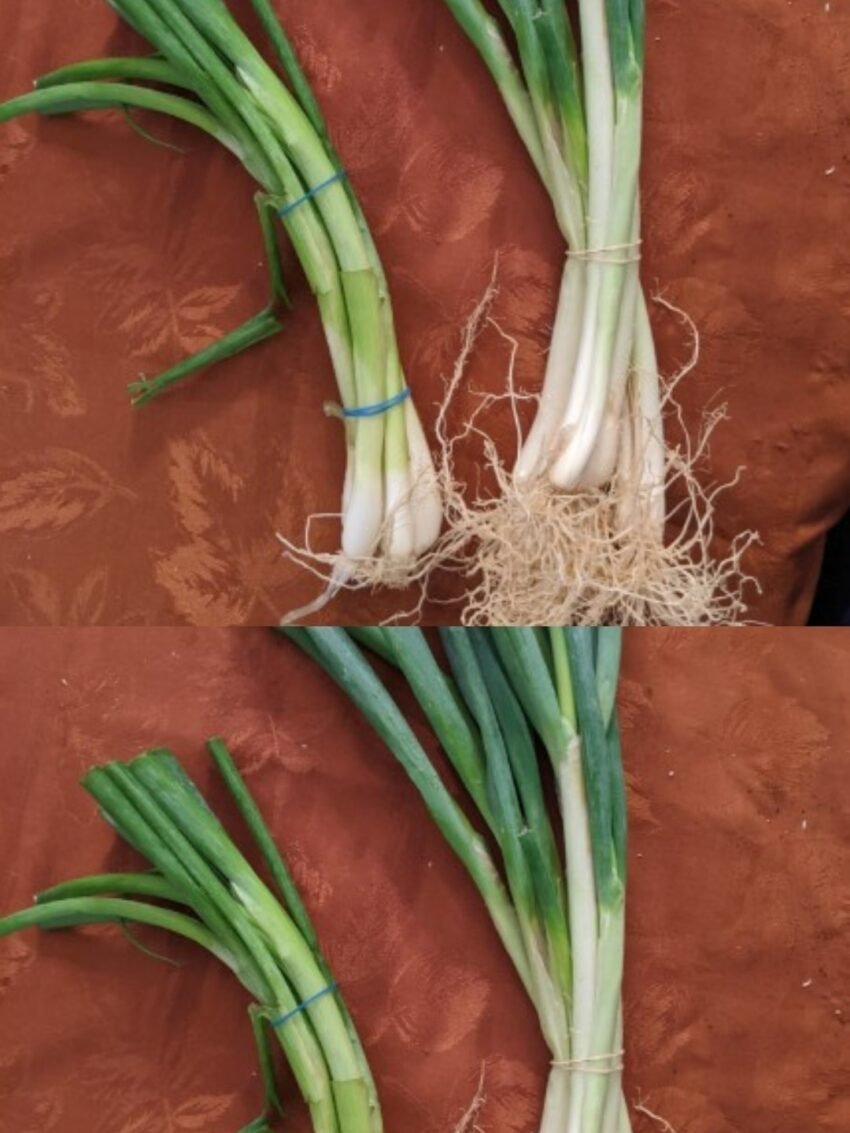
This is a common point of confusion in the kitchen! They look similar, they smell similar, and they are often used in similar ways, but Green Onions, Scallions, Spring Onions, and Chives are actually different (or used differently).
Here is the definitive guide to telling them apart.
The Short Answer (TL;DR)
-
Scallions and Green Onions are the exact same thing. They are just different names for the same vegetable.
-
Spring Onions are what scallions/green onions grow up to be if you leave them in the ground longer. They have a larger bulb.
-
Chives are a completely different plant (an herb), much thinner, and are used primarily as a garnish.
The Breakdown
1. Scallions vs. Green Onions
Verdict: No difference.
If you see a bunch of long, thin, green stalks with a small white base and no visible bulb, you are looking at Allium fistulosum (or sometimes just young bulb onions).
-
Appearance: Straight white bottoms that transition to green tops. The white part is usually the same width as the green part (no big bulge).
-
Flavor: Mild and fresh. The white part is slightly sharper than the green part, which is grassy and mild.
-
Usage: You can eat the entire thing—raw in salads, as a garnish, or lightly cooked in stir-fries.
2. Spring Onions
Verdict: These are what scallions want to be when they grow up.
If you leave a scallion in the ground, it will start to form a bulb. At this stage, it is harvested as a “Spring Onion.”
-
Appearance: They look like scallions, but with a distinct, small, round bulb at the base (like a mini onion).
-
Flavor: Because of the bulb, they have a stronger, more pungent oniony kick than scallions.
-
Usage: You can use the whole thing, but the bulb is often cooked (roasted or grilled) to sweeten it, while the greens are used raw. They are great roasted whole on the grill.
3. Chives
Verdict: A totally different plant (an herb).
Chives are a perennial herb (Allium schoenoprasum). They are much, much thinner and more delicate than the others.
-
Appearance: Thin, hollow, grass-like tubes. They are completely green from top to bottom (no white bulb at all).
-
Flavor: Very mild, delicate onion flavor—almost sweet and subtle. They can’t stand up to high heat.
-
Usage: Always used raw or as a garnish. You sprinkle them on baked potatoes, scrambled eggs, or dips at the very end. Never stir-fry chives like you would a scallion; they will wilt and disappear.
Comparison Chart
| Feature | Scallions / Green Onions | Spring Onions | Chives |
|---|---|---|---|
| Bulb | None (Straight sides) | Small, distinct round bulb | None (Thin, hollow leaves) |
| Flavor | Mild, fresh | Stronger, pungent (like a mini onion) | Very mild, delicate |
| Texture | Crisp, juicy | Crisp bulb, tender greens | Soft, tender |
| Best Use | Raw or cooked | Grilled, roasted, or sautéed | Raw garnish only |
| Part Used | Entire stalk | Entire stalk (bulb often cooked) | Only the green hollow leaves |
Can You Substitute Them for Each Other?
-
Scallions for Chives? Yes, but be careful. Scallions are much stronger and crunchier. If a recipe calls for a sprinkle of chives as a finishing touch, you can use the very thin green part of a scallion, finely sliced, but it will have a stronger bite.
-
Chives for Scallions? Generally, no. If a stir-fry calls for a cup of chopped scallions, you cannot use chives. They will melt into nothing and provide no texture or flavor.
-
Spring Onions for Scallions? Yes, but expect more heat. If you use a spring onion raw where a scallion is called for, it will be noticeably spicier. If you cook them, they will be sweeter.