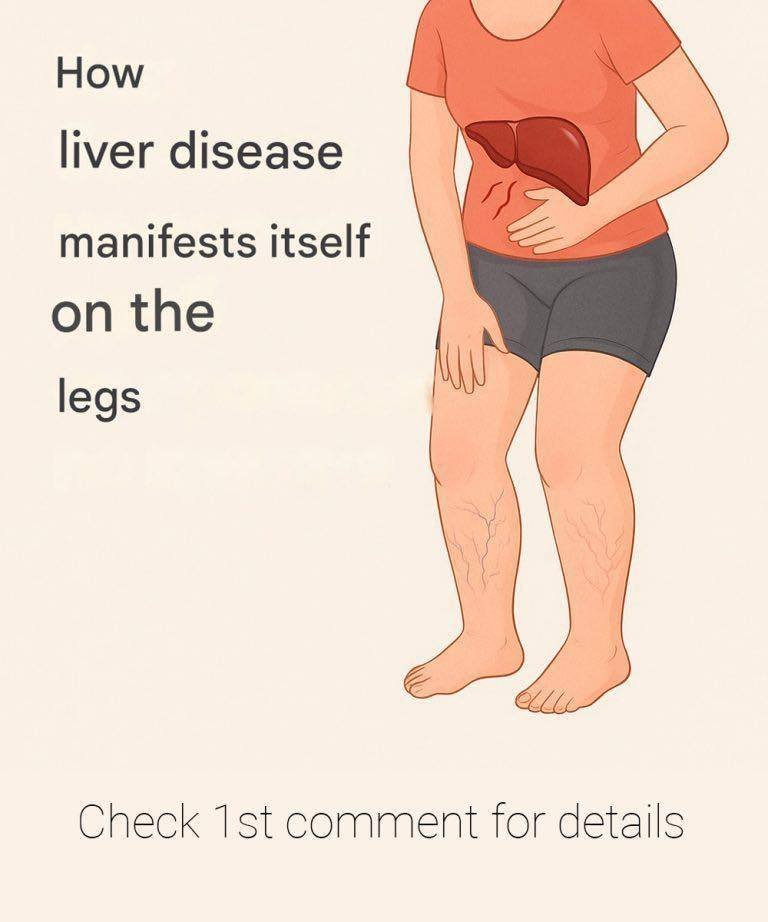
The liver is a remarkable organ that acts as the body’s primary filter. When it becomes damaged or diseased (a condition known as Chronic Liver Disease or Cirrhosis), its ability to process blood and produce essential proteins is compromised.
Because the liver affects your entire circulatory and lymphatic system, the legs are often the first place where physical symptoms appear. Here is how liver disease manifests itself on the legs.
1. Edema (Swelling in the Ankles and Calves)
The most common sign of liver distress in the legs is swelling, medically known as peripheral edema.
-
What it looks like: The feet and ankles look puffy or “sausage-like.” The skin may appear shiny or stretched. If you press your finger into the swollen area for a few seconds, it will leave a visible dimple or pit (this is called pitting edema).
-
Why it happens: The liver produces a protein called albumin, which acts like a sponge to keep fluid inside the blood vessels. When the liver fails, albumin levels drop, and fluid leaks out of the veins into the surrounding tissues. Gravity pulls this fluid down to the legs, causing swelling.
2. Easy Bruising (Purpura and Ecchymosis)
You might notice large, dark purple or black bruises appearing on the shins or thighs from very minor bumps—or sometimes for no reason at all.
-
What it looks like: Flat, blueish-purple patches that look like typical bruises.
-
Why it happens: The liver is responsible for producing the proteins (clotting factors) that allow blood to clot. In liver disease, the blood becomes “thin,” and capillaries under the skin rupture easily, causing blood to pool in the tissues.
3. Jaundice (Yellowing of the Skin)
While jaundice is often noticeable first in the eyes, it becomes very evident on the legs and torso as the disease progresses.
-
What it looks like: A distinct yellow tint to the skin, particularly noticeable on the pale skin of the inner thighs or lower legs.
-
Why it happens: The liver normally filters out a yellow pigment called bilirubin. When the liver is diseased, bilirubin builds up in the bloodstream and stains the skin.
4. Severe, Uncontrollable Itching (Pruritus)
Many people with liver disease report itching on their lower legs and feet that is relentless and doesn’t respond well to standard lotions.
-
What it looks like: The skin may look normal, or it may be red and scratched raw from constant itching. There is usually no rash, just irritation caused by scratching.
-
Why it happens: When the liver cannot filter toxins effectively, bile salts and other waste products accumulate in the bloodstream and deposit in the skin, triggering intense itching.
5. Spider Angiomas (Spider Veins)
While small spider veins are common in the general population, a sudden appearance of many of them on the legs and ankles can signal liver issues.
-
What it looks like: Small, red spots with tiny radiating lines (like spider legs) emanating from a central red dot. They may blanch (turn white) when you press on them.
-
Why it happens: Liver failure causes an imbalance in hormone levels, leading to the dilation of small blood vessels just under the skin.
6. Loss of Hair on the Legs
You might notice that the hair on your shins or calves becomes sparse or disappears entirely.
-
What it looks like: Patches of smooth, hairless skin on the legs.
-
Why it happens: Chronic liver disease disrupts normal hormone and nutrient processing, which can lead to hair thinning and loss not just on the head, but on the body as well.
7. Palmar Erythema (Red Palms) and its connection to legs
Although this is a hand symptom, it is a classic sign of liver disease that often accompanies leg swelling.
-
What it looks like: The palms of the hands (and sometimes the soles of the feet) take on a red, blotchy, warm appearance.
-
Why it happens: Similar to spider veins, this is caused by altered blood flow and hormone metabolism due to liver failure.
8. Xanthelasma (Fatty Deposits)
In liver diseases related to bile duct blockages (like Primary Biliary Cholangitis), fat metabolism is impaired.
-
What it looks like: Small, yellowish, waxy bumps or plaques can appear on the legs, especially around the knees or buttocks, as well as the elbows.
-
Why it happens: Cholesterol and fats build up in the blood due to liver dysfunction and are deposited under the skin.
When to See a Doctor
If you notice swelling in your legs accompanied by any of the following, it is crucial to see a healthcare provider immediately:
-
Yellowing of the skin or eyes.
-
Abdominal swelling or bloating (ascites).
-
Confusion or drowsiness (this indicates toxins are reaching the brain).
-
Vomiting blood or black, tarry stools.
Disclaimer: This information is for educational purposes only. Leg symptoms can be caused by many conditions (like heart failure, kidney disease, or varicose veins). Only a medical professional can provide a proper diagnosis.