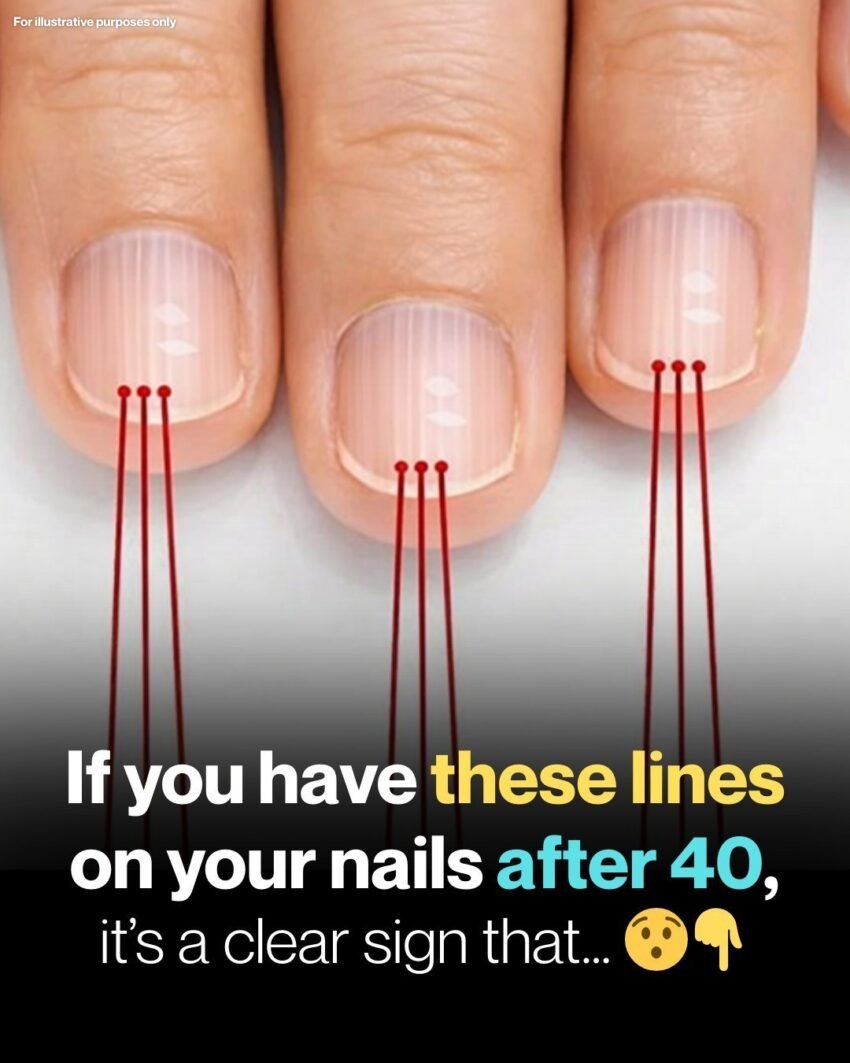
This is a very common concern as people age. If you are noticing vertical lines (ridges) running from your cuticle to the tip of your nail, here is what it usually means.
The Short Answer:
If you are over 40, these vertical lines are most likely a normal sign of aging, medically known as onychorrhexis.
However, depending on their texture and color, they can sometimes hint at other things happening inside the body. Here is a breakdown of what those ridges might be telling you:
1. Natural Aging (The Most Common Cause)
Just as skin wrinkles and hair grays, our nails change with age.
-
The Cause: As we get older, the rate of cell turnover in the nail matrix (the root of the nail) slows down and becomes less efficient. This leads to fluctuations in growth, causing the nail to thin out and form these longitudinal ridges.
-
The Verdict: If the ridges are smooth to the touch (even if they look bumpy) and you are generally healthy, this is simply a cosmetic sign of aging and not a health concern.
2. Dehydration and Dryness
Nails are mostly made of keratin (protein). When the body or the immediate environment lacks moisture, the nail plate can become brittle and form ridges.
-
The Cause: Frequent hand washing, cold winter air, or not using enough moisturizer.
-
The Fix: This is often reversible. Massaging cuticle oil, vitamin E oil, or a thick hand cream into the nails can help smooth them out over time.
3. Nutrient Deficiencies
While less common than simple aging, certain vertical ridges can indicate a lack of specific vitamins and minerals:
-
Iron: If the ridges are deep and accompanied by a spoon-shaped curve (koilonychia) or pale nail beds, it could suggest iron deficiency anemia.
-
B Vitamins: Specifically, a lack of B12 or Folate can sometimes manifest as nail ridges or changes in nail color.
-
Magnesium/Protein: General deficiencies can weaken the nail structure.
4. Thyroid Imbalance
The thyroid gland controls metabolism, which includes the rate at which your nails grow.
-
Hypothyroidism (Underactive Thyroid): This often slows down bodily processes, leading to dry skin, hair loss, and brittle nails with pronounced vertical ridges.
5. Inflammatory Arthritis (Psoriatic Arthritis)
This is a more specific condition to watch for.
-
The Difference: While normal aging ridges are usually just lines, people with psoriatic arthritis or other inflammatory conditions may have nails that look like they have a “washboard” texture—thick, ridged, and often pitted (small dents) alongside the ridges.
-
Other Signs: Look for joint pain, stiffness, or skin issues (psoriasis).
6. Trauma
Sometimes, we don’t remember bumping our nail, but repeated minor trauma (like constantly tapping fingers on a keyboard or chewing nails) can cause the nail matrix to produce a ridged nail as it heals.
“Bean” and “Sock” Connection
Since we just discussed bananas and socks, it is interesting to note how they relate to this topic:
-
Bananas (Potassium/B Vitamins): If the ridges are caused by a nutrient deficiency, the B vitamins and magnesium in bananas can help support healthier nail growth.
-
Socks (Circulation): For toenails, vertical ridges can be exaggerated by poor circulation (which is why seniors should wear warm socks!). Keeping feet warm and moisturized can improve blood flow to the nail bed, potentially reducing brittleness.
When Should You See a Doctor?
You should consult a dermatologist or your GP if:
-
A single ridge appears suddenly with a dark streak (this could be a sign of subungual melanoma, a type of skin cancer).
-
The nail is splitting or cracking along the ridge.
-
There is pain, swelling, or redness around the nail.
-
The nail bed itself looks discolored (yellow or green) underneath.