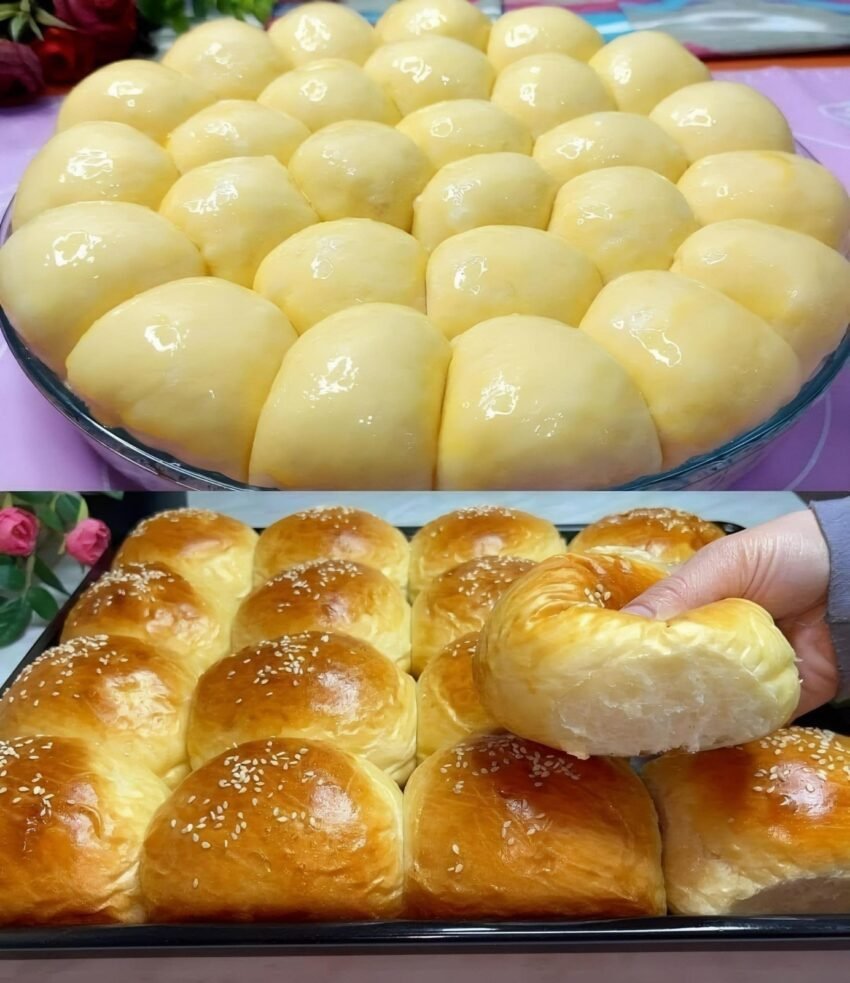
There is nothing quite like the smell of freshly baked brioche rolls filling your kitchen. These are the epitome of comfort baking—pillowy soft, rich, tender, and with a gorgeous golden crust. The secret to their luxurious texture is the high butter and egg content, and of course, the milk, which keeps them incredibly moist.
This recipe yields beautifully soft, slightly sweet rolls that are perfect for breakfast, dinner, or just tearing apart and enjoying with a slather of butter.
Milk Brioche Rolls
This recipe makes about 12-15 rolls, depending on size.
Ingredients
For the Dough:
-
4 cups (500g) all-purpose or bread flour (bread flour will give a slightly chewier texture)
-
⅓ cup (65g) granulated sugar
-
2¼ teaspoons (1 packet) active dry yeast or instant yeast
-
1 teaspoon salt
-
¾ cup (180ml) whole milk, warm (about 110°F / 45°C)
-
3 large eggs, at room temperature
-
½ cup (115g / 1 stick) unsalted butter, very soft at room temperature (cut into cubes)
For the Egg Wash:
-
1 large egg
-
1 tablespoon milk or water
Instructions
Step 1: Activate the Yeast (if using active dry)
-
If you’re using active dry yeast, combine the warm milk with a pinch of the sugar and sprinkle the yeast on top. Let it sit for 5-10 minutes until frothy.
-
If you’re using instant yeast, you can skip this step and mix it directly with the flour.
Step 2: Mix the Dough
-
In the bowl of a stand mixer fitted with the dough hook, combine the flour, sugar, and salt.
-
Add the warm milk mixture (or just the warm milk and instant yeast), eggs, and softened butter.
-
Mix on low speed until the ingredients come together into a shaggy dough. This will take about 2 minutes.
Step 3: Knead
-
Increase the speed to medium and knead for 8-10 minutes. The dough will be very sticky at first—do not be tempted to add more flour! This sticky stage is what creates the tender crumb.
-
Continue kneading until the dough becomes smooth, elastic, and cleans the sides of the bowl. It should still be slightly tacky to the touch but not a sticky mess. You’ll know it’s ready when you can stretch a small piece thinly without it tearing (the “windowpane test”).
Step 4: First Rise
-
Form the dough into a ball and place it in a lightly greased bowl. Cover with plastic wrap or a clean kitchen towel.
-
Let it rise in a warm, draft-free place for 1.5 to 2 hours, or until doubled in size.
Step 5: Shape the Rolls
-
Gently punch down the dough to release the air. Turn it out onto a lightly floured surface.
-
Divide the dough into equal pieces. For standard rolls, aim for 12-15 pieces, each weighing about 60-70g.
-
To shape each roll, take a piece of dough and pull the edges into the center, pinching to seal. Flip it over and gently roll it between your cupped palm and the work surface to form a tight, smooth ball.
-
Place the shaped rolls in a greased 9×13 inch baking dish or on a parchment-lined baking sheet, leaving a little space between them for the second rise.
Step 6: Second Rise
-
Cover the rolls loosely with plastic wrap or a towel.
-
Let them rise for another 45 minutes to 1 hour, until they have puffed up and are touching each other (if in a dish) or have nearly doubled in size.
Step 7: Preheat and Egg Wash
-
About 20 minutes before baking, preheat your oven to 375°F (190°C) .
-
In a small bowl, whisk together the egg and 1 tablespoon of milk to make the egg wash.
-
Gently brush the tops of the risen rolls with the egg wash. This will give them a beautiful, shiny, golden-brown crust.
Step 8: Bake
-
Bake for 18-22 minutes, or until the tops are deep golden brown and the rolls sound hollow when tapped on the bottom.
-
If the tops are browning too quickly, you can loosely tent them with foil for the last 5 minutes.
Step 9: Cool and Enjoy
-
Remove from the oven and let them cool in the pan for a few minutes, then transfer to a wire rack to cool completely. (But honestly, eating one warm is a must.)
The Secret to Perfect Brioche
-
Room Temperature Ingredients: This is crucial. Cold eggs or butter won’t emulsify properly into the dough, leading to a greasy or dense result. Leave your eggs and butter out for at least an hour before starting.
-
Don’t Skimp on the Kneading: Brioche dough needs adequate kneading to develop the gluten structure that will support all that butter and create those signature airy shreds.
-
Sticky Dough is Okay: Trust the process. Adding too much flour at the beginning will result in heavy, dry rolls. The dough will become less sticky as it kneads.
Tips for Success
-
Butter Quality: Since butter is a star here, use good-quality unsalted butter. It makes a difference in flavor.
-
Warm Rising Spot: If your kitchen is cool, use your oven with just the light on, or place the bowl on a warm spot (like on top of the fridge or near a sunny window).
-
Make Ahead: You can prepare the dough through the first rise, then punch it down, cover tightly, and refrigerate overnight. The next day, shape the cold dough, let it rise (it will take longer, about 2-3 hours), and bake.
-
Freezer-Friendly: Baked and cooled rolls freeze beautifully. Wrap them tightly in foil and place in a freezer bag. Reheat in a 300°F oven for 10 minutes.