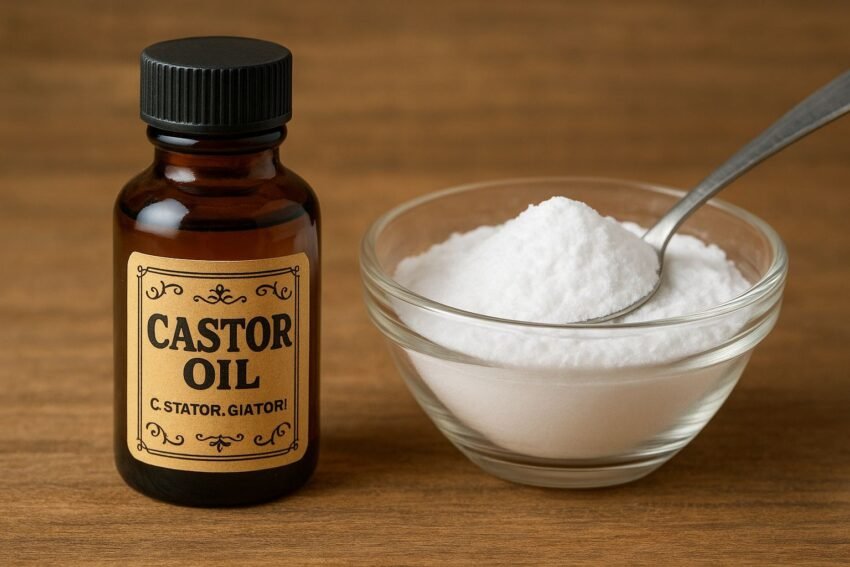
What is the Castor Oil and Baking Soda Mixture?
This combination is typically mixed into a paste and used as a folk remedy for various skin and health issues. The idea is that castor oil is deeply moisturizing and anti-inflammatory, while baking soda is a mild abrasive and is thought to have detoxifying properties.
Common Purported Uses (Found Online)
-
Skin Brightening and Dark Spot Removal: To lighten age spots, sun damage, or hyperpigmentation.
-
Acne Treatment: To dry out pimples and reduce inflammation.
-
Skin Tag and Mole Removal: A very popular (and dangerous) claim.
-
Athlete’s Foot and Fungal Issues: To combat fungus due to baking soda’s drying effect.
-
Detox Foot Soak or Poultice: Applied to the feet to “draw out toxins” from the body.
What Doctors and Dermatologists Really Say
When you look past the sensational headlines, medical professionals have a much more measured, and often cautious, view.
1. For Skin Brightening and Exfoliation: A Cautious “Maybe”
-
What they say: “Baking soda is alkaline with a pH around 9, while your skin’s protective acid mantle has a pH around 4.5-5.5. Using baking soda on your skin can disrupt this barrier, leading to dryness, irritation, and even making acne worse in the long run. While it may temporarily ‘brighten’ by exfoliating the top layer of dead skin, it can also cause micro-tears and damage. Castor oil is a great moisturizer, but mixing it with baking soda doesn’t create a miracle brightener. It’s a harsh physical exfoliant in an oil base.”
-
The takeaway: The “brightening” effect is likely just exfoliation, but the risks of irritating your skin’s protective barrier often outweigh the benefits. There are far gentler and more effective products formulated for this purpose.
2. For Mole or Skin Tag Removal: A Firm “Absolutely Not”
-
What they say: “This is dangerous. Any paste that claims to ‘burn off’ or ‘dry out’ a mole or skin tag is essentially causing a chemical burn at home. You cannot control the depth of the damage. This can lead to permanent scarring, severe infection, and misdiagnosis. A mole is a collection of pigmented cells. If it contains atypical or cancerous cells, burning it off can prevent a proper biopsy and allow any cancerous cells to spread deeper or recur.”
-
The takeaway: This is the most concerning claim. Never attempt to remove a mole or skin tag at home. Always see a dermatologist for any new or changing growth.
3. As a Detox Remedy: Highly Skeptical
-
What they say: “The human body has its own highly efficient detoxification systems: the liver and kidneys. There is no scientific evidence that applying a paste of castor oil and baking soda to your skin or feet can ‘draw out toxins.’ This is a pseudoscientific concept not recognized by medicine.”
-
The takeaway: Your body is perfectly capable of detoxifying itself. Focus on supporting your liver and kidneys with a healthy diet and plenty of water rather than relying on unproven topical remedies.
4. For Athlete’s Foot: Potentially Helpful, But Not a Cure
-
What they say: “Baking soda creates an alkaline environment, which can inhibit the growth of fungi that prefer an acidic environment. It also helps keep the area dry. Castor oil has some mild antimicrobial properties. As a supportive measure to keep feet dry between proper antifungal treatments, it might be harmless. However, it is not a substitute for proven, over-the-counter or prescription antifungal medications.”
-
The takeaway: It might help as a drying agent, but don’t rely on it as your primary treatment for a fungal infection.
The Bottom Line: Should You Try It?
-
For gentle exfoliation? Probably not. Use a gentle chemical exfoliant (like a low-percentage glycolic or lactic acid) or a finely ground, pH-balanced scrub formulated for the face.
-
For mole removal? Never. See a dermatologist.
-
For dry skin? Just use the castor oil on its own, or better yet, mix it with a lighter carrier oil like jojoba or almond oil. You don’t need the baking soda.
-
For a detox? Save your money and drink a glass of water.
The “doctors are speechless” headline is a classic marketing trick designed to make you click. In reality, doctors are often speechless for a different reason—they are baffled by the dangerous advice being spread. For safe and effective skincare, it’s always best to stick to evidence-based methods and consult a professional.