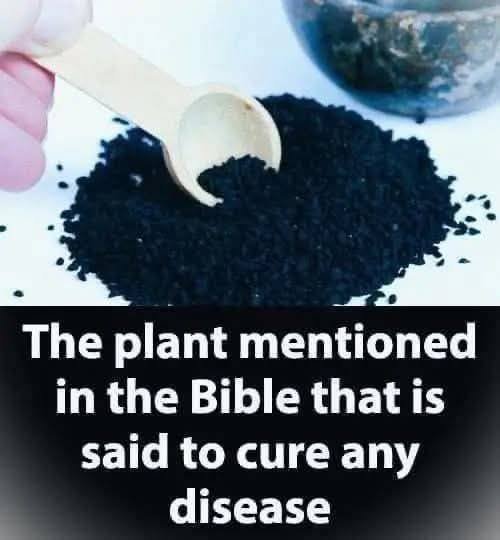
A “divine healer” among biblical plants. While the “Balm of Gilead” is the most famous biblical medicine, and the “Tree of Life” in Revelation is the ultimate symbol of eternal healing, Black Cumin (often called Black Seed or Nigella sativa) is the plant that modern science is investigating for its incredible broad-spectrum medicinal properties.
In many Muslim and Middle Eastern traditions, it is even believed to be “the remedy for all diseases except death,” a saying attributed to the Prophet Muhammad. However, its mention in the Bible is a subject of fascinating debate among scholars.
Here is a detailed look at Black Cumin and its connection to the Bible and healing.
The Plant: Nigella Sativa (Black Cumin)
-
What it is: An annual flowering plant native to parts of the Mediterranean, the Middle East, and South Asia. It produces small, black, triangular seeds.
-
Appearance: Not to be confused with the common kitchen herb cumin (Cuminum cyminum), which has larger, brownish-yellow seeds. Black cumin seeds are dark and have a slightly different, more complex flavor profile—often described as a mix of oregano, onions, and black pepper.
-
Historical Use: Its use dates back thousands of years. Black cumin seeds were found in the tomb of the Egyptian Pharaoh Tutankhamun, suggesting it was a valuable commodity. It has been used for centuries in traditional medicine systems like Unani, Ayurveda, and Siddha.
Is It in the Bible? The Case of “Kezah”
This is where it gets interesting. There is no direct translation for “Black Cumin” in most standard English Bibles. However, a very strong case can be made for it.
The candidate is the Hebrew word “Kezah” ( קֶצַח ). It appears only once in the Old Testament, in the Book of Isaiah.
The Source: Isaiah 28:25, 27
These verses describe a farmer’s wisdom in planting different crops appropriately:
-
Verse 25: “When he has leveled its surface, does he not scatter dill (Hebrew: qetsach), sow cumin (Hebrew: kammon), and plant wheat in rows, barley in its plot, and spelt in its place?” (Some translations use “black cumin” for qetsach and “cumin” for kammon).
-
Verse 27: “For dill ( qetsach ) is not threshed with a sledge, nor is a cart wheel rolled over cumin ( kammon ); but dill is beaten out with a stick, and cumin with a rod.”
Why Scholars Believe “Kezah” is Black Cumin:
-
Linguistic Evidence: The Hebrew word kezah is linguistically related to the Akkadian word zibû and the Arabic word qazḥa, both of which refer to a type of black-scented seed, almost certainly Nigella sativa.
-
The Threshing Detail: The verse describes a specific farming technique: dill (kezah) is beaten with a stick because its seed pods are delicate. Cumin (kammon), on the other hand, was often threshed with a heavier instrument. This distinction matches the known agricultural practices for these two different seeds in the ancient Near East.
-
Ancient Translations: Some very old translations of the Bible, like the Greek Septuagint and the Latin Vulgate, did not translate kezah consistently. However, later Jewish commentators and modern biblical botanists are nearly unanimous in identifying kezah as Nigella sativa.
Therefore, while your English Bible might say “dill,” the original Hebrew almost certainly refers to Black Cumin.
The “Heal All Ailments” Reputation
This reputation does not come directly from the Bible verse in Isaiah. Instead, it comes from a parallel tradition.
-
The Islamic Tradition: The most famous saying is attributed to the Prophet Muhammad: “Hold on to using this Black Seed, for it has a remedy for every illness except death.” (Sunan Ibn Majah). This Hadith elevated black seed to a near-mythical status as a panacea in the Islamic world.
-
The Scientific Connection: Modern research has begun to validate this ancient reputation. The active compound in black seed is Thymoquinone.
What Modern Science Says
Studies have shown that black seed and its compound thymoquinone possess a remarkable range of pharmacological activities:
-
Powerful Antioxidant: Helps neutralize harmful free radicals.
-
Anti-inflammatory: Reduces inflammation in the body, which is a root cause of many chronic diseases.
-
Immune System Modulator: Can help balance and strengthen the immune response.
-
Antimicrobial: Effective against certain bacteria, viruses, and fungi.
-
Anti-cancer Properties: Numerous in-vitro (lab) studies show thymoquinone can inhibit the growth of various cancer cells. (Note: This is promising research, not a cancer treatment recommendation).
-
Benefits for Specific Conditions: Studies suggest it may help with asthma, allergies, diabetes, high blood pressure, and digestive issues.
Summary: The Biblical “Healer”
So, to directly answer your query:
-
Is Black Cumin in the Bible? Yes, almost certainly. It is the plant referred to by the Hebrew word “Kezah” in Isaiah 28:25, 27, often mistranslated as “dill” in modern Bibles.
-
Is it Said to Heal All Ailments? The Bible itself does not make this claim for kezah. However, a parallel and powerful tradition (specifically in Islam) does make that claim for Black Seed. This reputation, combined with the plant’s presence in the Bible and its scientifically validated broad-spectrum medicinal properties, has led many people of faith and natural health advocates to call it the “Divine Healer” or the plant that “heals everything.”
It is a perfect example of how ancient wisdom, sacred texts, and modern science can converge on a single, remarkable plant.