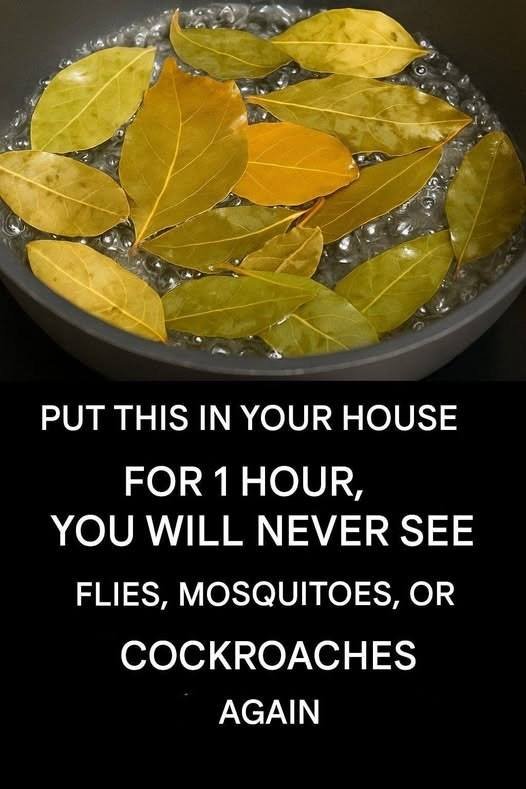
Here is the breakdown of how to make it safely, how it supposedly works, and the potential risks involved.
The “Boiling Leaves” Recipe (Decoded)
The instructions you provided seem to involve making a “poison bait” by boiling bay leaves and then mixing them with a sugary solution.
Ingredients:
-
5 tablespoons sugar (Attractant)
-
1 tablespoon baking powder (The “killer” agent for roaches)
-
1 cup water
-
15 bay leaves (Supposed repellent/toxin)
-
10 nails (Rusty nails create a smell/flavor? See warning below)
-
1 x 2-litre plastic bottle (The trap)
-
1/2 cup regular shampoo (Disrupts surface tension)
-
1/2 cup vegetable oil (Suffocates insects)
-
1/2 cup white vinegar (Cleaning agent/attractant)
How to Assemble the Trap
-
Boil the “base”: In a pot, bring the water, sugar, bay leaves, and nails to a boil. Let it simmer for 10-15 minutes. The theory is that the bay leaves release a scent that is attractive to bugs (or toxic to them) and the rust from the nails mimics the scent of decaying animal matter (which attracts flies and some roaches).
-
Cool down: Let this “tea” cool completely. Hot liquid will create steam and pressure in the bottle.
-
Prepare the bottle: Cut the plastic bottle in half around the middle.
-
Mix the oil and shampoo: In a small bowl, whisk the vegetable oil and shampoo together. The shampoo helps the oil mix with the water and traps the insects by breaking the surface tension (so they sink and drown instead of walking on top of the water).
-
Combine: Pour the cooled bay leaf mixture into the bottom of the bottle. Add the vinegar. Add the oil/shampoo mixture.
-
Add the “explosive” element: Add the baking powder last. Do not seal the bottle immediately.
-
Why? When you add baking powder (a base) to vinegar (an acid), it creates a fizzy reaction (carbon dioxide). This helps spread the scent around the room, but if you cap the bottle, it will burst.
-
-
Set the trap: Place the top half of the bottle upside down (like a funnel) into the bottom half. Tape it in place if needed. Place it in corners or near trash cans.
🚨 The Problem with “Nails” (Safety Warning)
While rusty nails are a common ingredient in old folk recipes (supposedly to release iron into the water to attract bugs), using random nails is dangerous.
-
Sharp edges: You risk cutting yourself when handling the bottle later.
-
Contaminants: Galvanized nails contain zinc, and other nails might have coatings that are toxic to you if they leach into the liquid and you accidentally touch it or if a pet drinks it.
Recommendation: You can skip the nails entirely. The sugar and shampoo are strong enough attractants on their own.
Does it actually work?
-
For Flies: Yes, this works well. Flies are attracted to the fermenting sugar, land on the surface, but the oil/shampoo breaks the surface tension and they drown.
-
For Mosquitoes: Unlikely. Mosquitoes are attracted to standing water to lay eggs, but they are more attracted to CO2 (carbon dioxide) from breath. This mixture might actually breed mosquitoes if you don’t change the water regularly.
-
For Roaches: The baking soda theory is that when roaches eat it, it reacts with their stomach acid and causes them to explode. However, they usually need to eat it dry. Mixing it in water makes it less effective.
Would you like a simpler, safer recipe for just one of these pests (like a fruit fly trap or roach bait)?