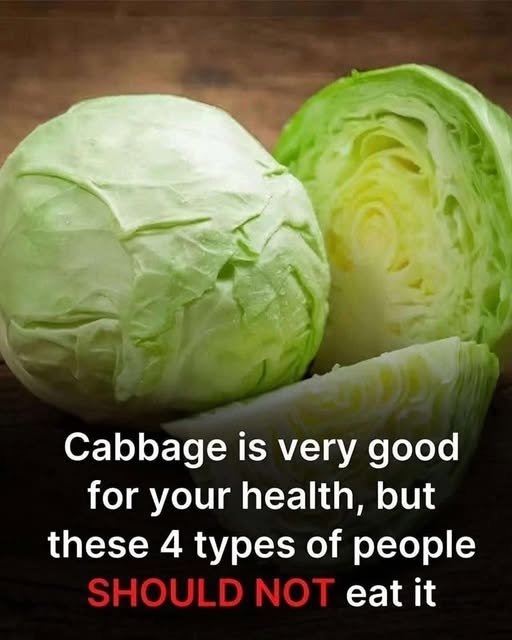
The 4 Types of People Who Shouldn’t Eat Cabbage (Or Should Proceed with Caution)
While cabbage is a nutritional powerhouse—packed with vitamins, fiber, and antioxidants—it can cause issues for certain individuals due to its specific compounds (like raffinose, sulfur-containing glucosinolates, and goitrogens). Here’s a breakdown of who might need to limit or avoid it.
1. People with Severe Hypothyroidism or Iodine Deficiency
-
Why: Cabbage contains goitrogens, substances that can interfere with thyroid hormone production by inhibiting iodine uptake in the thyroid gland.
-
Risk: For individuals with an already underactive thyroid (especially untreated) or severe iodine deficiency, consuming large, frequent amounts of raw cabbage (more potent than cooked) could potentially worsen the condition.
-
Advice: Cooking significantly reduces goitrogenic activity. Most people with well-managed hypothyroidism (on medication like levothyroxine) can eat moderate amounts of cabbage without issue, but those with severe or uncontrolled thyroid conditions should consult their doctor and may need to limit raw intake.
2. People Prone to Severe Gas, Bloating, or FODMAP Intolerance
-
Why: Cabbage contains raffinose, a complex sugar (an oligosaccharide and high-FODMAP food) that humans lack the enzyme to digest. Gut bacteria ferment it, producing gas. It’s also high in insoluble fiber.
-
Risk: Individuals with IBS (Irritable Bowel Syndrome), particularly those sensitive to high-FODMAP foods, or anyone with a very sensitive digestive system may experience painful cramping, excessive bloating, and flatulence.
-
Advice: Smaller portions, thorough cooking, and pairing with digestive spices (like cumin or fennel) can help. Those on a strict low-FODMAP diet during a flare-up may need to avoid it temporarily.
3. People Taking the Blood-Thinner Warfarin (Coumadin)
-
Why: Cabbage is rich in Vitamin K, a vitamin essential for blood clotting. Warfarin works by antagonizing Vitamin K.
-
Risk: Suddenly eating large, inconsistent amounts of high-Vitamin K foods can interfere with Warfarin’s effectiveness, making it harder for doctors to maintain a stable, therapeutic INR (International Normalized Ratio) level, potentially increasing risk of clotting or bleeding.
-
Advice: Consistency is key. Patients are advised to maintain a steady, consistent intake of Vitamin K-rich foods (like cabbage, kale, spinach) week-to-week, not to avoid them entirely. Any major dietary changes should be discussed with their healthcare provider.
4. People with a Documentated Oxalate Kidney Stone History (Specific Types)
-
Why: Certain leafy greens (like spinach and beet greens) are very high in oxalates, which can contribute to calcium-oxalate stones. Cabbage is actually low-to-moderate in oxalates, but some strict, physician-prescribed low-oxalate diets might initially limit it.
-
Risk: Generally low for cabbage, but individuals on a therapeutic, restrictive low-oxalate diet for recurrent stone formation may be advised to monitor all moderate-oxalate vegetables.
-
Advice: If you form oxalate stones, follow your doctor’s or dietitian’s specific guidance. For most, cabbage is a safe choice compared to high-oxalate veggies.
Important Note: “Shouldn’t Eat” vs. “Should Be Cautious”
For most in these groups, the advice isn’t necessarily “never eat cabbage,” but rather:
-
Cook it thoroughly (reduces goitrogens and FODMAPs, softens fiber).
-
Start with small portions to assess tolerance.
-
Maintain consistency (crucial for those on Warfarin).
-
Consult with a doctor or registered dietitian for personalized advice, especially if you have a diagnosed medical condition.
Who Can Generally Eat Cabbage Freely?
Most people! It’s a healthy, affordable vegetable. Introducing it gradually and cooking it can help minimize common side effects like gas. If you have no underlying conditions, enjoy it as part of a varied diet.