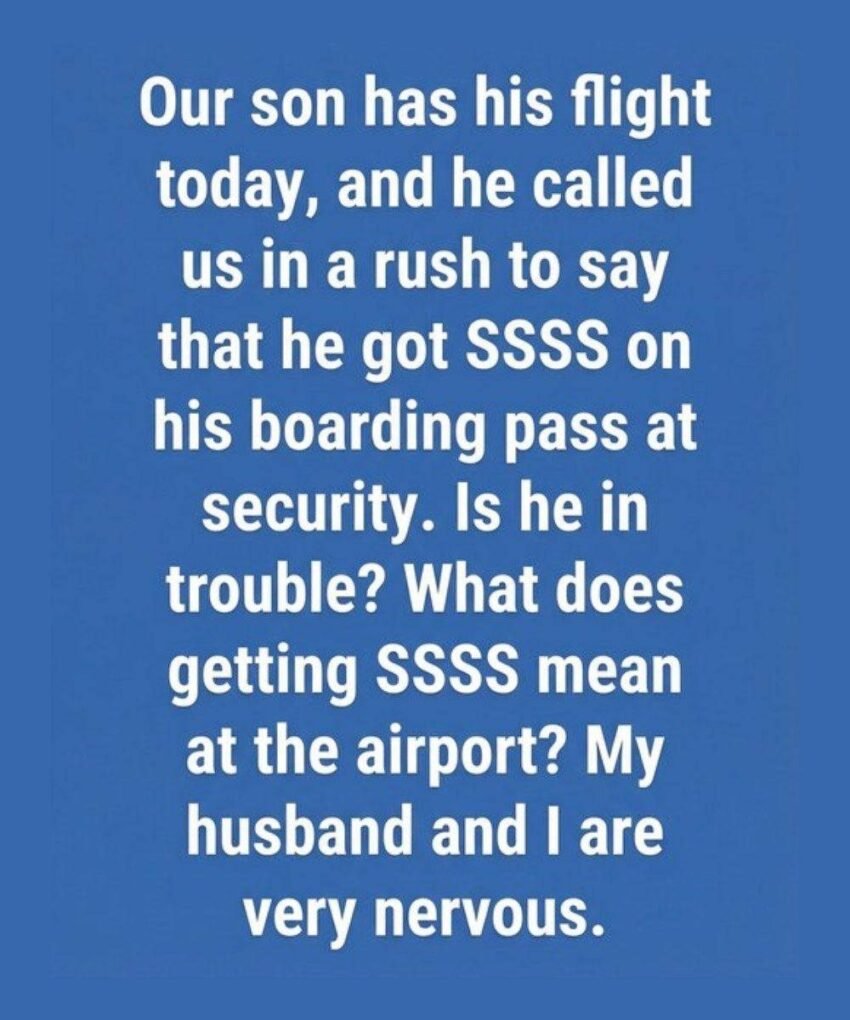
If you’ve ever looked at your boarding pass and seen “SSSS” printed on it, you might have wondered if it was a typo or some kind of code. It’s neither—it stands for Secondary Security Screening Selection, and it means you’ve been selected for additional scrutiny by the Transportation Security Administration (TSA).
Here’s a breakdown of what it means, why it happens, and what to expect if you see it.
What is “SSSS”?
SSSS is a designation used by the TSA to flag certain passengers for enhanced screening before they board a flight. It applies to both domestic and international travel within and from the United States.
If you have this on your boarding pass, you cannot check in online or at a kiosk. You must check in with a human agent at the airport counter, who will verify your documents and then stamp or mark your pass, directing you to a special security lane for additional screening.
What Happens During an SSSS Screening?
The process is more thorough than the standard security check. You can expect:
-
Detailed Baggage Check: TSA agents will physically search both your carry-on and checked luggage, often swabbing them for explosive residue.
-
Pat-Down: You will likely undergo a full-body pat-down.
-
Explosives Trace Detection: You and your belongings may be swabbed and tested.
-
Interview: An agent might ask you questions about your travel plans.
-
ETD (Explosive Trace Detection) Testing: Your shoes, hands, and personal items may be tested.
Because this process takes significantly longer, if you see SSSS on your pass, arrive at the airport at least three hours before your flight to ensure you don’t miss it.
Why Were You Flagged?
The exact criteria the TSA uses are confidential to maintain security, but several factors are known to potentially trigger an SSSS designation:
-
Random Selection: Sometimes, it’s completely random. The TSA uses random selection as an unpredictable security measure.
-
Flying to or from High-Risk Destinations: If your itinerary includes countries considered “high-risk” by U.S. intelligence, you are more likely to be flagged.
-
Last-Minute Cash Purchases: Buying a one-way ticket with cash shortly before departure can be a red flag.
-
Name Matches a Watchlist: Your name might be similar or identical to a name on a government watchlist. This is the most common reason for frequent fliers who get flagged repeatedly. You can apply for a Redress Control Number (RCN) through the Department of Homeland Security’s Traveler Redress Inquiry Program (DHS TRIP) to fix this if it happens often.
-
Unusual Travel Patterns: Frequently traveling to certain regions or having gaps in your travel history can sometimes trigger additional screening.
-
Your International Travel History: The way your passport is stamped or the countries you’ve visited recently can be a factor.
-
You’re a New Frequenter Flier: If you have no established travel history, you might be selected more often.
Can You Get Rid of It?
You cannot remove SSSS from a single flight once it’s issued. However, if you are frequently flagged, you can:
-
Apply for a Redress Number through the DHS TRIP website. This gives you a unique number that you can add to your future flight reservations, which helps the TSA distinguish you from someone with a similar name on a watchlist.
In short, while seeing SSSS is inconvenient and stressful, it’s usually just a random or bureaucratic hiccup. The best thing to do is plan for extra time and cooperate with the agents to get through it as smoothly as possible.