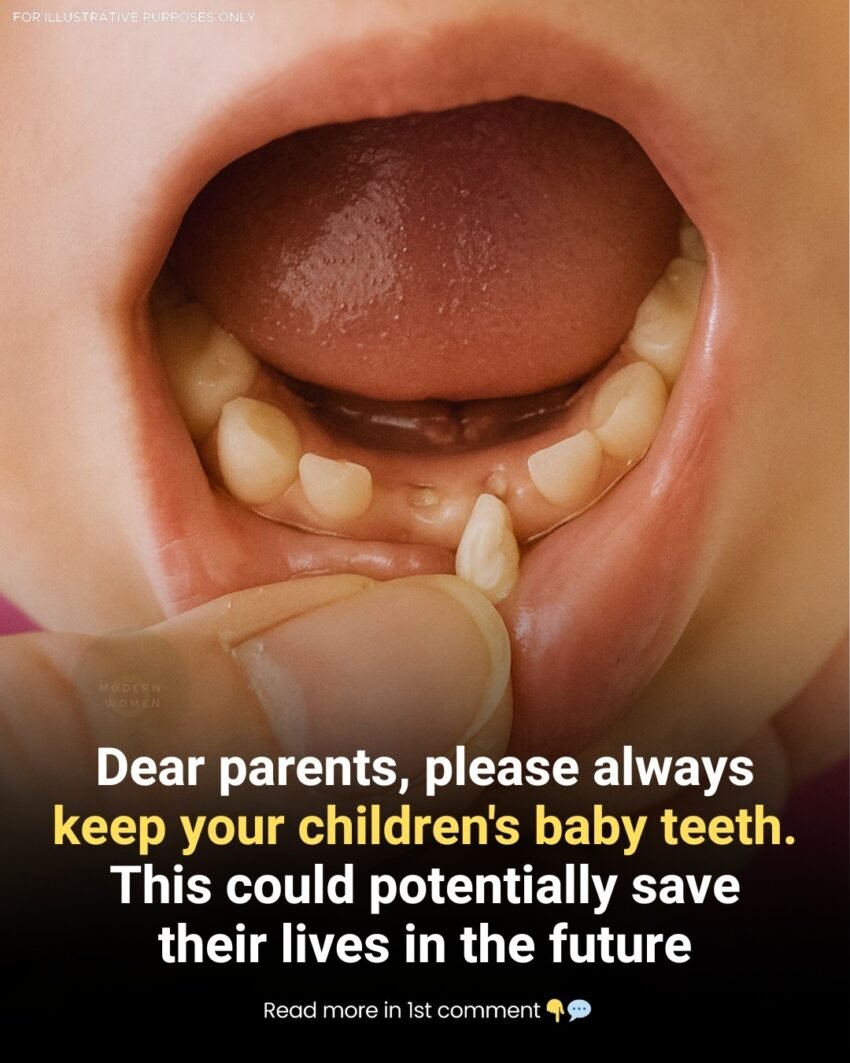
The idea that a body part designed to fall out could hold the key to future medical treatments is a compelling one. Let’s dive into the science behind “Tiny Teeth, Big Possibilities.”
The Discovery: A Serendipitous Find
For decades, scientists knew that certain tissues, like bone marrow and fat, contained valuable stem cells. But the discovery of stem cells in baby teeth was relatively recent and somewhat accidental.
In the early 2000s, Dr. Songtao Shi, a pediatric dentist and researcher at the National Institutes of Health (NIH), was examining a lost baby tooth from his daughter. He noticed a unique population of cells in the dental pulp—the soft, living tissue inside the tooth. Upon further investigation, he found that these cells were remarkably vibrant, proliferative, and had the ability to turn into multiple cell types. He named them Stem cells from Human Exfoliated Deciduous teeth (SHED) .
This was a breakthrough. Finally, here was a source of stem cells that was:
-
Easily Accessible: Teeth fall out naturally or are extracted by a dentist, making collection non-invasive and painless.
-
Young and Robust: Baby tooth stem cells are more primitive and plastic than adult stem cells, meaning they can multiply faster and potentially differentiate into a wider range of cell types.
-
Ethically Uncontroversial: Unlike embryonic stem cells, there are no ethical debates surrounding the collection of baby teeth.
The Unique Power of SHED
So, what makes these cells so special? SHED are a type of mesenchymal stem cell (MSC). While they share some characteristics with other MSCs (like those from bone marrow), they have distinct advantages:
-
Neural Crest Origin: This is their superpower. SHED originate from the neural crest, a temporary structure in early embryonic development that gives rise to not only teeth but also parts of the nervous system, bones of the face, and other tissues. This means SHED have a natural predisposition to become neuron-like cells, making them exceptionally promising for treating neurological conditions.
-
High Proliferation Rate: SHED have a higher rate of cell division compared to adult stem cells. This means that from a single tiny tooth, scientists can potentially grow a large quantity of cells needed for therapy.
-
Excellent Immunomodulatory Properties: SHED can help regulate the body’s immune response. They can suppress inflammation and “instruct” the local environment to be more accepting of healing, rather than attacking the damaged area. This is crucial for treating autoimmune diseases and preventing transplant rejection.
Big Possibilities: The Future of Regenerative Medicine
The potential applications of SHED are vast and span nearly every field of medicine. Researchers are actively exploring their use in:
Repairing and Regenerating Tissue
-
Neural Repair: This is arguably the most exciting area. In animal models, SHED have been shown to differentiate into neurons and support cells, offering hope for treating:
-
Spinal cord injuries: Promoting nerve regeneration and restoring function.
-
Stroke: Repairing damaged brain tissue.
-
Neurodegenerative diseases: Such as Parkinson’s and Alzheimer’s, where SHED could potentially replace lost neurons and provide protective factors.
-
-
Dental and Craniofacial Regeneration: The most direct application. Scientists envision using a child’s own SHED to:
-
Regenerate dental pulp in a damaged adult tooth, saving it from a root canal.
-
Repair cleft palates or other bone defects in the jaw and skull.
-
-
Bone and Cartilage Repair: SHED can be guided to form osteoblasts (bone cells) and chondrocytes (cartilage cells), making them candidates for treating conditions like osteoarthritis or repairing bone fractures.
-
Corneal Regeneration: Early studies suggest SHED can help repair damaged corneas, restoring vision.
Treating Systemic and Immune-Related Diseases
-
Type 1 Diabetes: Researchers are investigating whether SHED can be coaxed into producing insulin, offering a potential cell-based therapy for diabetes.
-
Autoimmune Diseases: Because of their ability to modulate the immune system, SHED are being studied for treating conditions like rheumatoid arthritis, multiple sclerosis, and Crohn’s disease, where the body’s immune system attacks itself.
-
Liver Disease: SHED have shown the ability to differentiate into hepatocyte-like cells (liver cells) and help repair damaged liver tissue in animal studies.
The Path from Possibility to Reality
It’s crucial to understand that most of this research is still in the preclinical and early clinical trial stages. While the results in animal models and small human studies are incredibly promising, we are likely years away from widespread, approved therapies.
Current challenges include:
-
Standardization: Developing reliable, reproducible methods to grow and prepare SHED for treatment.
-
Safety: Ensuring that transplanted cells don’t form tumors or have other unintended consequences.
-
Regulation: Navigating the complex regulatory pathways to get these therapies approved for public use.
What Does This Mean for You Today?
The promise has led to the rise of private tooth banking companies. For a fee (usually an initial collection/processing fee plus an annual storage fee), they will extract, test, and cryogenically freeze the stem cells from your child’s lost baby teeth.
Is it worth it? This is a personal decision.
-
The Optimist’s View: You are investing in a form of “biological insurance” for your child’s future. You are preserving a valuable, young resource that could be used for personalized regenerative therapies 20 or 30 years from now.
-
The Skeptic’s View: The science is still unproven. There’s no guarantee that the cells you store today will be usable, effective, or even needed for a treatable condition in the future. It is an expensive bet on future technology.
Conclusion
“Tiny Teeth, Big Possibilities” is not just a catchy phrase. It perfectly captures the essence of this groundbreaking research. A child’s lost baby tooth, once a simple memento, is now understood to be a potential treasure trove of powerful stem cells. While the path to routine clinical use is long, the potential to repair damaged brains, mend broken hearts, and cure autoimmune diseases makes these tiny teeth one of the most exciting frontiers in regenerative medicine.