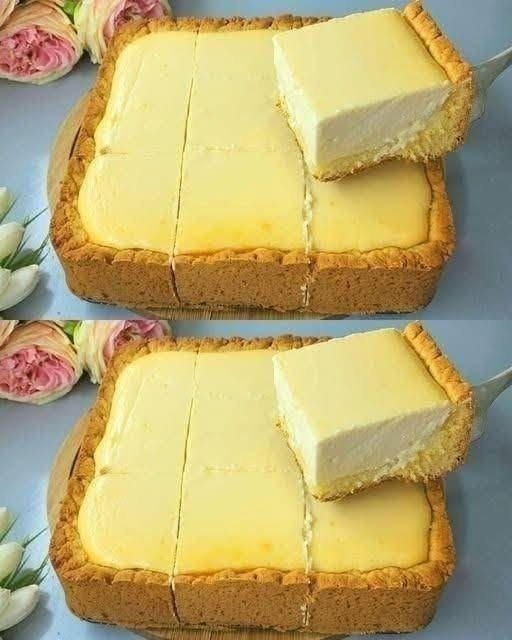
The authentic version is a shortcrust pastry (pasta frolla) shell filled with a rich vanilla custard (crema pasticcera) and topped with crunchy pine nuts and a dusting of powdered sugar. It’s the perfect balance of buttery, creamy, and nutty.
Here is a detailed recipe to make this beautiful cake at home.
Torta della Nonna (Grandmother’s Tart)
This recipe makes one 9-10 inch (24cm) tart, serving about 8 people.
Ingredients
For the Pasta Frolla (Shortcrust Pastry):
-
2 cups (250g) all-purpose flour
-
½ cup (100g) granulated sugar
-
½ cup (115g) unsalted butter, very cold and cut into small cubes
-
1 large egg + 1 large egg yolk (save the egg white for later)
-
Zest of 1 lemon (organic, unwaxed)
-
1 teaspoon vanilla extract
-
Pinch of salt
For the Crema Pasticcera (Pastry Cream):
-
2 cups (500ml) whole milk
-
½ cup (100g) granulated sugar
-
4 large egg yolks
-
⅓ cup (40g) cornstarch (cornflour)
-
Zest of 1 lemon (or 1 teaspoon vanilla extract)
For the Topping:
-
⅓ cup (50g) pine nuts
-
Powdered sugar, for dusting
-
The reserved egg white (from the pastry), lightly beaten
Instructions
This recipe has a few steps, but each is simple. It can be broken up over two days.
Step 1: Make the Pasta Frolla (Pastry)
-
On a clean work surface or in a large bowl, combine the flour, sugar, and salt. (Or use a stand mixer with the paddle attachment).
-
Add the cold butter cubes. Using your fingertips (or the mixer on low), work the butter into the flour quickly until the mixture resembles coarse breadcrumbs. You don’t want the butter to melt; you want small, flat pieces of butter throughout.
-
Make a well in the center. Add the whole egg, the egg yolk, lemon zest, and vanilla extract.
-
Gently mix with a fork until it just starts to come together, then use your hands to gently knead it into a smooth ball. Be careful not to overwork the dough, or it will be tough.
-
Flatten the ball into a disk, wrap it in plastic wrap, and refrigerate for at least 1 hour (or up to 2 days). This rest is crucial to relax the gluten and firm up the butter.
Step 2: Make the Crema Pasticcera (Pastry Cream)
-
In a medium saucepan, heat the milk with the lemon zest (if using) until it’s just about to simmer. Turn off the heat. If you used zest, let it infuse for 10 minutes, then strain it out.
-
In a separate bowl, whisk the egg yolks and sugar together until pale and thick.
-
Add the cornstarch to the yolk mixture and whisk until completely smooth and no lumps remain.
-
Slowly pour about ½ cup of the hot milk into the yolk mixture, whisking constantly. This “tempers” the eggs so they don’t scramble.
-
Pour the tempered yolk mixture back into the saucepan with the rest of the milk.
-
Place the saucepan over medium heat and whisk constantly. It will thicken quickly. Keep whisking for 2-3 minutes after it starts to bubble to cook out the raw starch taste.
-
Remove from heat. If you’re using vanilla extract instead of lemon zest, stir it in now.
-
Pour the cream into a shallow bowl, cover directly with plastic wrap (pressing it onto the surface to prevent a skin from forming), and refrigerate until completely cold (at least 2 hours).
Step 3: Assemble the Tart
-
Preheat your oven to 350°F (175°C) . Grease and flour a 9 or 10-inch tart pan (preferably with a removable bottom).
-
Take the chilled dough out of the fridge. On a lightly floured surface, roll it out into a circle about 12 inches in diameter and about ¼-inch thick.
-
Carefully transfer the dough to the prepared tart pan. Gently press it into the bottom and up the sides. Run your rolling pin over the top of the pan to trim off the excess dough. Prick the bottom all over with a fork. Place it in the fridge for 15-20 minutes to firm up again.
-
Take the cold pastry cream out of the fridge and give it a quick stir to loosen it. Spread it evenly into the chilled tart shell.
-
To make the top lattice (optional but traditional): Gather the dough scraps, re-roll them, and cut them into long strips. Lay the strips in a lattice pattern over the custard. This is a classic look, but the tart is just as delicious without it.
-
If not making a lattice: Simply sprinkle the pine nuts evenly over the entire surface of the custard. Then, using a pastry brush, gently brush the edge of the exposed pastry crust with the beaten egg white.
-
If making a lattice: Brush the lattice strips with the beaten egg white. Then, carefully sprinkle the pine nuts over the custard, trying to get them in the open spaces of the lattice. Brush the outer crust edge with egg white as well.
Step 4: Bake and Serve
-
Bake for 30-40 minutes, or until the crust is golden brown and the custard is set (it should jiggle only slightly in the very center).
-
Let the tart cool completely in the pan on a wire rack. The custard needs time to set fully.
-
Once completely cool, carefully remove the tart from the pan. Just before serving, dust the top generously with powdered sugar.
Tips for Success:
-
Cold Butter is Key: For a flaky crust, your butter must be cold.
-
Chill the Dough: Don’t skip the resting times; they prevent the crust from shrinking.
-
Strain the Custard: For an extra-silky cream, you can strain it through a fine-mesh sieve after cooking.
-
Serve at Room Temperature: This tart is best enjoyed at room temperature, not straight from the fridge, so the flavors and texture can shine.