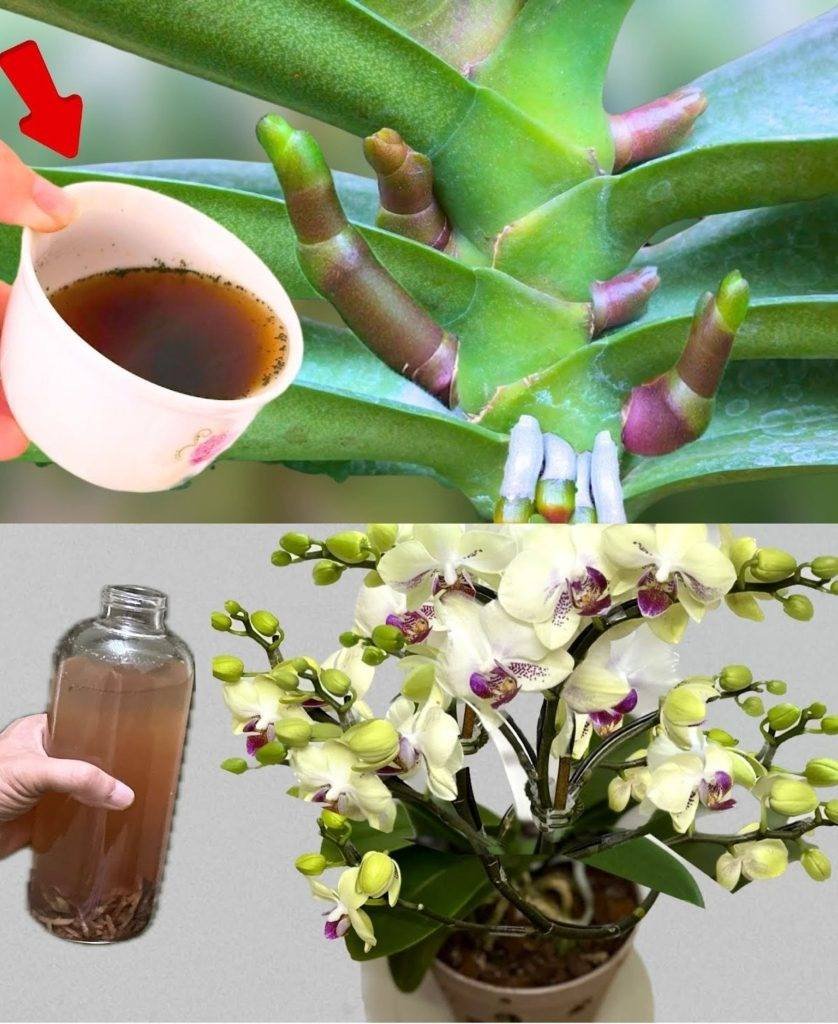
his is a fantastic and popular tip among orchid enthusiasts! The claim is that a common kitchen ingredient can work wonders for your orchids, making them more vibrant, leafy, and likely to rebloom.
The secret ingredient is rice water.
Here’s everything you need to know about why it works, how to prepare it, and how to use it to help your orchid thrive.
The Secret: Rice Water
Rice water is the starchy water left over after rinsing or cooking rice. For centuries, it’s been used in various cultures as a hair rinse and skin treatment, and it’s also a fantastic, gentle, and natural fertilizer for plants.
Why It Works: The Science-Backed Benefits
Rice water is beneficial for orchids (and many other houseplants) for several reasons:
-
Starch for Energy: The starch in rice water contains carbohydrates. In the soil (or potting mix), these carbohydrates break down and provide a food source for beneficial bacteria and fungi. These microorganisms, in turn, help break down organic matter in the potting mix, making nutrients more accessible to the orchid’s roots.
-
Vitamins and Minerals: Rice water contains small amounts of essential nutrients that plants need, including:
-
Nitrogen (N): Promotes healthy, lush leaf growth (hence the “very leafy” claim).
-
Phosphorus (P): Supports strong root development and is crucial for flower production.
-
Potassium (K): Overall plant health and disease resistance.
-
It also contains traces of thiamin, niacin, and other B-vitamins which can act as growth boosters.
-
-
Beneficial Microbes: When rice water is fermented (see method below), it becomes a breeding ground for beneficial bacteria (Lactobacillus), similar to what you’d find in a probiotic. These “good” bacteria can help suppress harmful pathogens in the potting mix and promote a healthy root zone.
-
Gentle and Organic: Unlike harsh chemical fertilizers, rice water is a very mild, organic option that’s nearly impossible to overdo. It’s a great supplement, especially for orchids that are sensitive to salt buildup from synthetic fertilizers.
How to Prepare Rice Water for Your Orchid
There are two main ways to use rice water: plain and fermented. Fermented rice water is more potent and has more beneficial microbes, but plain rice water is perfectly good for regular use.
Method 1: The Simple Soak (Plain Rice Water)
This is the easiest method for a quick nutrient boost.
-
Rinse: Take ½ cup of uncooked rice (any type: white, brown, jasmine, etc.) and rinse it thoroughly in a fine-mesh strainer to remove any dust or debris.
-
Soak: Place the rinsed rice in a bowl or jar and cover it with 2-3 cups of water. Let it soak for 30-60 minutes, stirring occasionally. The water will become cloudy.
-
Strain: Pour the water through a strainer into a clean container. This is your rice water. You can cook with the strained rice as usual.
Method 2: The Boiled Rice Water
If you’re already cooking rice, this is a fantastic way to repurpose what you’d normally pour down the drain.
-
Cook Rice: Cook your rice as you normally would, using a ratio of about 1 part rice to 3-4 parts water.
-
Reserve Water: When the rice is done, pour off the excess water into a container.
-
Cool Completely: This is crucial. Let the water cool down to room temperature before using it on your plant. Hot water will kill the roots.
Method 3: The Fermented Rice Water (The “Power-Up” Version)
Fermented rice water is richer in beneficial bacteria and nutrients. It’s what many growers swear by for incredible results.
-
Combine: In a jar, combine 1 cup of rice with 1 cup of water. Shake or stir vigorously.
-
Strain: After a minute or two, strain the milky white liquid into a clean jar. This is your rice water concentrate.
-
Ferment: Cover the jar with a cloth or a loose-fitting lid (do not seal it tight, as gases need to escape). Let it sit at room temperature for 2-5 days. The mixture will start to smell sour and slightly fermented. You may see it separate into layers.
-
Dilute: To use, dilute this fermented concentrate. Use a ratio of 1 part fermented rice water to 3-5 parts fresh water.
How to Use Rice Water on Your Orchid
-
Water as Usual: Use your prepared (and cooled/diluted) rice water exactly as you would use regular water.
-
Application: Pour it slowly and evenly over the potting mix, ensuring it reaches the roots. Water thoroughly until you see it draining from the bottom of the pot.
-
Frequency: Use rice water once a month as a supplement to your regular watering routine. For plain rice water, you could use it every other watering, but once a month is a safe and effective schedule. For fermented rice water, once a month is ideal.
-
Flush Occasionally: Every 2-3 months, use plain, distilled water to thoroughly flush the pot. This helps prevent any potential salt or starch buildup from the rice water.
Important Precautions
-
Always Dilute (for fermented): Never use undiluted fermented rice water. It’s too acidic and concentrated and could harm the roots.
-
Cool Down: Never use hot rice water.
-
Avoid Leaves: Try to water the potting mix, not the leaves. Standing water in the crown (the center where leaves meet) can cause crown rot, a common killer of orchids.
-
Monitor Your Plant: As with any new treatment, observe your orchid. If you notice any negative changes (like yellowing leaves), stop using it and flush the pot with plain water.
-
Smell: Fermented rice water has a distinct, sour smell. This is normal, but you may not want to keep the jar in your kitchen. Diluting it for use will also dilute the smell.
Give this simple, cost-free hack a try. Your orchid might just reward you with lush, vibrant leaves and a spectacular display of blooms