
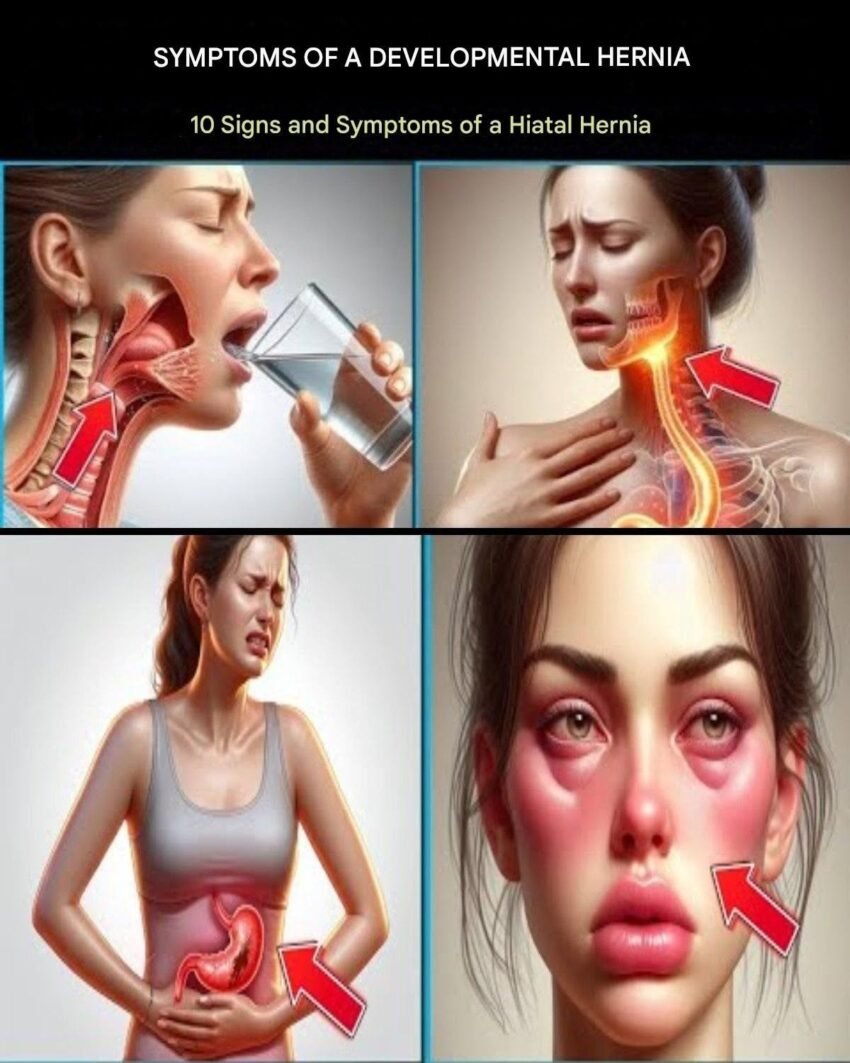
Here are some commonly reported signs and symptoms associated with a hiatal hernia, explained with appropriate context.
Commonly Reported Symptoms
A hiatal hernia occurs when part of the stomach pushes up through the diaphragm into the chest cavity. Many people with a small hiatal hernia have no symptoms at all, and it’s sometimes discovered incidentally. When symptoms do occur, they often mimic gastroesophageal reflux disease (GERD).
1. Heartburn
A burning sensation in the chest, often after eating or when lying down. This is one of the most common symptoms and can be worse at night.
2. Regurgitation
The sensation of stomach acid, food, or bitter-tasting liquid backing up into your throat or mouth.
3. Difficulty Swallowing (Dysphagia)
A feeling that food is sticking in your throat or chest. This can feel like a lump sensation or pressure behind the breastbone.
4. Chest Pain
Pain or discomfort in the chest, which can sometimes be mistaken for heart-related chest pain. Any unexplained chest pain warrants immediate medical evaluation to rule out cardiac causes.
5. Shortness of Breath
A large hiatal hernia can crowd the chest cavity and press on the lungs, leading to breathlessness, especially when bending over or after a large meal.
6. Feeling Full Quickly (Early Satiety)
The hernia can alter the stomach’s position and capacity, making you feel uncomfortably full after eating only a small amount.
7. Frequent Belching or Hiccups
The altered anatomy and associated acid reflux can trigger frequent belching or prolonged bouts of hiccups.
8. Sour or Bitter Taste in the Mouth
Stomach acid reaching the back of the throat can leave an unpleasant, acidic, or metallic taste.
9. Abdominal or Chest Pressure
A vague sense of pressure, bloating, or discomfort in the upper abdomen or lower chest, particularly after meals.
10. Nausea
Persistent nausea, especially following meals, can be a related symptom due to delayed stomach emptying or acid reflux.
Important Context
-
Overlap with GERD: The symptoms listed above strongly overlap with GERD. A hiatal hernia is often diagnosed during an endoscopy or imaging study investigating reflux symptoms.
-
When to Seek Emergency Care: If you experience severe, sudden chest pain, especially with sweating, shortness of breath, or pain radiating to the arm or jaw, seek emergency medical attention immediately. These could be signs of a heart attack, not a hernia.
-
Consult a Professional: This information is for educational purposes only. A gastroenterologist or primary care physician can provide a proper diagnosis through a physical exam and appropriate tests, such as a barium swallow or upper endoscopy.
If you have ongoing concerns, I’d encourage you to make an appointment with your doctor.