
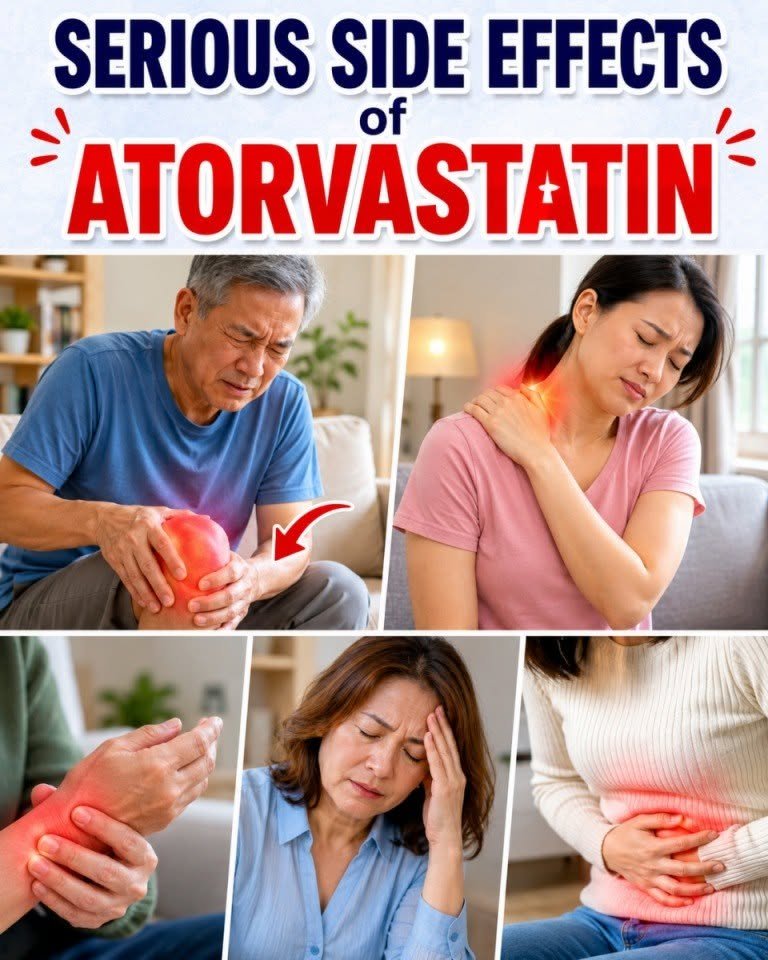
This is a vital topic because atorvastatin (Lipitor) is one of the most prescribed drugs globally, and while it’s generally safe and effective, patients are often told only about the classic muscle pain and liver enzyme elevation. Many discontinue it unnecessarily, not realizing their vague new symptom is a manageable side effect.
Here are 15 lesser-known side effects, why they happen, and practical steps you can take today—crucially, without stopping your medication on your own.
Cognitive & Neurological Effects
1. Brain Fog & Word-Finding Difficulty
A distinct “cotton wool” feeling, trouble retrieving specific words, or mental sluggishness. The brain requires cholesterol for synapse formation and myelin sheath maintenance. Aggressive LDL lowering might temporarily disrupt this in sensitive individuals.
-
What to do today: Ask your doctor about switching from atorvastatin to rosuvastatin. Rosuvastatin is hydrophilic (water-soluble) and less likely to cross the blood-brain barrier than lipophilic statins like atorvastatin. The cognitive fog often clears completely with this switch.
2. Vivid, Disturbing Dreams or Nightmares
Patients rarely connect their new cinematic nightmares to their cholesterol pill. The mechanism isn’t fully understood, but it’s reported enough to be in the literature.
-
What to do today: Take your dose in the morning, not at night. Atorvastatin’s half-life is long enough (14 hours) that morning dosing is equally effective for cholesterol synthesis, but it may reduce the peak blood concentration during REM sleep, minimizing this effect.
Metabolic & Endocrine Disruption
3. New or Worsening Insulin Resistance
Statins can slightly impair pancreatic beta-cell function and reduce insulin sensitivity, raising blood sugar modestly. A person with borderline prediabetes can tip into diagnosis.
-
What to do today: This is not a reason to stop the statin (the cardiovascular protection far outweighs the small glucose rise), but it is a reason to get a baseline HbA1c test if you haven’t. Proactively add 10 minutes of walking after meals—this directly counters the glucose effect and is a powerful adjunct to the statin’s benefit.
4. Coenzyme Q10 (CoQ10) Depletion with Muscle Weakness Beyond Pain
The classic side effect is myalgia (muscle pain). The lesser-known one is a generalized, non-painful muscle weakness or exercise intolerance. Statins block the HMG-CoA reductase pathway, which produces cholesterol and CoQ10, a crucial mitochondrial energy carrier.
-
What to do today: Start a high-quality ubiquinol form of CoQ10 at 100–200 mg daily with a meal containing fat. Ubiquinol is the active, bioavailable form. Avoid cheap ubiquinone. Expect a 4–6 week trial to feel a difference.
Psychiatric & Mood Changes
5. Increased Irritability & Agitation
A loved one might describe you as “snapping” more easily. The neurosteroid pathway requires cholesterol, and statins may temporarily lower levels of brain chemicals that regulate mood resilience.
-
What to do today: Track it with a simple mood note on your phone for 2 weeks. If it coincides with a statin dose increase, switching to a lower, intermittent dose (e.g., every other day) under doctor’s guidance often resolves the mood shift while maintaining LDL reduction.
6. Depressive Symptoms Misattributed to Life Circumstances
Beyond irritability, a flatter, more persistent low mood can emerge. It’s often dismissed because the patient is typically at an age where life stressors (aging parents, retirement, health) are already present.
-
What to do today: If you started the statin within the last 6 months, discuss a trial statin holiday of 2–4 weeks with your doctor. Mood-related side effects will lift relatively quickly if the statin is the cause.
Skin, Sensory & Physical Changes
7. A Distinctive Butterfly Rash or Photosensitivity
Some patients develop a mild, lupus-like or rosacea-like facial rash, or find they burn in the sun for the first time in their lives. This is a rare but known drug-induced reaction.
-
What to do today: Document the rash with a photo. Use a high-SPF mineral sunscreen (zinc oxide) daily. Show the photo to your doctor; a change in statin type or a dermatology referral may be needed.
8. Tinnitus (Ringing in the Ears) That Starts or Worsens
A high-pitched ringing can appear. The inner ear’s outer hair cells are highly metabolically active and sensitive to microvascular changes or neurosteroid disruption.
-
What to do today: Rule out the obvious first—have your blood pressure checked. Hypertension is the most common cause of tinnitus, and many statin users already have cardiovascular concerns. If BP is controlled, the statin becomes a stronger suspect.
Gastrointestinal & Abdominal
9. Persistent “Lump in the Throat” Sensation (Globus) or Unexplained Nausea
Not severe pain or vomiting, but a nagging, feeling of a pill stuck in the throat, even hours later, or persistent low-grade nausea that kills appetite.
-
What to do today: This is often acid reflux—statins can relax the lower esophageal sphincter. Take the pill with a full glass of water, sitting fully upright, and stay upright for 30 minutes after. A 2-week trial of an over-the-counter H2 blocker (famotidine) at bedtime, taken several hours apart from the statin, can be illuminating.
10. Pancreatitis-Like Abdominal Pain
A rare but serious side effect is a mild, persistent upper abdominal pain that radiates to the back, sometimes misdiagnosed as gas. True statin-induced pancreatitis is rare, but a low-grade enzyme elevation can cause discomfort.
-
What to do today: If you have persistent upper abdominal pain, especially with nausea, your doctor needs to run a lipase blood test, not just the standard liver panel.
Urinary, Sleep & Extremity Effects
11. Interstitial Cystitis-Like Bladder Pain
A deep, aching bladder pressure, urgency, and frequency without any sign of bacterial infection. This is an under-recognized drug-induced cystitis.
-
What to do today: Keep a bladder diary for 3 days (time and volume of urination, pain scale). An elimination diet for bladder irritants (caffeine, acidic foods) alongside a statin holiday discussion can pinpoint the cause.
12. Severe Insomnia Independent of Nightmares
Trouble falling and staying asleep, even when physically tired. The mevalonate pathway blocked by statins also produces sleep-regulating molecules.
-
What to do today: Morning dosing is the first-line fix (as in #2). Pair this with strict sleep hygiene: no screens 1 hour before bed, and magnesium glycinate at 200–400 mg an hour before sleep. Magnesium supports GABA, the calming neurotransmitter.
13. Peripheral Neuropathy: Numbness, Tingling, or Burning in Hands and Feet
Distinct from the “pins and needles” of a limb falling asleep, this is a persistent distal burning. Long-term CoQ10 depletion and mitochondrial damage in nerve cells are theorized causes.
-
What to do today: This requires immediate reporting to your doctor. The CoQ10 supplementation (see #4) is critical here, as is a B vitamin panel to rule out concurrent B12 deficiency, which statins might unmask.
Hormonal & Rare Effects
14. Testosterone Decline and Libido Loss (in Men)
LDL cholesterol is the raw precursor for testosterone. Drastically lowering it can, in some men, lead to low-normal testosterone, diminished libido, and erectile dysfunction. This is often misattributed to age or cardiovascular disease itself.
-
What to do today: Request a morning total and free testosterone blood test. If low, the doctor may consider the risk/benefit of a slight statin dose reduction or adding CoQ10, which supports testicular mitochondrial function.
15. Interstitial Lung Disease (A Rare But Serious Signal)
A dry, hacking, non-productive cough that persists for months, accompanied by unexplained shortness of breath with usual activities like climbing one flight of stairs. This is a very rare but documented hypersensitivity reaction.
-
What to do today: A cough lasting more than 3 weeks, in a non-smoker, with no other cold symptoms, warrants a chest X-ray and a pulmonary function test. Report the statin use explicitly to the evaluating doctor.
Critical Rule: Never Stop on Your Own
The absolute risk of a cardiovascular event from abruptly stopping a prescribed statin is often far higher than the side effect risk. Your doctor has many tools: switching to a different hydrophilic statin (rosuvastatin), reducing the dose and adding ezetimibe (a non-statin), or trialing an alternate-day dosing schedule.
Would you like me to detail a specific nutrient protocol to take alongside statins (CoQ10, vitamin D, magnesium), or explain the difference in side effect profiles between atorvastatin and rosuvastatin in more detail?