
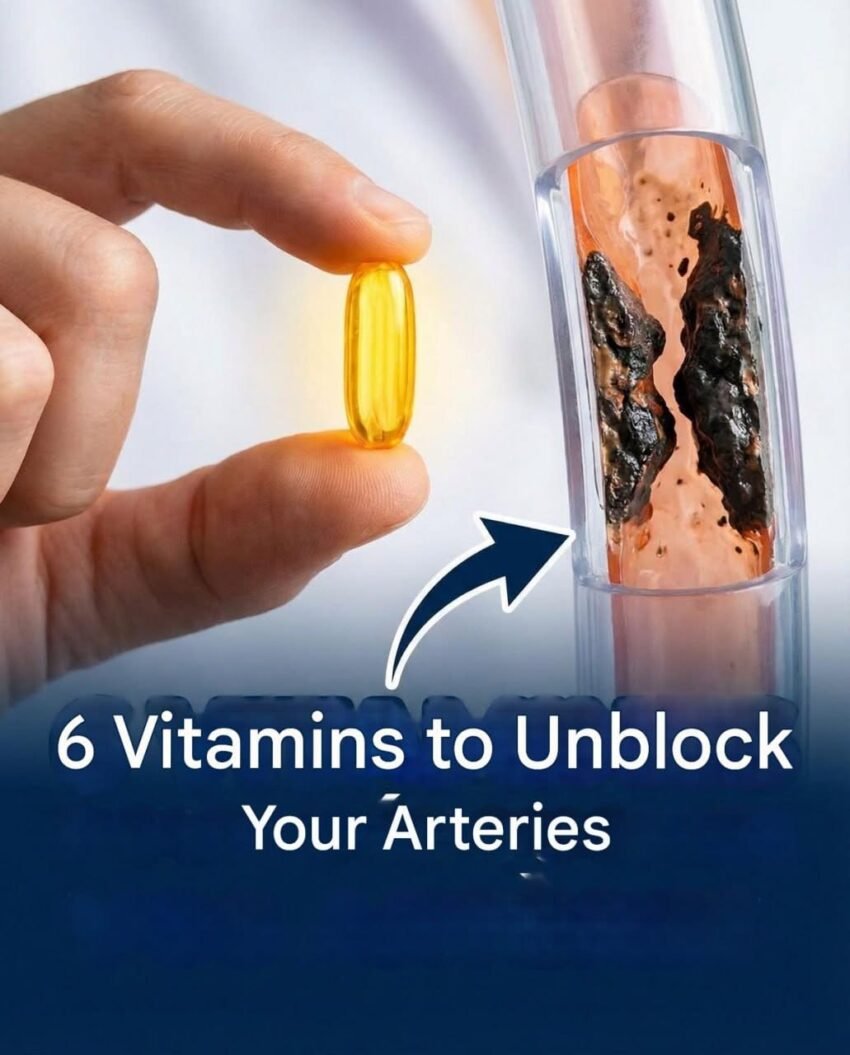
Here are 6 evidence-backed vitamins and compounds that help keep arteries flexible and support cardiovascular health:
1. Vitamin K2 (Menaquinone)
This is arguably the most crucial vitamin for arterial health that most people don’t get enough of. Its job is to activate Matrix GLA Protein (MGP), which acts like a “calcium bouncer.” It escorts calcium out of the soft tissues (arteries and joints) and directs it into the bones and teeth where it belongs.
-
The Mechanism: Without K2, calcium can deposit in the arterial walls, making them stiff. It inhibits vascular calcification.
-
Best Sources: Natto (fermented soybeans), hard cheeses (Gouda, Brie), egg yolks, and chicken liver.
2. Vitamin D3 (Cholecalciferol)
Vitamin D and K2 work as partners. D3 helps absorb calcium from the gut, but you need K2 to tell that calcium where to go. D3 also acts as an anti-inflammatory hormone for the blood vessel lining.
-
The Mechanism: Vitamin D receptors are present on vascular smooth muscle cells and endothelial cells. Deficiency is strongly linked to endothelial dysfunction, arterial stiffness, and hypertension.
-
Synergy: Never take high doses of Vitamin D without K2, as the extra calcium absorption can theoretically worsen arterial calcification.
3. Omega-3 Fatty Acids (Vitamin F – EPA/DHA)
While technically a fatty acid and not a vitamin, they are essential. High-dose prescription fish oil (specifically Icosapent ethyl, a purified EPA) is an FDA-approved treatment for reducing cardiovascular risk.
-
The Mechanism: They don’t “scrape” plaque out like Drano. Instead, they stabilize existing plaque so it’s less likely to rupture, lower triglycerides, and powerfully reduce inflammation in the arterial wall.
-
Target: For therapeutic benefit, a combined EPA/DHA amount of 1-2+ grams daily is often used, but you should discuss this with a doctor.
4. Vitamin C (Ascorbic Acid)
Arteries are not passive pipes; they are living tissue that requires collagen to remain strong and flexible. Vitamin C is the essential co-factor for collagen synthesis.
-
The Mechanism: Without adequate Vitamin C, the arterial walls become weak and brittle. The body uses lipoprotein(a) to patch up these micro-cracks, which contributes to plaque buildup. This is the basis of Linus Pauling’s theory on cardiovascular disease.
-
Food vs. Supplement: Whole-food sources like bell peppers, citrus, and kiwi provide the full complex of bioflavonoids that potentiate Vitamin C’s effects.
5. Vitamin E (Tocopherols/Tocotrienols)
Vitamin E is a fat-soluble antioxidant. It protects the delicate cell membranes of the endothelium and, crucially, prevents LDL cholesterol from oxidizing. Oxidized LDL is the specific kind of cholesterol that drives plaque formation.
-
The Mechanism: LDL is only dangerous to arteries once it has been damaged (oxidized) by free radicals. Vitamin E quenches these radicals.
-
Important Distinction: Look for “mixed tocopherols” and particularly tocotrienols, which have shown stronger anti-atherosclerotic properties in research than alpha-tocopherol alone.
6. Vitamin B-Complex (Specifically B6, B9 (Folate), B12)
These three B vitamins are critical regulators of homocysteine, an amino acid.
-
The Mechanism: High levels of homocysteine are directly toxic to the endothelial lining, literally scratching and scorching the artery walls, which provides a sticky surface for plaque to attach. These vitamins recycle homocysteine back into methionine or break it down.
-
Note: While lowering homocysteine is theoretically protective, large intervention trials haven’t shown a dramatic reversal of blockages, suggesting it’s a strong risk marker and contributor, but not a magic cure.
The Realistic Outcome
Taking these won’t make a 70% blockage vanish. What they can do, alongside a healthy diet, exercise, and medical management, is:
-
Soften hard arteries (improving compliance).
-
Reduce blood pressure.
-
Prevent the plaque you have from rupturing (the #1 cause of heart attacks).
Always consult your cardiologist before starting a new supplement regimen, especially if you are on blood thinners (Vitamin E and Omega-3s can thin the blood) or managing existing arterial disease.