
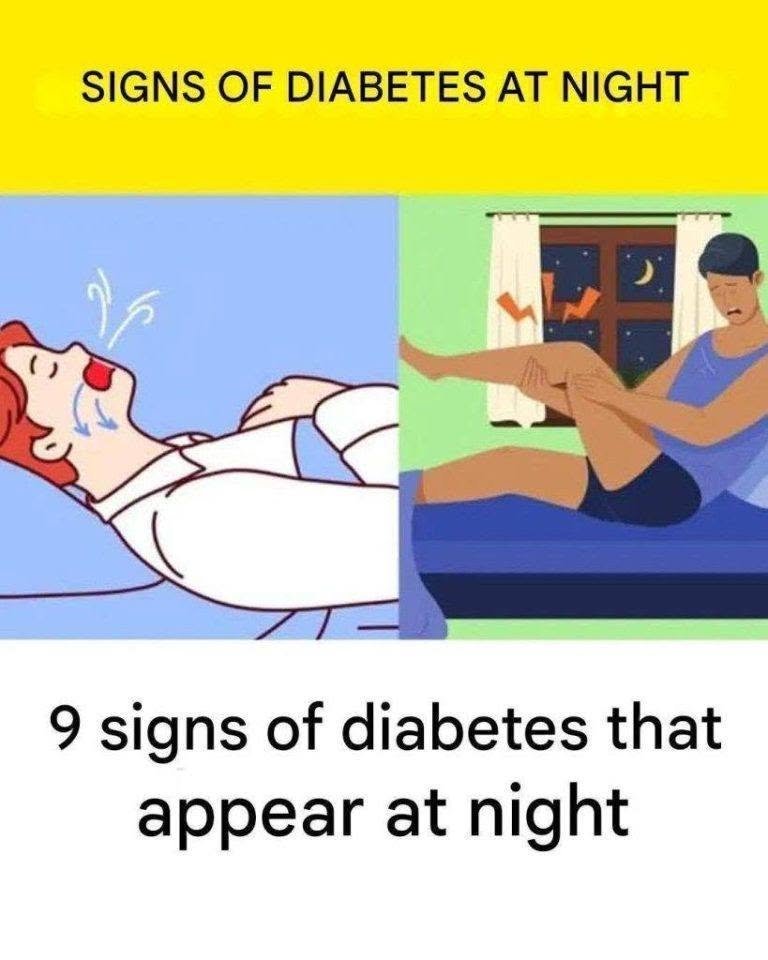
Diabetes is a condition that affects how your body processes glucose (sugar), and when blood sugar levels are too high or too low, the symptoms don’t clock out at sunset. In fact, many people with undiagnosed diabetes, or those struggling with blood sugar management, find that their symptoms become significantly more noticeable and disruptive at night.
Because you are lying still, trying to sleep, and have no daytime distractions, your body’s distress signals become impossible to ignore. Here are 9 signs of diabetes that specifically appear or worsen at night:
1. Relentless Nighttime Urination (Nocturia)
This is often one of the very first red flags of diabetes. When there is too much sugar in your blood, your kidneys work overtime to filter and flush it out of your body through urine.
-
What it feels like: You find yourself waking up multiple times during the night—sometimes every hour or two—with an urgent, overwhelming need to urinate.
-
The tell-tale sign: It is not just a small bladder capacity; you are passing a large amount of urine every time you wake up.
2. Extreme Nighttime Thirst and Dry Mouth
Because you are losing so much fluid through frequent urination, your body becomes severely dehydrated, triggering an unquenchable thirst.
-
What it feels like: You wake up with a mouth that feels like cotton or sandpaper. You might keep a giant glass of water on your nightstand and find yourself chugging it multiple times a night, only to wake up an hour later thirsty again.
-
The tell-tale sign: This is a vicious cycle: the more you drink, the more you urinate, and the more dehydrated you feel.
3. Restless Legs Syndrome (RLS) and Tingling Limbs
High blood sugar damages the small blood vessels that supply your nerves, particularly in your hands and feet (a condition called diabetic neuropathy). At night, when you are trying to be still, this nerve damage becomes highly noticeable.
-
What it feels like: A creeping, crawling, itching, or painful “pins and needles” sensation deep in your legs that creates an irresistible urge to move them. You may also feel burning or numbness in your feet.
-
The tell-tale sign: These sensations are almost impossible to ignore when you are trying to fall asleep and are temporarily relieved by moving or shaking your legs.
4. Drenching Night Sweats
Blood sugar levels can fluctuate wildly at night. If your blood sugar drops too low (hypoglycemia) while you sleep—often a side effect of diabetes medications or insulin—your body releases adrenaline to try to raise the sugar levels, causing you to sweat profusely.
-
What it feels like: You wake up in the middle of the night with your sheets, pillowcase, and pajamas literally soaked through, even though your bedroom is cool. It is often accompanied by a racing heart or a headache.
-
The tell-tale sign: Night sweats that happen repeatedly and are not related to menopause, a too-heavy blanket, or a fever.
5. Nighttime Muscle Cramps (Especially in the Calves)
While dehydration can cause cramps for anyone, people with diabetes are highly prone to them. Electrolyte imbalances (specifically magnesium, potassium, and sodium) caused by frequent urination and poor circulation lead to sudden muscle spasms.
-
What it feels like: A sudden, sharp, agonizing charley horse in your calf or foot that jolts you awake in the middle of the night, leaving your muscle sore for days afterward.
-
The tell-tale sign: Cramps that happen multiple times a week despite drinking plenty of water.
6. Vivid Nightmares or Night Terrors
This is a specific symptom of nighttime hypoglycemia (low blood sugar). When your brain doesn’t get enough glucose while you sleep, it can trigger a stress response that disrupts your sleep cycles.
-
What it feels like: You experience incredibly vivid, disturbing, or violent nightmares. You may scream, thrash, or wake up in a panic, covered in sweat (as mentioned in sign #4).
-
The tell-tale sign: Waking up from a bad dream with a pounding headache, confusion, or extreme hunger usually points directly to a dangerous drop in blood sugar during the night.
7. Morning Headaches and “Brain Fog” Upon Waking
While this happens in the morning, it is a direct result of what happened while you slept. If your blood sugar spiked too high (hyperglycemia) or dropped too low overnight, your brain and blood vessels react.
-
What it feels like: You wake up with a dull, throbbing headache, feel incredibly groggy, confused, or irritable, and it takes hours to “wake up.”
-
The tell-tale sign: This is often called the “dawn phenomenon”—where hormones released in the early morning hours cause blood sugar to surge, leaving you feeling hungover without having had any alcohol.
8. Nighttime Heart Palpitations or Racing Pulse
Low blood sugar at night triggers the release of adrenaline (epinephrine). This is your body’s emergency response to try and dump stored sugar into your bloodstream.
-
What it feels like: You wake up suddenly with your heart pounding in your chest or feeling like it skipped a beat. You might also feel shaky, anxious, or jittery.
-
The tell-tale sign: If you check your pulse and it is racing, and you do not have sleep apnea or anxiety, your blood sugar may be crashing.
9. Itchy Skin (Especially at Night)
High blood sugar causes poor circulation and dries out the skin, while also making you more prone to yeast infections. The itching, medically known as nocturnal pruritus, often gets worse at night because the body’s natural anti-inflammatory chemicals (corticosteroids) dip while you sleep.
-
What it feels like: An intense, maddening itch on the lower legs, feet, or hands that makes you scratch uncontrollably in bed. You might notice your skin looks unusually dry, flaky, or even darkened around the neck or knuckles (a sign of insulin resistance).
-
The tell-tale sign: Scratching so hard at night that you break the skin, and moisturizer offers no relief.
When to See a Doctor
It is important to remember that occasionally waking up to use the bathroom or having a charley horse is perfectly normal. However, if you are experiencing two or three of these symptoms in combination, multiple nights a week, it is a strong indicator that your body is struggling to regulate blood sugar.
Please contact your healthcare provider for a simple fasting blood glucose test or an A1C test. Early detection can prevent the long-term complications of diabetes, such as nerve damage, vision loss, and heart disease.