
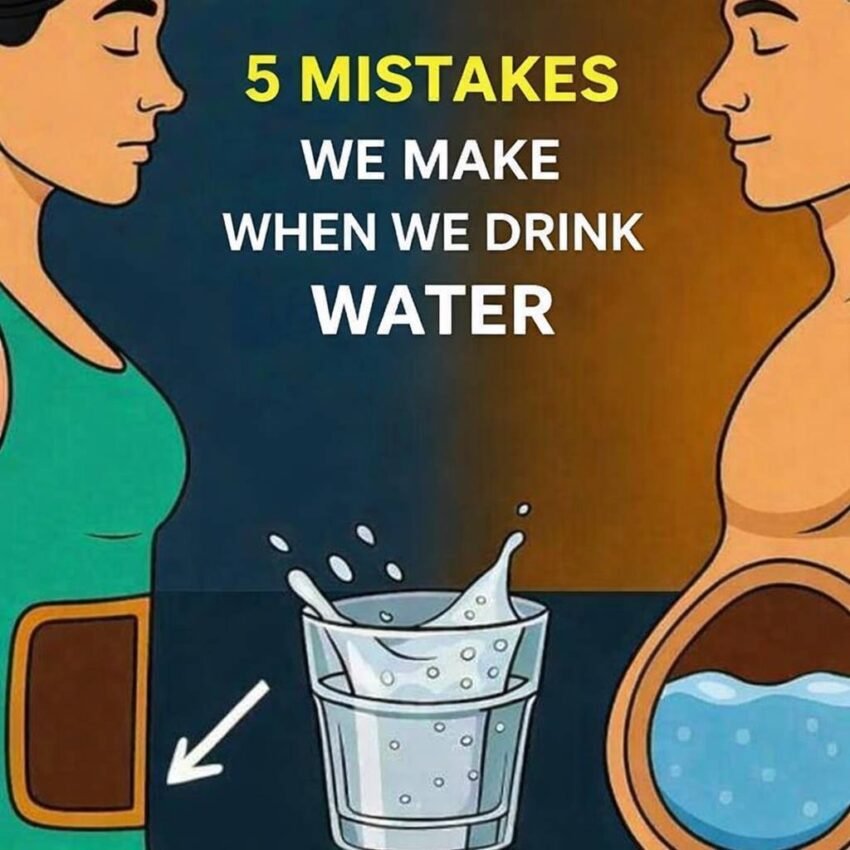
Here are 5 common mistakes people make when drinking water, according to health experts and nutritionists.
1. Drinking Too Much Water Too Fast (Water Intoxication)
This is one of the most dangerous mistakes, though rare.
-
The Mistake: Gulping down a huge bottle of water in one go, especially after exercising or when extremely thirsty.
-
What Happens: When you flood your system too quickly, your kidneys cannot process the excess water fast enough. This can dilute the sodium in your bloodstream, leading to a condition called hyponatremia (low salt levels). This causes cells to swell, which can be life-threatening if it affects brain cells.
-
The Fix: Sip water slowly throughout the day. Your body absorbs water much better when you take small, consistent sips rather than chugging it all at once.
2. Drinking Ice-Cold Water With Meals
Many people love ice water, but drinking it with food can hinder digestion.
-
The Mistake: Drinking freezing water while eating.
-
What Happens: Cold temperatures can solidify the fats and oils from the food you just ate, making them harder for the body to break down. It also constricts (tightens) blood vessels, which can slow down the digestive process. Additionally, the body has to expend extra energy to warm the water to body temperature before it can be used.
-
The Fix: Opt for room-temperature water or warm water with lemon during meals. Ayurvedic medicine and Traditional Chinese Medicine both recommend warm water for optimal digestion.
3. Drinking Water Right Before Bed (Nocturia)
Staying hydrated is great, but timing matters for sleep quality.
-
The Mistake: Drinking a large glass of water immediately before going to sleep.
-
What Happens: This leads to nocturia—waking up multiple times during the night to urinate. It disrupts your sleep cycle, which affects everything from brain function to immune system repair. It can be particularly problematic for seniors, as sleep is often lighter and more easily disturbed.
-
The Fix: Try to stop drinking water 1-2 hours before bedtime. This gives your body time to process the fluid and empty your bladder before you go to sleep.
4. Relying Only on Thirst (Especially for Seniors)
Waiting until you feel thirsty to drink is a mistake, especially as we age.
-
The Mistake: Using thirst as the only indicator of when to drink water.
-
What Happens: By the time you feel thirsty, your body is often already mildly dehydrated (1-2% fluid loss). Furthermore, the thirst sensation diminishes with age. Seniors have a blunted thirst response, meaning their bodies don’t signal thirst even when they need fluids, putting them at higher risk for dehydration.
-
The Fix: Drink water on a schedule. For example: a glass when you wake up, one with each meal, and one in the afternoon—regardless of whether you feel thirsty.
5. Drinking From Plastic Bottles Left in the Heat
This is more about chemical safety than hydration.
-
The Mistake: Leaving a plastic water bottle in a hot car, in direct sunlight, or reusing single-use plastic bottles for weeks.
-
What Happens: Heat can cause chemicals from the plastic, such as antimony (a potentially toxic metalloid) and BPA (bisphenol A), to leach into the water. While the levels are generally considered low, long-term exposure is best avoided.
-
The Fix: Use stainless steel or glass water bottles. If you must use plastic, avoid exposing it to heat and direct sunlight.
A Bonus Tip: The “Gulping vs. Sipping” Rule
To summarize the first point, a good rule of thumb is:
-
Gulp water only when you are severely dehydrated (like after a workout in the heat) to rehydrate quickly.
-
Sip water the rest of the time to keep your cells and digestion happy.