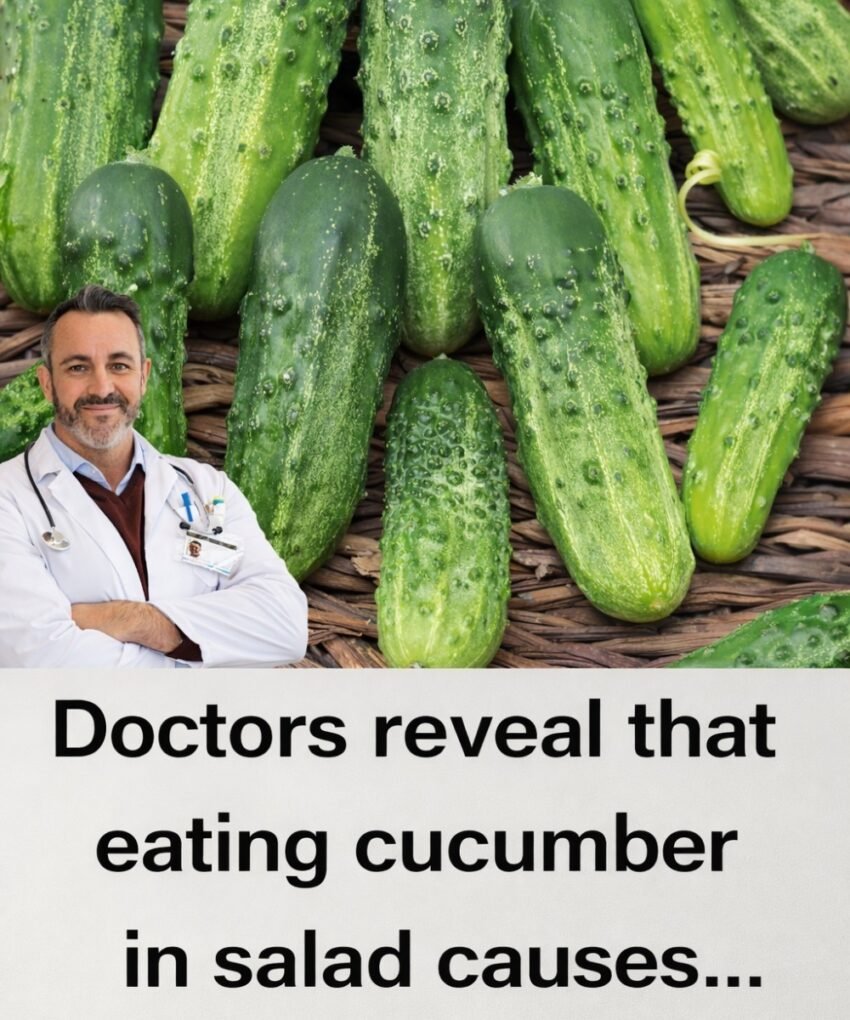
This is a fascinating question that looks at a simple, everyday habit through a medical lens. Cucumber is often dismissed as just “water and crunch,” but doctors and dietitians view it as a surprisingly beneficial nutritional tool, especially when eaten daily in a salad.
Here is what medical and nutritional experts really say about the practice, breaking down the benefits, the potential downsides, and how to optimize it.
The Verdict: A Strong “Yes” for Most People
For the vast majority of people, eating cucumber in a salad every day is a healthy and positive habit. It’s a simple way to increase vegetable intake, improve hydration, and add fiber and essential nutrients without adding many calories.
The Health Benefits Doctors Highlight
1. Superior Hydration
-
What they say: “Cucumbers are about 96% water. Eating them is a great way to contribute to your daily fluid intake, which is essential for every cell in your body, from regulating body temperature to joint lubrication.”
-
The takeaway: It’s a tasty way to stay hydrated, especially for people who struggle to drink enough plain water.
2. Digestive Health Support
-
What they say: “The skin of the cucumber is a good source of insoluble fiber. This type of fiber adds bulk to stool and helps food pass through your digestive tract more quickly, promoting regularity and preventing constipation.”
-
The takeaway: Don’t peel your cucumber! The fiber is concentrated in the skin.
3. Essential Nutrient Intake
-
What they say: “While not a superfood powerhouse, cucumbers provide meaningful amounts of several key nutrients. They contain Vitamin K, which is crucial for blood clotting and bone health. They also provide small amounts of potassium (important for blood pressure regulation) and magnesium.”
-
The takeaway: It’s a solid source of important vitamins and minerals that many people are deficient in.
4. Weight Management
-
What they say: “Cucumbers are very low in calories but high in volume and water. This makes them a nutrient-dense food that can help you feel full and satisfied without consuming many calories, which is beneficial for weight management or weight loss.”
-
The takeaway: It’s an excellent food for “volumetrics”—eating a larger, more satisfying portion for fewer calories.
5. Antioxidant Properties
-
What they say: “Cucumbers contain antioxidants, including flavonoids and tannins, which help prevent the accumulation of harmful free radicals and may reduce the risk of chronic disease.”
-
The takeaway: It contributes to your body’s overall defense system.
Potential Downsides and Considerations
While generally safe, doctors point out a few specific considerations.
1. Digestive Issues for Some
-
What they say: “For some people with sensitive digestive systems, particularly those with Irritable Bowel Syndrome (IBS), cucumbers can be problematic. They contain compounds called cucurbitacins and are a high-FODMAP food for some individuals, which can cause bloating, gas, and indigestion.”
-
The takeaway: If you notice discomfort after eating cucumber, you might be sensitive to it. Try peeling it (which removes some of the compounds) or eating it in smaller amounts.
2. Blood Clotting and Vitamin K
-
What they say: “If you are taking blood-thinning medications like Warfarin (Coumadin), it’s crucial to maintain a consistent intake of Vitamin K-rich foods. Cucumbers (especially with the skin) contain Vitamin K. Eating a large cucumber salad every day is fine, but dramatically increasing or decreasing your intake can affect your medication’s effectiveness.”
-
The takeaway: If you’re on blood thinners, be consistent and inform your doctor about your dietary habits.
3. Pesticide Residue
-
What they say: “Cucumbers are frequently found on the ‘Dirty Dozen’ list, meaning they can carry higher levels of pesticide residues. The wax coating on some store-bought cucumbers can also trap these residues.”
-
The takeaway: Doctors and dietitians often recommend buying organic cucumbers, especially if you plan to eat the skin. If not organic, wash them thoroughly with a vegetable brush under running water. Peeling removes most residues but also removes the fiber.
4. It’s Not a Miracle Food
-
What they say: “The biggest risk is thinking that eating cucumber salad every day is a magic bullet for health. It’s a healthy choice, but it must be part of an overall balanced diet rich in a variety of fruits and vegetables.”
-
The takeaway: Variety is still king. Don’t let your daily cucumber salad crowd out other colorful vegetables.
How to Optimize Your Daily Cucumber Salad (Doctor’s Tips)
To maximize the health benefits, experts suggest these simple tweaks:
-
Keep the Skin On: That’s where the fiber and most of the nutrients are.
-
Add Healthy Fat: The Vitamin K in cucumber is fat-soluble, meaning your body absorbs it better when eaten with fat. Drizzle your salad with a little olive oil or add some avocado.
-
Watch the Dressing: A healthy cucumber salad can quickly become unhealthy if drowned in creamy, high-calorie, high-sugar dressings. Stick to a simple vinaigrette.
-
Add Variety: Make your salad a mix of vegetables. Add tomatoes, bell peppers, onions, and leafy greens to get a wider range of nutrients.
Final Takeaway
For most people, eating a cucumber salad every day is a simple, effective, and healthy habit that supports hydration, digestion, and nutrient intake. Just be mindful of any personal digestive sensitivities, wash your produce well, and keep it as part of a diverse and balanced diet.