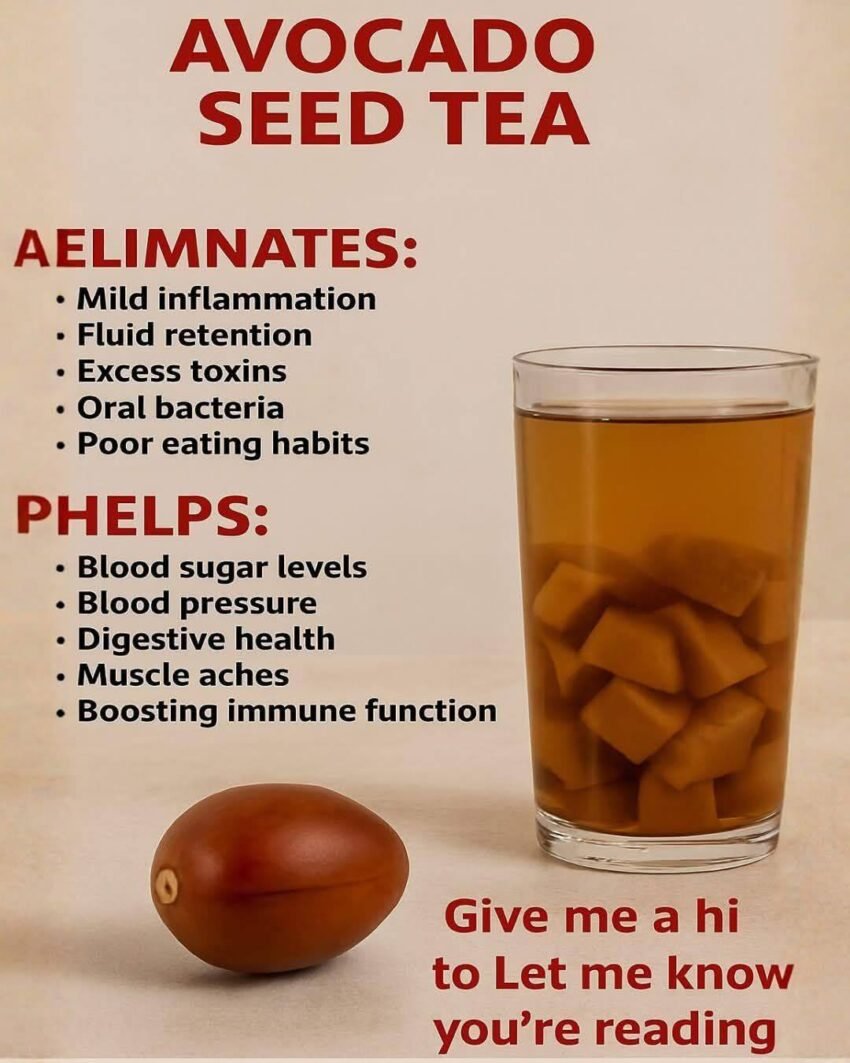
The Seed: More Than Just a Pit?
When you slice open an avocado, the large, brown seed is usually the first thing to hit the compost or trash. But for centuries, in cultures ranging from South America to Asia, that pit has been dried, ground, and brewed into teas or used as a traditional remedy.
The seed makes up a significant portion of the fruit’s antioxidant content. In fact, some studies suggest that the seed contains the majority of the avocado’s total antioxidant compounds. These include phenolic compounds and flavonoids, which are the body’s defense system against oxidative stress caused by free radicals.
The Potential Benefits: What Does the Science Say?
Let’s break down the specific claims in your title.
1. “Cleanses Your Body” (Antioxidant Power)
This is the claim with the strongest scientific backing.
-
High in Antioxidants: Avocado seeds are rich in compounds that act as antioxidants. They help neutralize free radicals, which are unstable molecules that can damage cells and contribute to aging and diseases like cancer.
-
Fiber Content: The seed is a fantastic source of soluble fiber. Fiber acts like a scrub brush for your digestive tract, helping to regulate bowel movements, feed good gut bacteria, and bind to certain toxins to help eliminate them from the body. In this sense, it absolutely supports the body’s natural “cleansing” and detoxification systems (primarily the liver and gut).
2. “Reduces Cholesterol”
This is a promising area of research, but most of the compelling evidence comes from animal studies.
-
Animal Studies: Research on rats and mice has shown that avocado seed extract can significantly lower total cholesterol and “bad” LDL cholesterol. The soluble fiber in the seed is known to bind to cholesterol in the digestive tract and prevent its absorption.
-
Human Evidence: We are currently lacking large-scale, rigorous human clinical trials. While the animal data is encouraging, we can’t definitively say it has the same powerful effect in humans without more research.
3. “Protects Your Heart”
This is a logical conclusion based on the other two points.
-
By potentially lowering cholesterol and providing antioxidants, the avocado seed could contribute to better cardiovascular health. Reducing oxidative stress and inflammation in blood vessels is a key factor in preventing heart disease. So, while it may not be a direct “heart protector” in a pharmaceutical sense, its properties support the systems that keep your heart healthy.
A Word of Caution: The Potential Risks
Before you start grating a pit into your smoothie, there are important safety considerations.
-
Toxicity Concerns: Avocado seeds contain compounds called persin and cyanogenic glycosides. Persin is a fungicidal toxin that is harmless to humans in small amounts but can be toxic in very large quantities. Cyanogenic glycosides can break down into hydrogen cyanide. The levels in a single seed are generally considered too low to cause acute poisoning in humans, but it’s a reminder that “natural” does not automatically mean “safe to consume in large amounts.”
-
Lack of Human Safety Data: We simply don’t have long-term studies on the effects of regular avocado seed consumption in humans. We don’t know the ideal dose, the long-term side effects, or how it might interact with medications.
-
Bitter Taste: The seed is intensely bitter, thanks to those powerful tannins and phenols. It’s not exactly a culinary delight, which is why it’s typically processed into powders, teas, or extracts rather than eaten raw.
How to (Safely) Use Avocado Seed
If you’re intrigued and want to explore it as a supplement, here is the safest, most common way to prepare it:
1. Dry and Grate:
-
Remove the brown skin of the seed (this helps reduce some of the bitterness).
-
Grate the inner seed using a fine grater or a food processor.
-
Spread the grated seed on a baking sheet and let it air dry for several days, or dry it in a low-temperature oven (150°F / 65°C) for a few hours until completely dry.
-
Store the dried, ground seed in an airtight jar.
How to Use It:
-
Avocado Seed Tea: This is the most traditional method. Steep a teaspoon of the ground seed powder in hot water for 10-15 minutes to make a slightly nutty, bitter tea. You can add honey, lemon, or cinnamon.
-
Smoothie Booster: Add a small amount (start with 1/2 teaspoon) to a strong-flavored smoothie (with berries, banana, and spinach) to mask the bitterness.
-
Sprinkle: Use it sparingly on oatmeal, yogurt, or salads.
Dosage: Start very small. A pinch or a half-teaspoon per day is a reasonable amount to see how your body reacts.
The Verdict
Calling the avocado seed a “hidden treasure” isn’t entirely wrong. It is a rich source of fiber and antioxidants, and preliminary research suggests it may have benefits for cholesterol and heart health.
However, it’s not a miracle cure. The bold claims need to be tempered by the fact that most human research is still pending. The best way to get the heart-healthy benefits of an avocado is still to eat the delicious green flesh. It’s packed with monounsaturated fats, fiber, and potassium.
Think of the seed as a potential supplement, not a replacement for a healthy diet. If you choose to use it, do so with respect, in small amounts, and preferably after consulting with a healthcare provider.