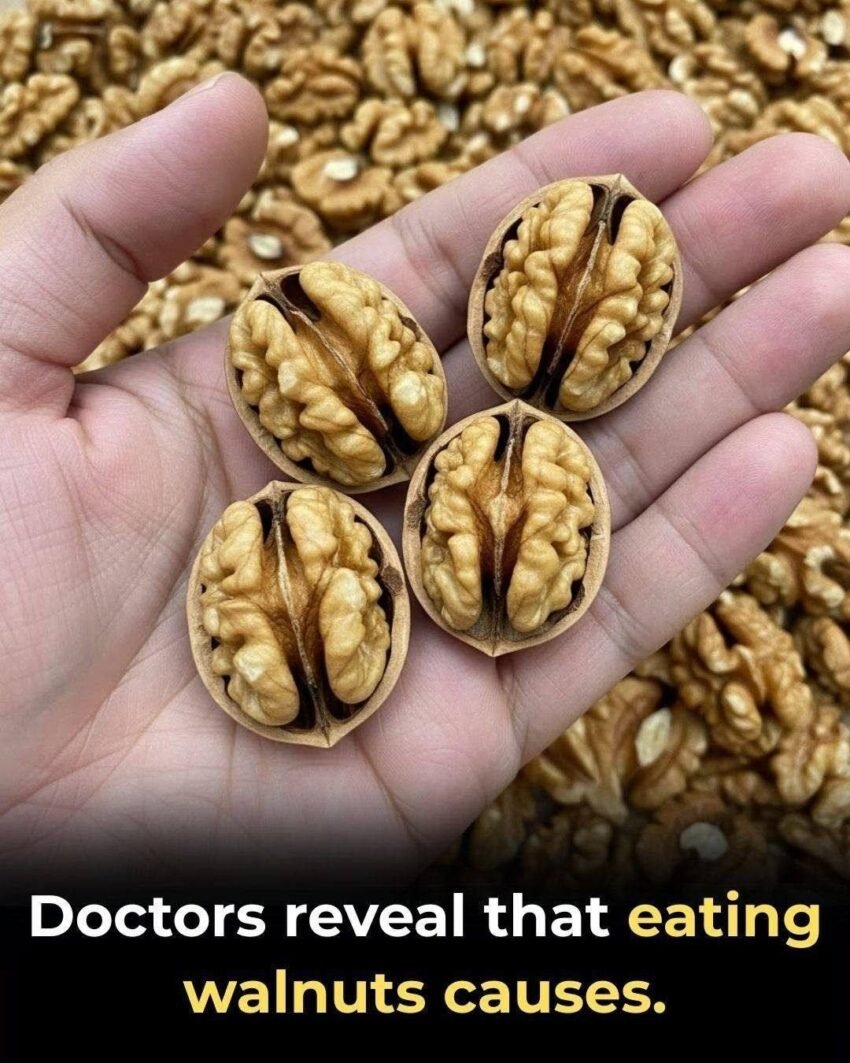
Doctors and nutrition experts confirm that eating walnuts in moderation is overwhelmingly beneficial for health, but it’s important to separate evidence from myths.
✅ What Eating Walnuts Supports (Science-Backed Benefits)
-
Heart Health
-
Rich in alpha-linolenic acid (ALA), a plant-based omega-3 fatty acid that helps lower inflammation and improve cholesterol.
-
Studies show regular walnut consumption can reduce LDL (“bad”) cholesterol and support blood vessel function.
-
-
Brain Health
-
Nutrients in walnuts (ALA, antioxidants, vitamin E) may help protect brain cells and support cognitive function as we age.
-
Some research links walnut intake to better memory and slower cognitive decline.
-
-
Gut Health
-
Walnuts act as a prebiotic, feeding beneficial gut bacteria and promoting a healthy microbiome.
-
-
Blood Sugar Regulation
-
The healthy fats, fiber, and protein in walnuts help slow sugar absorption, supporting stable blood sugar levels.
-
-
Anti-Inflammatory & Antioxidant Power
-
Walnuts contain polyphenols and other antioxidants that fight oxidative stress and inflammation linked to chronic diseases.
-
-
Weight Management Support
-
Despite being calorie-dense, walnuts promote satiety due to their fiber and healthy fat content, which can help prevent overeating.
-
⚠️ Important Considerations & Potential Downsides
-
Allergies
-
Tree nut allergies are common and can be severe. Avoid walnuts if you have a known allergy.
-
-
High in Calories
-
A 1-ounce serving (about 14 halves) contains ~185 calories. Overeating can contribute to weight gain.
-
-
Digestive Sensitivity
-
High fiber and fat content may cause bloating or discomfort in some people, especially if eaten in large amounts.
-
-
Possible Medication Interaction
-
Walnuts are high in vitamin K, which can interfere with blood thinners like warfarin if intake varies widely. Consistency is key.
-
-
Phytates and Tannins
-
These naturally occurring compounds can reduce mineral absorption slightly, but this is rarely an issue in a balanced diet.
-
❌ Debunking Common Myths
-
Myth: Walnuts cause kidney stones.
-
Truth: While they contain oxalates, moderate intake does not increase risk for most people unless you have a history of oxalate stones.
-
-
Myth: Walnuts make you gain weight quickly.
-
Truth: Research shows that adding nuts to the diet does not lead to weight gain when portions are controlled—it may even support weight management.
-
🩺 Doctor-Recommended Intake
-
Serving size: 1 ounce per day (about a handful or 14 halves).
-
Best eaten raw or lightly toasted — avoid walnuts coated in sugar, salt, or excessive oil.
-
Store in the fridge or freezer to prevent the healthy fats from going rancid.
🧠 Special Note on Brain Shape
Walnuts resemble the brain, which has fueled some playful “food folklore,” but their brain benefits come from nutrition—not shape.
✅ Bottom Line
Unless you have a walnut allergy, eating a small handful daily is a heart-smart, brain-healthy habit supported by decades of research. As part of a balanced diet, walnuts are a nutrient-dense superfood—not a cause for concern.
Always listen to your body, keep portions in check, and if you have specific health conditions, discuss dietary changes with your doctor or a registered dietitian.