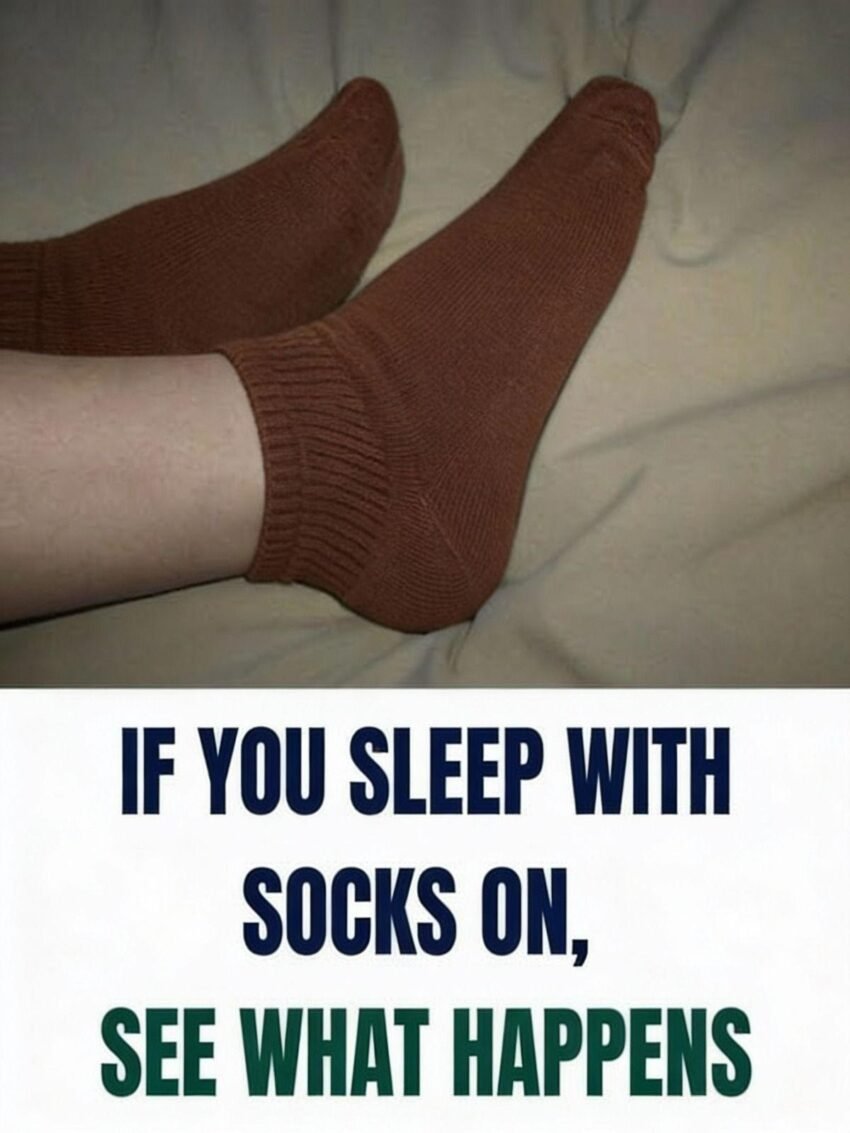
🧦 Sleeping With Socks On: Science-Backed Benefits & Risks
Wearing socks to bed is a simple habit that can have surprising effects on your sleep quality, health, and comfort. Here’s what science and sleep experts say about what actually happens to your body.
✅ Potential Benefits of Sleeping with Socks On
1. Faster Sleep Onset
-
Why: Warming the feet causes blood vessels to dilate (vasodilation), which helps lower core body temperature — a key signal to your brain that it’s time to sleep.
-
Evidence: Studies show warm feet can reduce the time it takes to fall asleep by up to 15 minutes.
2. Improved Sleep Quality & Fewer Nighttime Awakenings
-
Why: Stable body temperature throughout the night supports longer, deeper sleep cycles.
-
Benefit: Especially helpful for people with insomnia or those in cold environments.
3. May Reduce Hot Flashes & Night Sweats
-
Why: Counterintuitively, warming feet can help regulate overall body temperature, potentially easing menopausal hot flashes for some women.
4. Helps Prevent Raynaud’s Attacks
-
Why: People with Raynaud’s syndrome have poor circulation in extremities. Socks keep feet warm, reducing painful vasospasms at night.
5. Reduces Risk of Cracked Heels
-
Why: Socks lock in moisture if you apply lotion before bed, preventing dry, cracked skin.
⚠️ Potential Risks & Drawbacks
1. Overheating
-
Risk: If socks are too thick or made of non-breathable material, you may overheat, disrupting sleep.
-
Fix: Choose lightweight, breathable socks (cotton, bamboo, moisture-wicking blends).
2. Circulation Restriction
-
Risk: Tight socks can impede blood flow, especially if they leave marks on your skin.
-
Fix: Wear loose-fitting, non-elasticated socks designed for sleep.
3. Hygiene & Fungal Risk
-
Risk: Warm, moist environments can encourage fungal growth (like athlete’s foot) if feet sweat or socks aren’t clean.
-
Fix: Change socks daily, ensure feet are clean and dry before bed, and choose breathable fabrics.
4. Dependency
-
Risk: Some may become reliant on socks to fall asleep, making it hard to sleep without them (e.g., while traveling).
-
Fix: Use socks as a sleep aid, but occasionally try without to maintain flexibility.
🧠 Special Considerations
-
People with diabetes: Should consult a doctor — neuropathy may reduce sensation, increasing burn or blister risk if socks are too warm.
-
Those with edema or heart failure: May need to avoid socks if swelling is an issue.
-
Sleep partners: If your partner hates the feel or look, consider compromise (e.g., loose bed socks they can’t feel).
🛌 How to Sleep with Socks On Safely & Comfortably
-
Choose the right socks: Lightweight, breathable, loose-fitting. Avoid tight elastic bands.
-
Keep them clean: Wash after every use.
-
Consider alternatives: Warm foot bath before bed, heated blanket at foot of bed, or microwavable bed socks.
-
Listen to your body: If you wake up hot or uncomfortable, ditch the socks.
🌡️ Science Behind It: The “Distal Vasodilation” Effect
When your feet are warmed (by socks), blood vessels expand, heat is released through the skin, and core temperature drops slightly. This mimics the natural drop in body temperature that occurs when falling asleep, triggering drowsiness.
✅ Final Verdict
For most people, sleeping with socks on is safe and can improve sleep onset and quality — especially in cooler climates or for those with poor circulation.
If you tend to run hot or have specific health conditions, assess comfort and adjust accordingly.
Try it for a week and track your sleep. Your own body will tell you if it’s a helpful habit or not. Sweet dreams! 🌙🧦