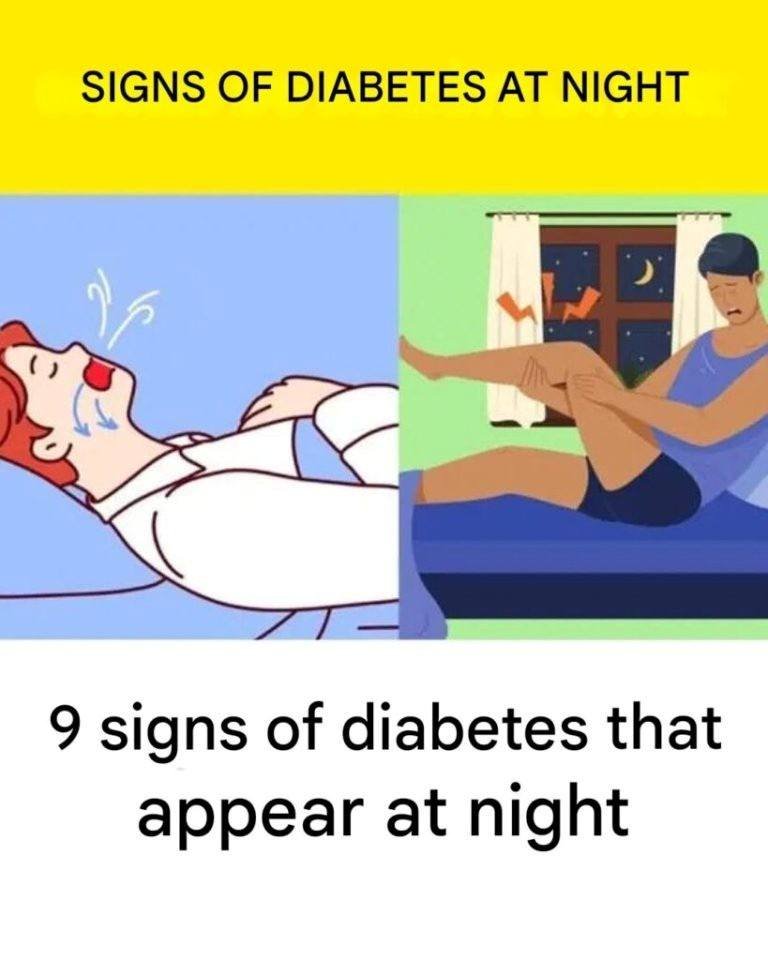
Here are 9 nighttime signs of diabetes that may appear while sleeping or during the evening hours, based on clinical guidelines and patient-reported experiences. If you notice several of these regularly, consult a healthcare provider for evaluation.
1. Frequent Urination at Night (Nocturia)
-
Why it happens: High blood sugar forces the kidneys to work overtime to filter excess glucose, pulling more fluid from your body and filling the bladder.
-
Sign to note: Waking up multiple times to urinate, even if you limited fluids before bed.
2. Excessive Thirst & Dry Mouth
-
Why it happens: Frequent urination leads to dehydration, triggering intense thirst. Dry mouth can also result from high blood sugar pulling moisture from tissues.
-
Sign to note: Needing to drink water repeatedly through the night.
3. Night Sweats or Chills
-
Why it happens: Fluctuating blood sugar levels can disrupt the autonomic nervous system, causing sweating (especially if blood sugar drops too low) or chills.
-
Sign to note: Waking up with damp pajamas or bedding unrelated to room temperature.
4. Tingling, Numbness, or Pain in Feet/Legs
-
Why it happens: Diabetic neuropathy (nerve damage) often worsens at rest and may feel like pins-and-needles, burning, or cramping.
-
Sign to note: Discomfort that keeps you awake or wakes you up.
5. Restless Legs Syndrome (RLS)
-
Why it happens: Diabetes can affect nerve function and circulation, increasing the urge to move legs while trying to sleep.
-
Sign to note: Uncontrollable need to shift or kick legs at night.
6. Fatigue Upon Waking
-
Why it happens: Poor sleep quality from frequent urination, discomfort, or blood sugar fluctuations prevents deep, restorative sleep.
-
Sign to note: Feeling exhausted after a full night’s sleep.
7. Unintended Weight Loss (Type 1 or Advanced Type 2)
-
Why it happens: Without enough insulin, the body burns fat and muscle for energy, sometimes noticeably overnight.
-
Sign to note: Loose-fitting pajamas or unexplained decrease in weight over weeks.
8. Increased Hunger or Nausea at Night
-
Why it happens: Blood sugar imbalances can trigger hunger (if cells aren’t getting glucose) or nausea (if ketones build up in type 1 diabetes).
-
Sign to note: Waking up hungry, or feeling queasy/overnight stomach upset.
9. Blurred Vision Upon Waking
-
Why it happens: High blood sugar can cause fluid to shift into the lens of the eye overnight, temporarily changing its shape.
-
Sign to note: Morning blurriness that may clear later in the day.
⚠️ When to Seek Medical Advice
-
If you experience multiple symptoms regularly.
-
If you have risk factors (family history, overweight, sedentary lifestyle, high blood pressure).
-
If symptoms are paired with daytime signs like increased thirst, frequent urination, slow-healing cuts, or unexplained fatigue.
✅ Next Steps
-
Talk to a doctor — a simple fasting blood glucose test or HbA1c test can check for diabetes or prediabetes.
-
Monitor symptoms — keep a log of nighttime issues to share with your healthcare provider.
-
Prioritize sleep hygiene — consistent sleep schedules and a cool, dark room can help manage symptoms.
Important: These signs can also relate to other health conditions, so professional evaluation is essential. Early detection of diabetes can prevent complications and improve quality of life.