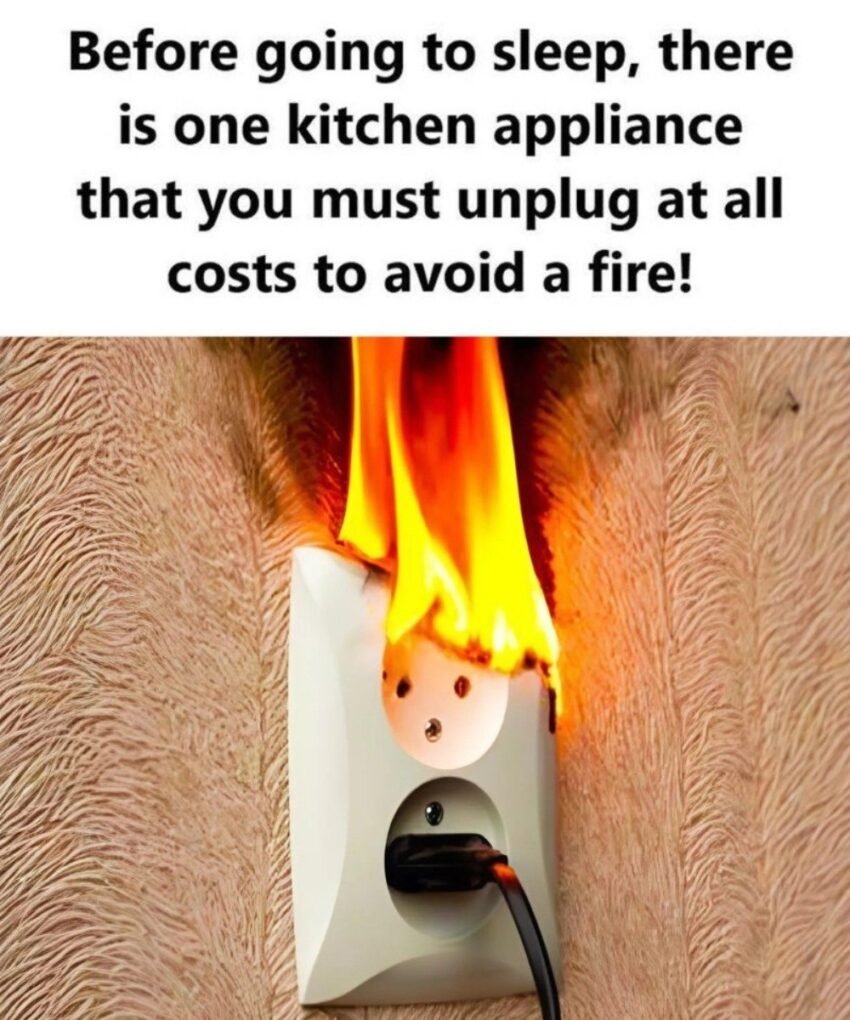
This is a genuinely important safety topic that many people overlook. While it might sound overly cautious, fire safety experts and organizations like the National Fire Protection Association (NFPA) strongly recommend unplugging certain appliances when they are not in use, especially overnight.
The main reason? “Vampire power” isn’t just about energy waste—it’s about constant, unnecessary electrical current flowing through devices that can malfunction, overheat, or be susceptible to power surges while you sleep.
While many appliances are safe to leave plugged in, here is the one category of kitchen appliance you should make a habit of unplugging at night, plus a few others to consider.
The #1 Kitchen Appliance to Unplug at Night: Toasters & Toaster Ovens
This is the appliance that tops most safety lists.
-
Why It’s a Risk: Toasters and toaster ovens contain heating elements that get extremely hot. If the appliance malfunctions internally—for example, if a switch fails and the appliance thinks it should be on, even when it’s not—it can begin to heat up without you knowing. A toaster left plugged in can also be more susceptible to a power surge, which could damage its internal components and create a fire hazard.
-
The “Crumb Tray” Factor: Built-up crumbs and grease inside a toaster or toaster oven are highly flammable. If the appliance accidentally turns on or has an electrical fault, those crumbs can ignite. Unplugging it eliminates the power source completely, removing that risk while you’re asleep.
-
What the Experts Say: The U.S. Fire Administration often notes that cooking equipment is a leading cause of house fires, and toasters fall into that category. Unplugging small appliances when not in use is a simple preventative measure.
Other Kitchen Appliances You Should Consider Unplugging
While the toaster is the primary concern, here are other appliances where unplugging at night is a smart habit:
2. Coffee Makers
-
The Risk: Especially models with a built-in timer or “auto-on” feature, coffee makers are always drawing a small current. The real risk is a malfunction in the heating element that could cause it to overheat and ignite nearby plastic components or paperwork on your counter.
3. Electric Kettles
-
The Risk: Like coffee makers, electric kettles use high wattage to boil water. A faulty thermostat or switch could cause the kettle to boil dry and overheat catastrophically.
4. Microwaves
-
The Risk: Modern microwaves are generally safe, but they are high-voltage appliances that draw power even when not in use (for the clock and standby mode). An internal electrical fault could potentially lead to a fire. If your microwave is older, unplugging it at night is an extra layer of safety.
5. Slow Cookers, Air Fryers, and Instant Pots
-
The Risk: These are high-powered cooking devices. While you shouldn’t unplug them during the day when you might use them, at night, when they are guaranteed not to be used for many hours, there’s no reason for them to be connected to the power grid.
Why Bother? Isn’t This Paranoid?
It’s not about paranoia; it’s about risk mitigation. Electrical fires can start from a faulty appliance even when it’s switched off but still plugged in. The switch can fail, or an internal component can degrade over time.
Unplugging an appliance does two things:
-
Completely eliminates the power source, so no current can flow.
-
Protects the appliance from power surges during storms or grid fluctuations, which can damage sensitive electronics and create latent fire hazards.
Tips for Making It a Habit
-
Designate a “Night Plug” Strip: Plug your toaster, coffee maker, and kettle into a single power strip with a switch. Get in the habit of flicking that switch off before bed. It’s easier than unplugging each one individually.
-
Keep It Accessible: Don’t bury plugs behind heavy appliances. Make sure you can easily reach them.
-
Check for Warmth: Before bed, quickly touch the plug of an appliance. If it feels warm when not in use, that’s a sign of a problem. Unplug it immediately and consider replacing it.
Bottom Line: While your refrigerator, stove, and dishwasher are hardwired or on dedicated circuits and are generally safe to leave plugged in, making a habit of unplugging small, heat-generating appliances like your toaster, coffee maker, and kettle at night is a simple, effective way to reduce the risk of a house fire while you sleep.