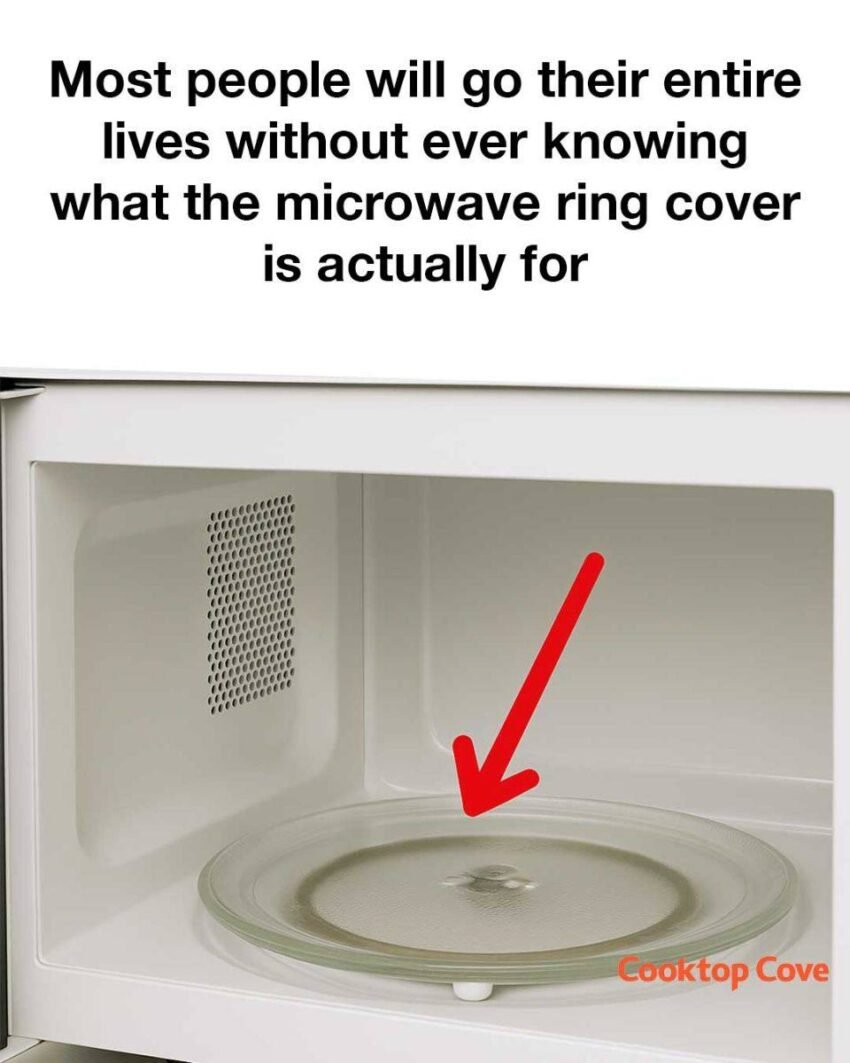
That small, often-forgotten circular tray that sits inside your microwave—usually made of glass or ceramic and resting on a set of rollers or a spinning hub—is technically called the microwave turntable plate or glass tray. The component you are likely referring to is the roller ring (the plastic ring with small wheels that sits underneath the glass tray) or the coupler (the small plastic piece underneath that connects the motor to the tray).
Since you asked specifically about the “ring cover,” let’s break down what that part is for and why it’s important.
What is the Microwave Ring For?
The roller ring (the plastic ring with small wheels) has one primary job: to allow the glass tray to rotate smoothly and evenly.
Here is exactly what it does and why it matters:
1. Even Cooking (The Main Job)
Microwaves emit energy in waves. If your food sat still in one spot, the waves would hit certain areas more intensely, leaving cold spots in other areas.
-
How it works: The roller ring sits between the motor’s drive hub (or coupler) and the glass tray. The motor spins a small plastic piece called a coupler, which is attached to the bottom of the glass tray. The roller ring provides a low-friction surface (the little wheels) that allows the heavy glass tray to spin smoothly and consistently.
-
The Result: As the tray turns, your food rotates through the microwave’s energy pattern, ensuring the heat is distributed evenly, so your leftovers don’t come out with a molten hot spot and a frozen center.
2. Supporting the Weight
The glass tray can be surprisingly heavy, especially when loaded with a large casserole dish. The roller ring is designed to bear this weight and keep the tray level. Without it, the tray would wobble, scrape against the bottom of the microwave, and likely crack under the stress.
3. Reducing Friction and Noise
The small wheels on the ring are usually made of a low-friction plastic or nylon.
-
Without them, the glass tray would grind directly against the plastic base, creating loud screeching noises and eventually wearing a hole in the bottom of your microwave.
-
The ring ensures the tray glides silently.
What About the “Cover” Part?
If you are looking at a specific part labeled a “microwave ring cover,” it might refer to one of two things:
-
The Roller Ring Itself: Some people call it a “ring cover” because it sits over the drive mechanism.
-
The Coupler Cover: In some microwave models, there is a small plastic cover that goes over the spinning coupler (the piece that actually turns the tray) to prevent food debris from falling into the motor shaft. This is often a separate small plastic disc.
Why It’s Important to Keep It Clean
This part is often neglected, but keeping it clean is crucial for safety and function.
-
Grease and Food Buildup: If food spills and hardens on the little wheels, they can stop spinning. Instead of rolling, the tray will drag, making a horrible noise, and eventually, the motor may burn out trying to turn a stuck tray.
-
Fire Hazard: Built-up grease on the plastic ring is flammable. If you microwave something for a long time, that grease can get hot and potentially ignite.
-
How to Clean It: You should wash the roller ring in warm, soapy water regularly (it’s usually dishwasher safe, but check your manual). Make sure the little wheels still spin freely by hand.
In short: The microwave ring is the unsung hero that ensures your food heats evenly by letting the tray spin smoothly.