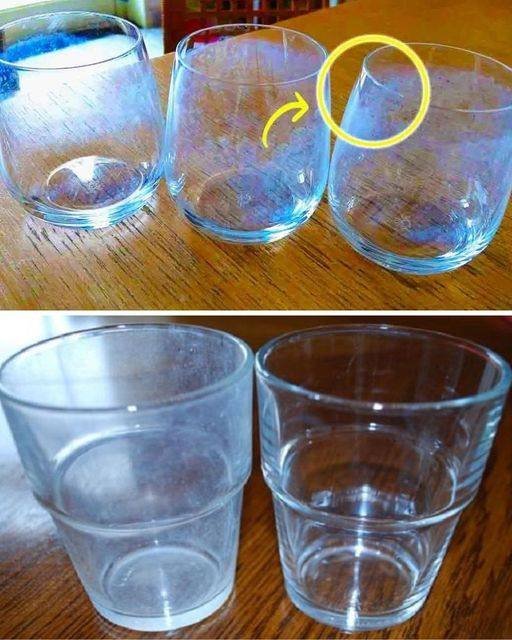
That white, hazy film on glassware—often called “patina” or “limescale”—is usually caused by hard water minerals (calcium and magnesium) bonding to the glass. It can make expensive crystal look like thrift store junk.
Here is the “cool trick” and the science behind why it works so well.
The “Cool Trick”: The Hot Vinegar Soak
The most effective method uses heat to accelerate the chemical reaction. While many people wipe with cold vinegar, the heat is the secret weapon that makes the minerals release their grip instantly.
What You’ll Need:
-
White distilled vinegar (the cheapest kind works fine)
-
A large pot (big enough to submerge the glasses) or a tea kettle
-
Dish soap
-
Microfiber cloth or lint-free towel (avoid terry cloth, which can leave lint)
The Method:
-
Heat the Vinegar: Pour white vinegar into a pot and heat it until it is hot but not boiling (just below a simmer). Do not boil it, as the fumes are very pungent.
-
Submerge: Carefully place the cloudy glasses into the hot vinegar. If they don’t fully submerge, turn them every minute or so.
-
Watch the Magic: Almost immediately, you should see the white film starting to dissolve or lift off the glass. Let them soak for 5-15 minutes, depending on how severe the buildup is.
-
Scrub Gently: Remove the glasses (they will be hot!). Use a non-abrasive sponge or a bottle brush with a little dish soap to scrub away any remaining residue. You will likely feel the “slick” texture of the minerals wash away.
-
Rinse & Dry: Rinse thoroughly with warm water and dry immediately with a microfiber cloth to prevent new water spots from forming.
Why This Works (The Science)
The white film is alkaline (basic), while vinegar is acidic. The heat agitates the molecules, allowing the acid to break down the alkaline mineral bonds much faster than cold vinegar can. It’s essentially a controlled chemical reaction that returns the glass to its original smooth surface.
What If It Doesn’t Work? (The “Etching” Test)
If you try the hot vinegar trick and the glass is still cloudy, you are likely dealing with glass etching, not hard water stains.
-
Hard Water Stain: The surface feels rough because something is on it (minerals). This can be removed.
-
Etching: The glass feels smooth but looks cloudy. This happens when the glass itself has been corroded, usually by using dishwasher detergent with high pH combined with hot water over time. Once glass is etched, the cloudiness is permanent because the surface of the glass is physically damaged.
The “No-Rub” Bonus Trick for Vases
If you have a narrow-necked vase that you can’t reach inside to scrub:
-
Fill it with hot water.
-
Drop in a Denture tablet (yes, really).
-
Let it fizz and sit overnight.
-
The effervescent action cleans the glass without you having to stick a brush inside.