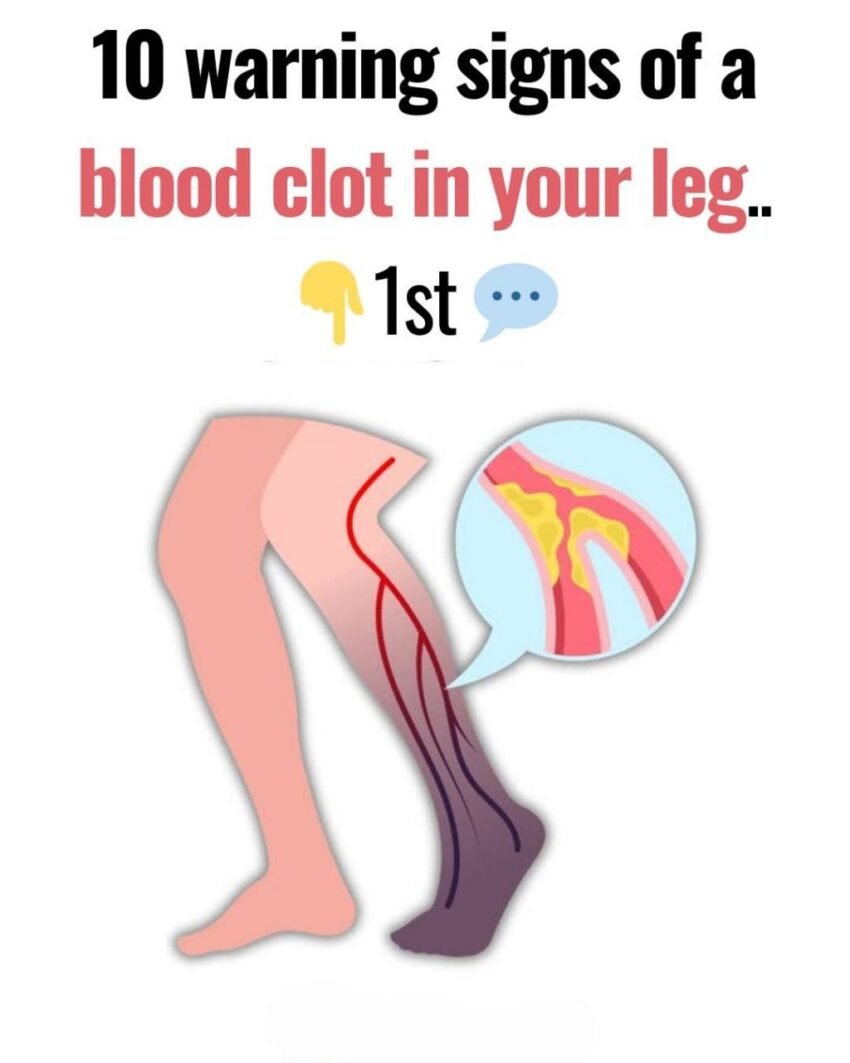
Here are 10 warning signs of a blood clot in the leg (deep vein thrombosis, or DVT) that warrant prompt medical attention:
-
Swelling in one leg – Unlike swelling from fluid retention (which often affects both legs), DVT swelling is typically unilateral.
-
Persistent leg pain – Often described as a cramp or soreness, usually starting in the calf.
-
Warmth over the affected area – The skin around the clot may feel noticeably warmer than the other leg.
-
Red or discolored skin – The leg may look reddish, bluish, or pale compared to the other side.
-
Tenderness along a vein – The leg may be painful to touch, especially along the path of a vein (often the calf or thigh).
-
Visible surface veins – Enlarged, engorged, or suddenly prominent superficial veins.
-
Heaviness or fatigue in the leg – A feeling of “dead weight” or unusual tiredness in one limb.
-
Skin that feels tight or shiny – Due to underlying swelling and venous pressure.
-
Mild fever or chills – In some cases, the body reacts to the clot with a low-grade fever.
-
Gradual worsening of symptoms – Unlike a pulled muscle, DVT symptoms often worsen over days rather than improve with rest.
Important: Not all clots cause obvious symptoms, and some may occur without any warning signs. If you have risk factors (recent surgery, prolonged immobility, cancer, pregnancy, clotting disorders) or develop chest pain, sudden shortness of breath, or coughing up blood, seek emergency care immediately — these could indicate a pulmonary embolism (when the clot travels to the lungs).