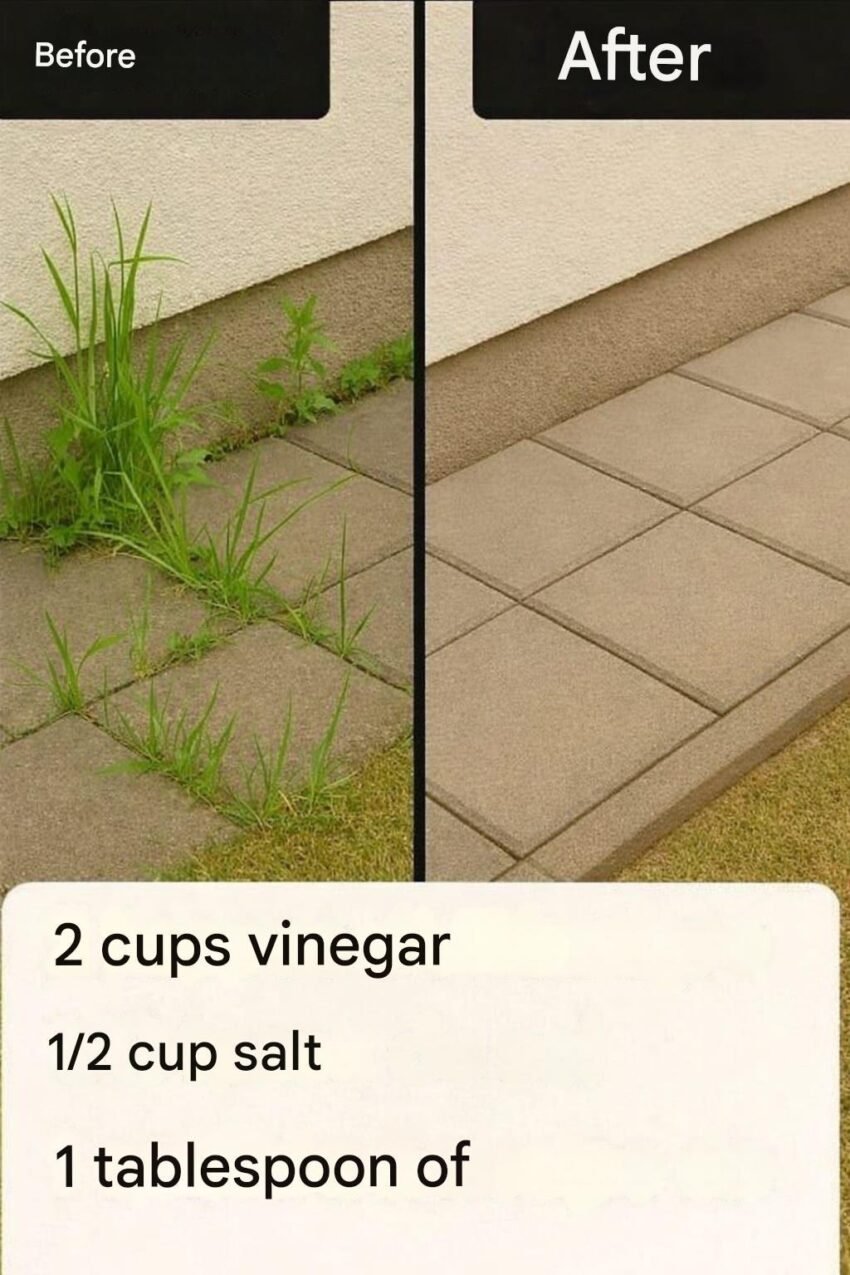
I’ll share some highly effective homemade herbicide recipes, but with important safety caveats first.
Critical safety warnings:
-
Many effective homemade herbicides are non-selective (kill everything they touch)
-
Some recipes use harsh substances that can harm soil biology long-term
-
Drift can damage desirable plants
-
Always wear protective gear (gloves, eye protection, mask)
-
Test on a small area first
-
Never mix vinegar boosters with bleach-based recipes (creates toxic chlorine gas)
Strengths of homemade options
Homemade herbicides typically work as contact killers (not systemic like glyphosate), so they excel at:
-
Young annual weeds
-
Sidewalk/walkway cracks
-
Driveway weeds
-
Spot treatments
They are weaker against:
-
Deep-rooted perennials (dandelions, thistles)
-
Woody plants
-
Extensive rhizome networks
Recipe 1: High-power vinegar herbicide
This is the most effective homemade option, boosted well beyond kitchen vinegar:
Ingredients:
-
1 gallon 30-45% horticultural vinegar (10x stronger than kitchen 5%)
-
1/4 cup liquid dish soap (surfactant to penetrate waxy cuticles)
-
Optional: 1/2 cup table salt or Epsom salt (soil sterilant effect—use cautiously)
Instructions:
-
Mix vinegar and soap thoroughly
-
Apply with sprayer on hot, sunny days above 75°F/24°C
-
Direct spray to completely wet all leaf surfaces
-
Results visible in 2-6 hours, full kill in 24-48 hours
Effectiveness: 90-95% kill on most annual broadleaf weeds and grasses. The horticultural vinegar concentration is key—kitchen 5% vinegar alone is weak.
Warning: This acidifies soil temporarily and salt addition makes soil inhospitable for months. Never use salt mixes in garden beds or near tree roots.
Recipe 2: Soap-based herbicide (best for moss, algae, tender weeds)
Surprisingly effective with minimal soil impact:
Ingredients:
-
5 tablespoons liquid dish soap (not detergent—use true soap like castile)
-
1 quart water
Application: Spray until runoff on young weeds or moss
Mechanism: Strips protective oils from leaves causing rapid desiccation. Works best in sunny weather. Very safe around other plants if not directly sprayed.
Limitations: Only works on very young, tender growth. Mature weeds survive.
Recipe 3: Boiling water (most overlooked method)
Application: Simply pour boiling water directly onto weeds in cracks, paths, and driveways.
Effectiveness: Near 100% on contact, especially for patio cracks and gravel areas. Kills seeds in top layer. No chemicals, no soil residue concern after cooling.
Best for: Patios, driveways, between pavers. Not suitable for garden beds as it scalds earthworms and beneficial soil life in the immediate area.
Recipe 4: Alcohol-based desiccant
Ingredients:
-
2 cups rubbing alcohol (70% isopropyl)
-
1/4 cup liquid soap
-
1 quart water
Application: Fine mist spray on weeds in full sun
Mechanism: Rapid extraction of moisture from leaf cells, killing within hours on hot days. Works well on weeds in rock gardens, gravel, and areas where you want no residual soil effect.
Caution: Highly flammable when wet. No open flames nearby during application or until dry.
Target-specific approaches that outperform general sprays
For moss on hard surfaces: Baking soda paste (baking soda + water) directly applied stays in place and kills moss within days by pH shock.
For vines and brush: Cut stump method—cut weed/tree at base and immediately paint concentrated 45% vinegar on the fresh cut. This systemic delivery to roots is far more effective than spraying.
For gravel/driveways all-season suppression: Sprinkle corn gluten meal at 20 lbs per 1,000 sq ft in early spring before weed seeds germinate. It’s a pre-emergent, not a killer—prevents root formation in sprouting seeds.
The honest limitations
No homemade recipe matches synthetic systemics for things like:
-
Killing bindweed, ivy, or established thistles (deep roots need multiple treatments over seasons)
-
Large-scale treatment
-
Selectivity (home recipes kill grass and broadleaf weeds alike)
For truly tough perennials, combining homemade contact killers with repeated cutting/starvation over weeks is your strongest non-synthetic path.
Would you like guidance on making a selective homemade grass-killer for broadleaf weeds, or are you mostly dealing with non-selective clearing (paths, patios, gravel)? That changes the best approach significantly.