
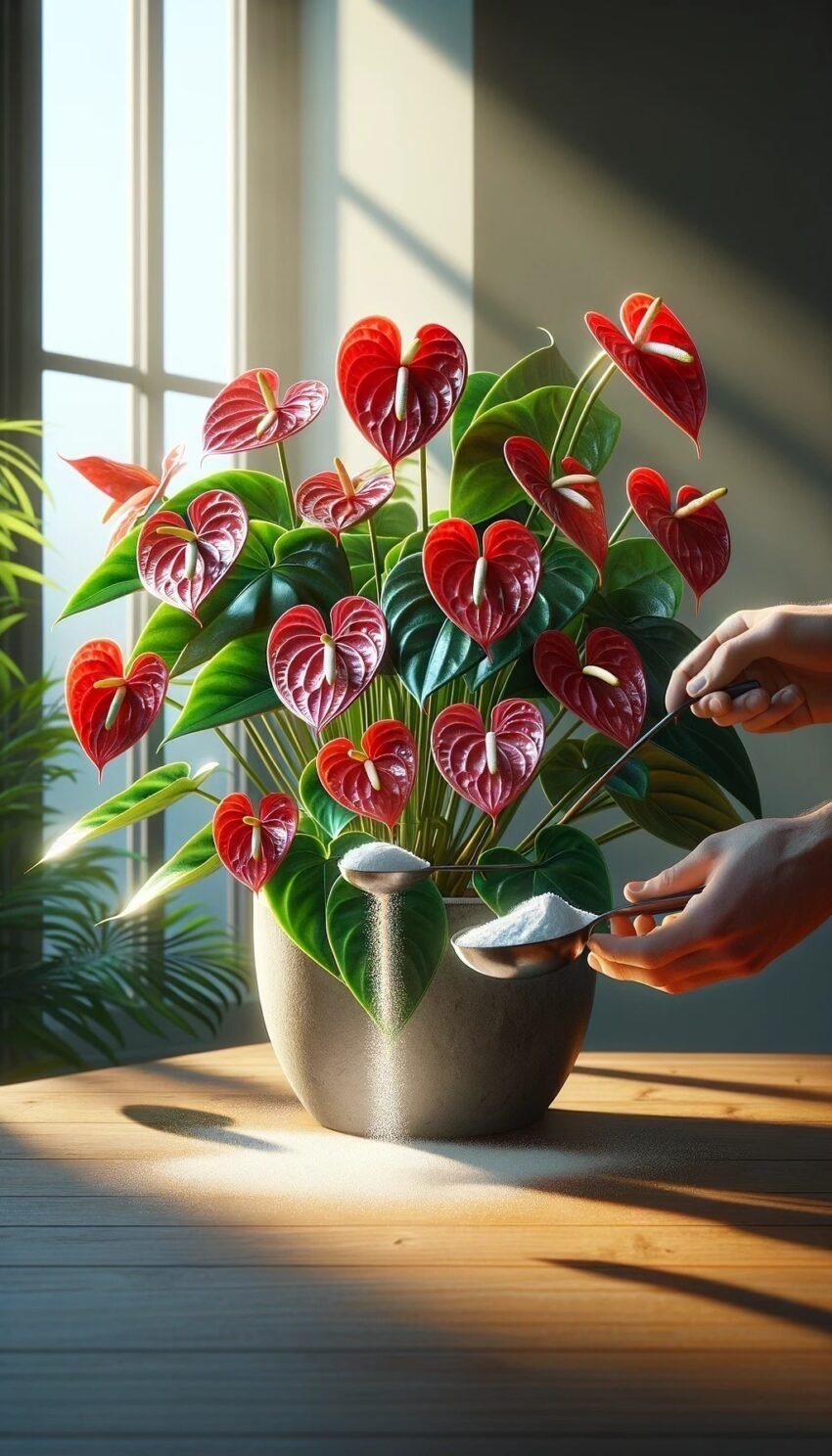
Here’s a clear, practical guide to getting your Anthurium (Flamingo Flower) to bloom almost non-stop, based on the rules you mentioned.
Anthuriums: How to Keep Them Blooming All Year Round
Anthuriums are tropical epiphytes. They don’t bloom based on a strict seasonal calendar—they bloom when their environmental conditions mimic a warm, humid rainforest. Follow these care rules, and you’ll have flowers nearly every month.
Rule 1: Bright, Indirect Light (The Non-Negotiable)
Light is the number one reason an Anthurium won’t bloom. They need brightness to generate the energy for flowers.
-
Ideal Spot: East-facing window is perfect. South or west windows work if you filter the light with a sheer curtain.
-
The Test: If the leaves are dark green and there are no flowers, it’s too dark. Move it closer to a window, but never in direct, harsh sun which burns the leaves.
-
Lack of light = Zero blooms. This is the most common issue.
Rule 2: Watering “Like a Rainforest,” Not a Swamp
They love humidity but hate wet feet. Roots must breathe.
-
The Rule: Water deeply only when the top 2-3 cm (about an inch) of soil are dry.
-
The Method: Use the “taco test.” Gently try to fold a leaf into a taco shape. If it folds easily, it’s thirsty. If it’s stiff, wait.
-
Water Quality: They are sensitive to salts and chlorine. Use filtered, distilled, or rainwater for best results. Brown leaf tips are often a cry for purer water.
Rule 3: The Humidity & “Spooning” Secret
This is a little-known trick. In the wild, Anthuriums grow roots not just in soil, but along the stem, absorbing moisture from the air.
-
Mist the Air, Not the Flowers: Use a spray bottle to mist the air around the plant daily, or place the pot on a pebble tray with water. Never spray the actual flower spathes directly, as this causes spots.
-
“Spooning” the Stem: If you see little nodules forming on the stem above the soil, mist those directly! Those are aerial root initials. If you spoon a little damp sphagnum moss around the base of the plant and keep it humid, it will explode with new growth and blooms.
Rule 4: The Right Feeding – “Little and Often”
Anthuriums bloom on new growth. They need phosphorus to trigger flowers, but over-fertilizing nitrogen gives you giant leaves and zero blooms.
-
What to Use: A bloom-boosting fertilizer with a higher middle number (e.g., 10-30-20) diluted to 1/4 strength.
-
When: Feed with every watering during active growth periods, but flush the soil with plain water every month to prevent salt buildup.
-
One Kitchen Trick: A very diluted, occasional watering with water from washed rice (unsalted!) or banana peel-infused water provides potassium and trace minerals that support flowering.
Rule 5: Warmth, No Drafts, and Grooming
-
Temperature: They thrive at 21°C–28°C (70°F–82°F). Never below 15°C (59°F). Avoid cold drafts and air conditioning vents.
-
“Deadheading” the Old Blooms: Cut the faded flowers right at the base of their stem. A dying flower saps energy even as it wilts. Removing it forces the plant to redirect energy into a new bloom spike.
-
Keep Leaves Clean: Dust blocks light. Wipe the big, glossy leaves with a damp cloth once a month. More photosynthesis = more flowers.
Quick Troubleshooting
-
Lots of leaves, no flowers: Too much nitrogen, not enough light. Move to brighter spot and switch to bloom fertilizer.
-
Yellow leaves: Overwatering. Let it dry out more between waterings.
-
Brown crispy edges: Low humidity or salt buildup. Increase humidity and water with filtered water.
Follow these, and your Anthurium should treat you to a constant show of glossy red, pink, or white spathes. Would you like tips for a specific Anthurium variety, or help with any problems it’s having right now?