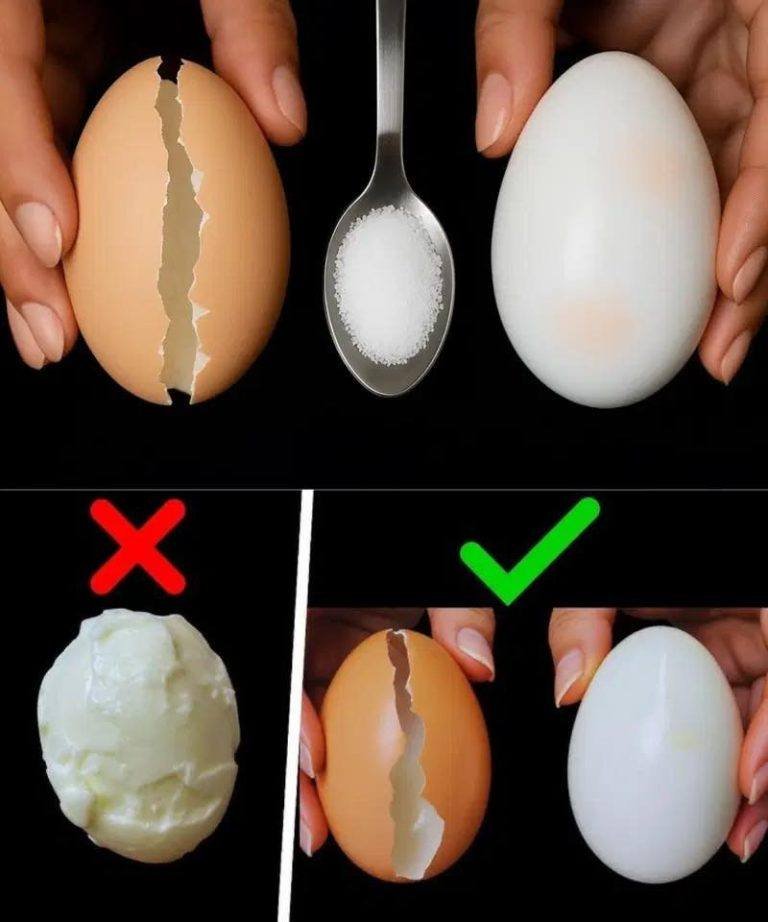
The secret isn’t a secret ingredient; it’s steam. Many high-end hotel breakfast buffets and restaurants use steam to cook eggs in the shell because it solves the two biggest problems with traditional boiling: inconsistency and difficult peeling.
Here’s the method and the science behind why it works so much better.
The “Five-Star Hotel” Method: Steamed, Not Boiled
The technique is simple. You only need about an inch of water in your pot, not a full pot that submerges the eggs.
The Method:
-
Fill a saucepan with about 1 inch (2.5 cm) of water and bring it to a rolling boil over high heat.
-
Place your cold eggs straight from the fridge into a steamer basket, or just set them directly in the pot. The eggs should not be submerged; they should sit above the water line.
-
Cover the pot tightly with a lid. This is crucial—the trapped steam is the cooking medium.
-
Start your timer immediately and adjust the heat to maintain a steady, medium boil of the water below.
-
For soft-boiled eggs: 6-7 minutes.
-
For perfect hard-boiled (or hard-“steamed”) eggs: 12-13 minutes.
-
-
While the eggs cook, prepare an ice bath (a large bowl of water with plenty of ice).
-
As soon as the timer goes off, use a slotted spoon to immediately transfer the eggs to the ice bath. Let them chill completely for at least 5 minutes, but 15 is better. This thermal shock is the final secret.
The Science: Why Steaming is Superior to Boiling
This isn’t just a pretentious chef’s trick; it’s a technique validated by food science.
| Issue with Boiling | The Steaming Solution | The Science |
|---|---|---|
| Inconsistent Results | Perfect Consistency | A pot of boiling water has a temperature of 100°C (212°F) only at the bottom. When you add cold eggs, the water temperature drops dramatically and recovers slowly. Steam, however, is a gas at 100°C that instantly fills the entire pot and condenses on the colder egg surface. This transfer of latent heat is much faster, more even, and the temperature doesn’t crash when you add the eggs. You get a perfectly consistent doneness from edge to yolk, every time. |
| The Stubborn Shell | Effortless Peeling | The nightmare of half the egg white peeling away is a pH issue. Fresh eggs have a low pH, which causes the albumen (white) to bond tightly to the inner shell membrane. As an egg ages, it loses CO₂, and the pH rises, reducing this bond. The rapid, high heat of steam cooks the outermost layer of the white so quickly that it effectively shrinks and sets before it can form a strong bond to the shell membrane. The ice bath then causes a rapid contraction of the egg inside, pulling it further away from the shell. The combination makes the shell practically fall off, even with very fresh eggs. |
| The Green, Rubbery Yolk | A Creamy, Yellow Yolk | That unappetizing grey-green ring is ferrous sulfide. It forms when the iron in the yolk reacts with hydrogen sulfide from the over-cooked white. This reaction requires high heat sustained over time. Steaming is so fast and even that you can cook the egg to the exact point of doneness without overcooking it. The immediate ice bath halts the cooking process instantly, preventing any carryover heat from forming that green ring. |
| Wasted Energy and Time | Speed and Efficiency | You’re only heating an inch of water instead of a whole pot. This brings the water to a boil much faster, saving time and energy. |