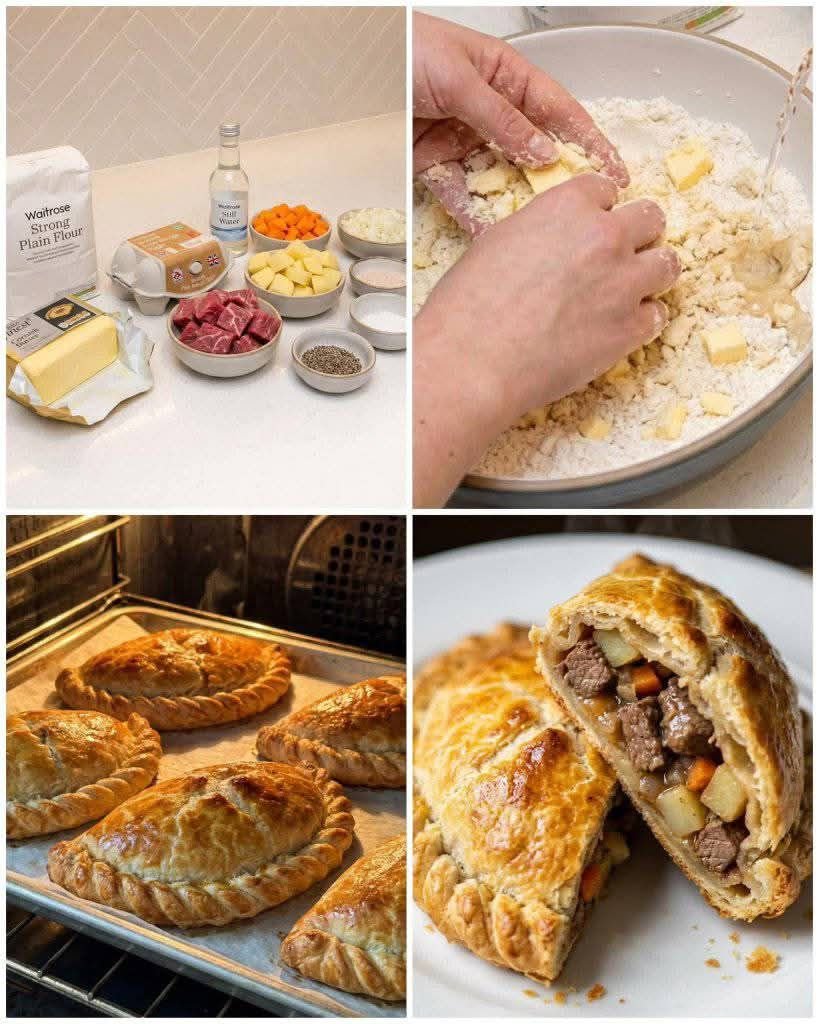
Here’s a recipe for a proper, traditional Cornish Pasty—the iconic hand-held pie with its distinctive crimped crust, made with beef and simple vegetables.
Traditional Cornish Pasty
Makes 4 large pasties
The authentic Cornish way is simple: no pre-cooking the filling, no carrots (contentious, I know, but traditionalists insist on just beef, potato, onion, and swede), and a strong, sturdy pastry that can survive being carried to the mines.
Part 1: The Pastry (Strong & Sturdy)
A genuine Cornish pasty uses a robust shortcrust, often made with a mix of butter and lard for strength and flavour.
Ingredients
-
500g (4 cups) strong bread flour (plain/all-purpose works, but bread flour gives the proper firm texture)
-
120g (1/2 cup) cold butter, cubed
-
120g (1/2 cup) cold lard (or use all butter if preferred)
-
1 tsp salt
-
150–175ml (2/3–3/4 cup) ice-cold water
Instructions
-
In a large bowl, rub the butter, lard, and salt into the flour using your fingertips until it resembles fine breadcrumbs.
-
Gradually add ice-cold water, mixing with a knife until the dough just comes together. It should be firm, not sticky.
-
Knead very briefly on a floured surface until smooth. Wrap and chill for at least 1 hour. This relaxes the gluten and firms the fats, making it easier to roll and crimp.
Part 2: The Filling (Raw, Never Pre-Cooked)
The magic of a Cornish pasty is that the filling cooks inside the pastry, steaming in its own juices.
Ingredients
-
350g (12 oz) beef skirt or chuck steak, finely diced (about 1cm / 1/2 inch cubes) — skirt is the traditional cut, prized for its flavour
-
300g (10 oz) waxy potato (like Maris Piper or Yukon Gold), peeled and finely diced
-
150g (5 oz) swede (rutabaga), peeled and finely diced — traditionally called “turnip” in Cornwall
-
1 medium onion, finely diced
-
2 tbsp butter, cut into 4 small cubes
-
Generous salt and freshly ground black pepper — plenty of pepper is essential
-
1 egg, beaten (for egg wash)
*Note the ratio: roughly 1/3 beef to 2/3 vegetables. No carrots, no peas, no pre-cooking.*
Part 3: Assembly & The Crimp
The crimp is everything. A real pasty is crimped along the side, not across the top.
-
Preheat oven to 200°C / 400°F. Line a large baking tray with parchment.
-
Divide the dough into 4 equal pieces. Roll each into a circle about 20–23cm (8–9 inches) in diameter, roughly the thickness of a pound coin.
-
Layer the filling in a line down the centre of each circle, leaving a generous border. Start with a bed of potato and swede, add the diced beef, then top with onion. Season each layer well with salt and a heavy dose of black pepper. Place a cube of butter on top of each pile.
-
Seal: Brush the edges of the pastry with beaten egg. Carefully fold the pastry over the filling to create a half-moon shape. Press the edges together firmly to seal.
-
Crimp: Starting at one end, fold and pinch the sealed edge between your thumb and forefinger to create a rope-like crimp along the side. This is the hallmark of an authentic Cornish pasty. (There are plenty of online videos to help you master the technique—it takes practice!)
-
Transfer to the baking tray. Cut two small slits in the top of each pasty to release steam. Brush all over with the remaining beaten egg.
Part 4: Baking
Bake in the preheated oven for 20 minutes at 200°C / 400°F, then reduce the temperature to 180°C / 350°F and bake for a further 30–35 minutes until deeply golden brown. The high heat at the start sets the pastry, while the lower heat ensures the filling cooks through.
Let them rest for 5–10 minutes before eating—the filling will be piping hot.
A Few Traditional Notes
-
The Handle: Legend says the thick crimped edge was a “handle” for miners to hold their pasty with dirty, arsenic-covered hands, then discard. While a charming story, it’s more practical than historical—it simply creates a sturdy, mess-free meal.
-
One End Savoury, One End Sweet: Some miners’ wives would put meat at one end and stewed apple or jam at the other, making it a two-course meal. You can absolutely do this at home.
-
No Gravy: The filling creates its own rich, peppery juices. You shouldn’t need any sauce.
Serve hot, warm, or cold—they’re perfect for lunch boxes, picnics, or a hearty dinner.
Would you like instructions for a vegetarian version, or perhaps a sweet filling for the “two-course” pasty idea?