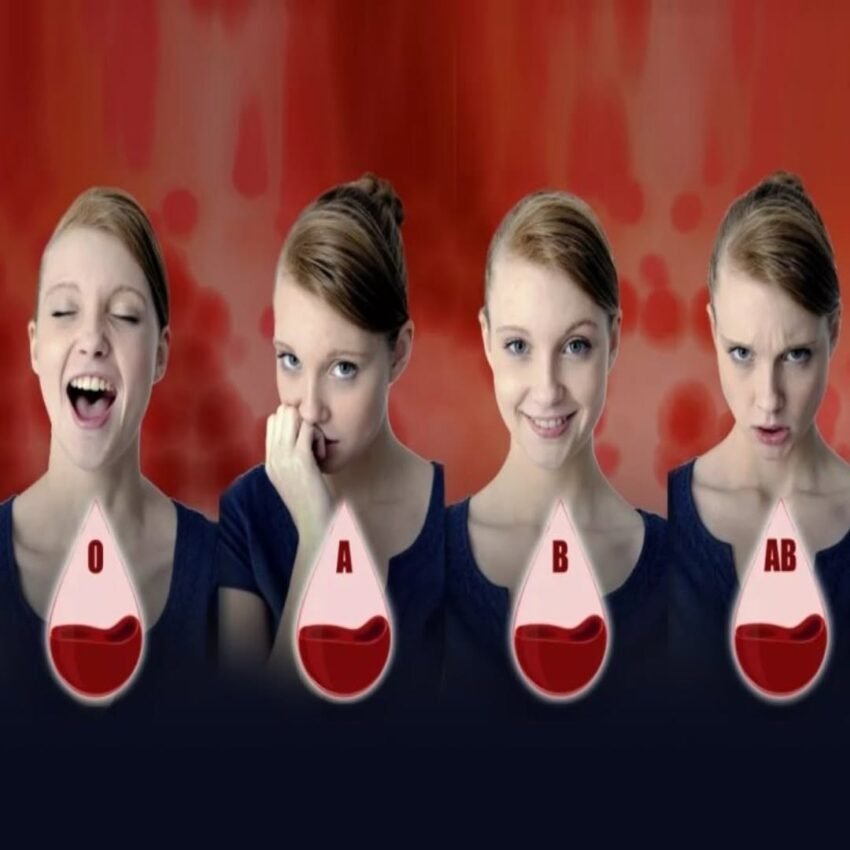
Here are 10 essential things to understand about your blood type, blending the practical, the medical, and the surprising.
1. Your Blood Type Is an Inherited Identity Card
Your blood type is determined by the presence or absence of tiny markers—antigens—on the surface of your red blood cells. You inherit these from your parents. The two most important systems are the ABO group (A, B, AB, or O) and the Rh factor (positive or negative), creating the eight common types (like O+ or AB-).
2. It’s All About a Sugar Code
The difference between Type A, B, and O comes down to specific sugar molecules on your red blood cells.
-
Type A has the “A” sugar.
-
Type B has the “B” sugar.
-
Type AB has both.
-
Type O has neither, making it the universal donor for red blood cells.
3. The Rh Factor Is a Separate Deal
The “positive” or “negative” refers to the RhD protein. If you have it, you’re Rh-positive. If not, Rh-negative. This is critical during pregnancy; an Rh-negative mother carrying an Rh-positive baby can develop antibodies that attack a future Rh-positive baby, a condition prevented by a simple injection called RhoGAM.
4. Your Blood Knows Who’s Welcome (Antibodies)
Your body naturally produces antibodies against the antigens you don’t have. For example, a Type A person has anti-B antibodies. If you receive the wrong type of blood, these antibodies will launch a fierce, potentially fatal attack. This is why cross-matching is so crucial.
5. “Universal Donor” and “Universal Recipient” Are Real
This gives a clear picture of the compatibility hierarchy:
-
O-negative: Universal red cell donor (can be given to anyone in an emergency). Trauma teams use it constantly.
-
AB-positive: Universal plasma donor and the universal recipient for red cells (can receive red cells from any type).
6. It’s More Than Just Red Cells
The rules change for plasma. Because plasma contains the antibodies, Type AB plasma (which has no anti-A or anti-B antibodies) is the universal plasma donor, while Type O is the universal plasma recipient.
7. Your Blood Type May Influence Your Health Risks
Large studies have found statistical links between blood types and certain health conditions:
-
Heart Disease & Blood Clots: Types A, B, and AB have a slightly higher risk of heart attacks and blood clots than Type O.
-
Stomach Cancer: Type A is associated with a higher risk.
-
Norovirus & Cholera: Type O individuals are more susceptible to severe bouts of the “winter vomiting bug” and cholera.
-
Malaria: Type O offers some protection against the most severe forms of malaria.
8. It’s Not a Diet Decoder
The popular “Blood Type Diet” suggests eating based on your ABO group. To date, there is no robust scientific evidence to support it. Your overall health depends far more on a balanced diet, exercise, and lifestyle than a menu built for your blood type.
9. Most of Humanity Is Rh-Positive
The global distribution varies wildly. O+ is the most common type worldwide, found in about 37% of the population. AB- is the rarest, found in less than 1%. Your specific combination is part of your unique biological heritage.
10. There Are Hundreds of Other Blood Group Systems
While ABO and Rh rule transfusion medicine, scientists have identified over 30 other blood group systems, like Kell, Duffy, and Kidd. These involve different antigens and are important for patients who need frequent transfusions, as they can develop antibodies to these less common markers.
Understanding these ten points takes you from basic curiosity to a deeper appreciation for the silent, powerful language of your blood. Let me know if you’d like to explore any of these in more detail.